
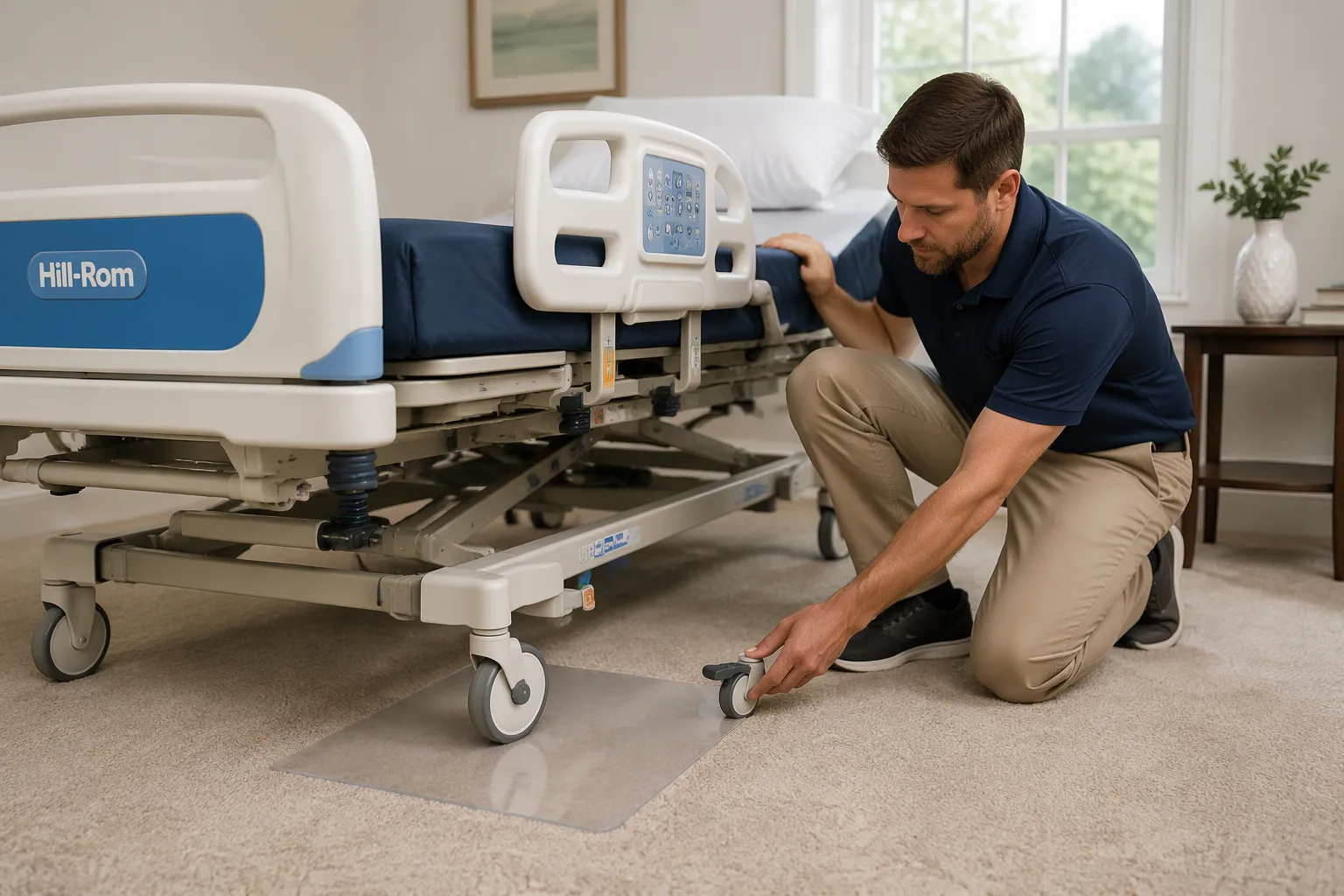
Yes, a hospital bed on carpet works well with the right precautions. Two risks exist: point load damage to the carpet and blocked casters. Both problems stay manageable with a smart setup. Most homes and care facilities need no special construction or professional installation. Success comes down to three habits. Match the hospital bed and its casters to the carpet type, spread the weight across a wider area, and keep the wheels clean. These steps stop the floor get damaged and keep the bed rolling smoothly. A little planning protects the floor and preserves mobility.
Point Load Damage to Flooring Explained

What Point Load Damage Means
How Bed Weight Concentrates at Casters
A hospital bed spreads its mass across four small contact patches. Each caster carries a concentrated share of the total load. This concentration creates point load damage to flooring over time. The flooring area directly under a patient’s bed receives steady pressure from these four points. Soft carpet fibers compress under this pressure and lose their original shape.
Bed Weight vs. Occupant Weight
The weight of the hospital beds often exceeds the occupant’s weight by a wide margin. A typical electric bed weighs between 150 and 300 pounds. An occupant adds another 100 to 250 pounds. The frame, motor, and side rails contribute most of the structural mass. This combined load presses down through four casters onto a small carpet surface.
Common Types of Carpet Damage
Crushing and Matting
Carpet fibers flatten under constant pressure. Crushing compresses the pile and reduces its height. Matting follows when fibers tangle and lose resilience. Both conditions create visible traffic lanes around the bed.
Permanent Indentations
Castors leave deep depressions in soft carpet over weeks or months. These indentations resist vacuuming and brushing. Permanent set occurs when fibers stay compressed beyond recovery.
Snags and Tears
Caster wheels catch loose carpet fibers during movement. Snags pull loops from the backing. Tears develop when repeated snagging weakens the carpet structure. Rolling a bed across worn carpet risks leaving scuff marks and under-bed damage.
Carpet Types and Durability
Low-Pile and Commercial Carpet
Low-pile carpet handles hospital beds well. Tight loops resist crushing and spring back after loading. Commercial-grade carpet offers dense backing and strong fiber bindings. These features support heavy equipment with minimal damage.
Plush and High-Pile Carpet
Plush carpet feels soft underfoot but compresses easily. High-pile styles trap caster wheels and hide deep indentations. These carpets show wear faster under concentrated loads.
Carpet Tiles
Carpet tiles offer a practical advantage. A damaged tile swaps out without replacing the entire floor. Tiles also distribute weight more evenly across seams. Facilities favor tiles for high-traffic areas with rolling equipment.
How to Avoid Point Load Damage to Floors
Prevention starts with a simple principle. Spread the bed’s weight across a wider area and reduce the pressure at each contact point. A few practical tools and habits make this easy for any household or facility. The goal is to avoid point load damage to floors without sacrificing the bed’s mobility or the room’s comfort.
Use a Protective Mat
A protective mat creates a buffer between the bed and the carpet. The mat absorbs concentrated pressure and spreads it across a larger surface. This simple layer protects the flooring from crushing and indentation.
Choosing the Right Mat Material
Material choice matters for long-term performance. Rubber mats offer excellent grip and durability. They resist compression and hold their shape under heavy loads. Felt-backed mats provide soft cushioning and work well on low-pile carpet. Polycarbonate mats combine rigidity with a low profile. These mats suit rolling beds because they allow smooth caster movement. Avoid thin foam mats. Foam compresses quickly and offers little protection against point load damage to flooring.
Placement Tips for Maximum Coverage
Position the mat under all four casters. The mat should extend at least two inches beyond each wheel. This margin prevents the caster from rolling off the edge during adjustments. Center the bed on the mat before locking the wheels. For beds that move frequently, choose a mat with beveled edges. Beveled edges reduce trip hazards and allow casters to roll on and off smoothly. Check the mat periodically for shifting. A mat that slides out of place leaves the carpet exposed.
Furniture Glides and Caster Coasters
Glides and coasters offer targeted protection at each contact point. These small accessories sit under individual casters and redistribute weight. They work well for beds that stay in one position for long periods.
How Glides Distribute Weight
Furniture glides increase the surface area at each caster. A wider contact patch lowers the pressure per square inch. This reduction protects the carpet fibers from crushing. Glides also reduce friction between the caster and the carpet. Less friction means less stress on the floor during movement. Choose glides with a concave shape. The cup holds the caster in place and prevents slipping.
When to Use Coasters Instead
Caster coasters work better for heavier beds or softer carpet. Coasters feature a rigid base and a raised rim. The rim captures the wheel and stops it from sinking into the pile. Use coasters when the bed weighs more than 250 pounds. Coasters also suit high-pile carpet where casters tend to dig in. Some coasters include a locking tab. The tab holds the caster stationary and prevents accidental rolling. Swap coasters for glides when the bed needs frequent repositioning. Coasters require lifting the caster to move the bed.
Rearranging and Rotating the Bed
Movement prevents permanent damage. Carpet fibers recover when pressure shifts to a new area. A simple rotation schedule keeps the flooring in better condition.
Preventing Set-In Indentations
Indentations form when casters stay in one spot for weeks. Rotate the bed a few inches every month. This small shift moves the casters to fresh carpet fibers. Combine rotation with regular vacuuming. Vacuuming lifts compressed fibers and restores pile height. For beds that rarely move, lift each caster and place it on a fresh spot. This practice prevents deep set-in marks and extends the carpet’s life.
Best Spots to Position the Bed
Choose a location with low foot traffic. High-traffic paths accelerate wear around the bed. Place the bed away from direct sunlight. Sun exposure weakens carpet fibers and makes them more prone to damage. Avoid positioning casters near carpet seams. Seams create weak points where tears start. Keep the bed at least six inches from walls. This gap allows air circulation and makes cleaning easier. A spot with even support and minimal traffic keeps damage to the floors to a minimum.
How Carpet Affects Hospital Bed Casters
Carpet changes how a hospital bed moves. The soft surface adds resistance, traps debris, and alters the way casters respond to pushing and steering. Understanding this interaction helps users choose the right setup and avoid frustrating mobility problems. The relationship between carpet and casters depends on wheel design, carpet texture, and regular maintenance.
How Hospital Bed Casters Work
Casters on medical equipment serve two purposes. They support heavy loads and allow smooth movement across flooring. A typical hospital bed uses four casters, each rated for a specific weight capacity. The design of these components determines how well the bed performs on carpet.
Wheel Size and Tread
Larger wheels roll over carpet more easily than small ones. A wheel with a diameter of four to five inches handles low-pile carpet without difficulty. Smaller wheels tend to sink into the pile and require more pushing force. Tread pattern also matters. A smooth tread glides across tight carpet fibers. A textured tread grips the surface and resists slipping. The type of wheel affects both mobility and floor protection. Soft rubber treads cushion the carpet and reduce fiber damage. Hard plastic wheels offer durability but concentrate pressure on a smaller contact area. For carpeted rooms, a wheel with a slightly rounded edge and medium-hard rubber tread provides the best balance.
Locking Mechanisms
Locking wheel casters keep the bed stationary during patient transfers and rest periods. These mechanisms engage a brake that presses against the wheel or locks the swivel. On carpet, the brake must overcome the compressible surface. A caster that sinks into the pile may not lock properly. The brake shoe needs firm contact with a hard surface to hold securely. Some locking wheel casters feature a total lock system. This design locks both the wheel rotation and the swivel simultaneously. Total lock casters provide greater stability on soft surfaces. They prevent the bed from drifting when a patient leans or shifts weight. Regular testing ensures the locking wheel casters engage fully on carpet.
When Carpet Blocks Casters
Carpet can interfere with caster function in several ways. The problems range from simple resistance to complete immobilization. Recognizing these issues early prevents damage to both the bed and the flooring.
High-Pile and Shag Carpet Problems
High-pile carpet creates the most serious challenges for medical carts and beds. The deep fibers swallow small wheels and trap them in place. Pushing the bed requires excessive force. Steering becomes unpredictable as the casters fight against the pile. Shag carpet amplifies these problems. Long, loose fibers wrap around the wheel axle and jam the swivel mechanism. A bed placed on shag carpet may become nearly impossible to move without lifting. The carpet also hides the casters from view. Users cannot see fiber buildup or damage until the bed stops rolling entirely.
Fiber Buildup Around Wheels
Carpet fibers collect around the wheel axle and swivel bearing over time. This buildup acts like a brake. It increases rolling resistance and prevents smooth rotation. Loose fibers from plush or looped carpet are the main culprits. These fibers break free during movement and wrap around moving parts. Once wrapped, they compact into a tight ball that restricts wheel movement. Regular inspection catches fiber buildup before it causes problems. A quick cleaning restores full caster function.
Thresholds and Carpet Edges
Carpet edges and room thresholds create obstacles for rolling loads. The transition strip between carpet and hard flooring often sits slightly raised. A caster that hits this edge may stop abruptly or swerve. Carpet binding at the room perimeter creates a similar barrier. These edges catch small wheels and force the user to lift the bed. Repeated impact against thresholds damages both the caster and the carpet edge. A gradual transition strip or a small ramp solves this problem. Placing the bed away from carpet edges also reduces the risk of snagging.
Signs Your Casters Are Struggling
Early warning signs indicate that the casters need attention. Ignoring these signals leads to permanent damage and safety hazards. Users should watch for specific behaviors during routine bed movement.
Hard Pushing or Steering
A bed that once rolled easily should continue to roll easily. Increased pushing effort signals a problem. The casters may have fiber buildup, damaged bearings, or improper wheel selection for the carpet type. Hard steering indicates swivel resistance. The swivel bearing may lack lubrication or contain trapped debris. These symptoms worsen over time without intervention. Addressing them early restores smooth movement and protects the floor from scuff marks caused by dragging.
Locks That Won’t Engage
Locking wheel casters should engage with a firm click and hold the bed securely. A lock that fails to engage on carpet poses a safety risk. The brake may not reach the wheel through the compressed pile. The locking mechanism may contain debris that prevents full travel. Testing each locking wheel caster before use confirms proper function. A caster that will not lock needs adjustment or replacement. Secure locks protect patient stability during transfers and prevent accidental movement.
Solutions for Smooth Caster Movement
Caster Cups and Bed Leg Pads
Caster cups offer a simple fix for sinking problems. These small dishes sit under each wheel and create a rigid barrier between the caster and the carpet pile. The cup spreads the load across a wider footprint. This design stops the wheel from pressing deep into soft fibers.
How Caster Cups Prevent Sinking
A caster cup features a raised rim and a flat base. The rim captures the wheel and holds it in position. The flat base distributes weight across the cup’s full diameter. This distribution reduces pressure on the carpet and prevents the caster from digging in. Cups work well under hospital beds that stay in one spot. They also protect the flooring from deep indentations during long-term placement.
Options for Locking and Unlocking
Some caster cups include a locking tab or a snap-in design. These features hold the wheel securely and stop accidental rolling. Locking wheel casters pair well with locking cups for maximum stability. Users who need to move the bed frequently should choose open cups. Open cups allow the caster to roll out without lifting. Locking wheel casters release easily from open cups during repositioning.
Choosing the Right Carpet Pile Height
Carpet pile height directly affects how easily medical equipment moves. Low-pile carpet offers the best surface for rolling loads. Tight fibers resist compression and allow wheels to glide smoothly.
Recommended Pile for Bedrooms
A pile height under half an inch suits most bedroom setups. Low-pile and tight-loop styles handle the weight of hospital beds without excessive crushing. These carpets also let locking wheel casters engage properly. Homeowners should avoid plush or shag styles in rooms with rolling medical equipment.
Low-Pile Runners and Mats
A low-pile runner creates a smooth path for casters. Place the runner along the bed’s travel route. The dense surface supports the wheels and reduces rolling resistance. Runners also protect the underlying carpet from fiber buildup and wear. Choose a runner with a non-slip backing for safety.
Regular Caster Maintenance
Routine care keeps casters working well on any carpet. Maintenance takes only a few minutes each month. A consistent schedule prevents small problems from becoming costly repairs.
Cleaning Fibers and Hair
Carpet fibers and hair wrap around the wheel axle during use. This buildup increases resistance and strains the swivel bearing. Remove debris with tweezers or a small brush. Check each wheel after every major move. Clean wheels roll more easily and cause less damage to the floor.
Lubrication and Wheel Checks
Apply a few drops of silicone spray to the swivel bearing every few months. Lubrication keeps the caster turning freely. Inspect each type of wheel for cracks, flat spots, or loose tread. Replace worn wheels promptly. A damaged wheel concentrates pressure and harms the carpet. Regular checks protect both the medical equipment and the flooring beneath it.
Matching Your Hospital Bed on Carpet to Your Space
Every room presents its own conditions. A setup that works in a rental apartment may fail in a busy care facility. Matching the hospital bed on carpet to the room’s traffic, carpet type, and long-term plans delivers the best results. The right approach balances floor protection with daily function.
Home Bedroom Setups
Renter-Friendly Options
Renters need solutions that leave no permanent marks. Caster cups and portable mats offer ideal choices. These items lift the bed’s weight off the carpet and protect the flooring without adhesives or tools. A renter can remove them at move-out and restore the room to its original state. Low-pile area rugs placed under the bed add another layer of defense. Choose rugs with non-slip backing to keep the surface stable.
Long-Term Placement Tips
A permanent bedroom setup deserves a more durable plan. A rigid protective mat under all four casters prevents deep indentations over the years. Rotate the bed a few inches each month to shift pressure to fresh fibers. Keep the bed away from direct sunlight and carpet seams. These habits extend carpet life and preserve the bed’s stability. Homeowners should also confirm that the bed’s casters suit the carpet pile before final placement.
Care Facilities and Shared Spaces
High-Traffic Carpet Considerations
Shared spaces see constant movement. Wheelchairs, carts, and medical equipment cross the floor many times each day. High-traffic carpet needs dense backing and tight fibers to handle this load. Commercial-grade carpet tiles work well here. A damaged tile swaps out quickly without closing the room. Place low-pile runners along common travel paths. These runners reduce wear and support smooth caster movement.
Balancing Safety and Floor Protection
Care facilities must protect patients and the flooring at the same time. Loose mats create trip hazards, so every mat needs a secure edge or non-slip base. Locking casters must engage fully on the carpet surface. Test each lock before patient transfers. Caster cups add stability for beds that stay in place. Staff should inspect the floor regularly for snags, tears, and fiber buildup around wheels. This routine protects both residents and the facility’s investment.
Surface compatibility drives every decision in these shared rooms. The carpet, the casters, and the traffic pattern must work as one system. A thoughtful match keeps medical equipment rolling freely and keeps the floor in good condition for years.
Safety Checklist Before You Roll
A final check protects both the patient and the room. This routine takes only a few minutes. It confirms that the setup works as planned before daily use begins.
Test the Bed’s Movement
Checking Lock Function on Carpet
Locking wheel casters must engage fully on the carpet surface. A technician or caregiver should press each lock and listen for a firm click. The brake shoe needs solid contact with the wheel. Soft pile can prevent full engagement. Test every locking wheel caster before the first patient transfer. A lock that slips needs adjustment or a caster cup beneath the wheel.
Confirming Stability
A stable bed does not shift when weight moves across the frame. Push gently against each corner and watch for rocking. The casters should stay planted on the carpet. Loose or wobbly wheels signal a problem with the caster or the surface beneath it. Confirm that all four locking wheel casters hold firm. This step supports safety, stability, and mobility during transfers and rest.
Inspect the Carpet Regularly
Spotting Early Wear
Caregivers should scan the carpet around the bed each week. Look for crushed fibers, matted patches, and loose threads near the casters. Early wear shows as flattened pile or faint indentations. Snags and fiber buildup around the wheels deserve immediate attention. Catching these signs early prevents permanent damage to the flooring.
Adjusting Your Protection Plan
Wear patterns guide the next step. Deep indentations call for caster cups or a thicker mat. Fiber buildup around the wheels means more frequent cleaning. A shifting mat needs a non-slip base. Facility staff should review the setup every few months. Small adjustments keep the flooring protected and the hospital beds rolling smoothly.
Surface compatibility ties these checks together. The carpet, the casters, and the traffic pattern must work as one system. A quick test before each roll and a weekly look at the floor protect the investment. These habits keep the bed secure and the carpet intact for years.
Yes, a hospital bed on carpet works well with proper precautions. Owners should use a protective mat or caster cups, choose low-pile carpet where possible, and spread the weight to avoid point load damage. Clean casters and routine maintenance keep hospital beds rolling smoothly. A quick setup check and simple care protect both the flooring and the bed’s mobility. Readers should match their solution to their carpet type and setting. This approach delivers the best long-term results for safety, stability, and mobility. Proper planning keeps the flooring intact and the casters functioning well.
FAQ
Can a hospital bed sit on high-pile carpet?
High-pile carpet creates real problems. Deep fibers swallow small wheels and trap them in place. The casters fight the pile during pushing and steering. Loose fibers also wrap around axles. A bed on shag or plush carpet may become nearly impossible to move. Low-pile styles suit rolling equipment far better.
Does a protective mat replace the need for caster cups?
No. The two tools solve different problems. A mat spreads weight across a wide area and shields the carpet from crushing. Caster cups capture individual wheels and stop them from sinking. Many setups benefit from both. A mat handles general pressure, and cups add targeted stability at each contact point.
How much weight can carpet support under a bed?
Most residential carpet handles a loaded hospital bed without structural failure. The real concern is cosmetic damage, not collapse. Soft fibers crush and mat under steady pressure. Dense backing and tight loops resist this wear. A protective layer under the wheels protects the flooring from long-term indentation.
Will bed locks work on soft carpet?
Locking mechanisms need firm contact to hold. Soft pile can prevent the brake from reaching the wheel. A caster that sinks may not lock at all. Test every lock before a patient transfer. A caster cup beneath the wheel creates the rigid surface the brake needs.
How often should someone clean the wheels?
Check the wheels after every major move. Remove hair and fibers with tweezers or a small brush. Apply silicone spray to the swivel bearing every few months. Replace worn wheels promptly. Clean wheels roll easily and cause less wear on the flooring beneath them.
Is a hospital bed safe on carpet for renters?
Yes. Renters can protect the flooring without permanent changes. Caster cups and portable mats lift the bed’s weight off the carpet. Both items remove easily at move-out. Choose mats with non-slip backing for stability. These solutions leave no marks and require no tools.
What carpet type suits rolling beds best?
Low-pile and tight-loop carpet offers the best surface. Tight fibers resist compression and let wheels glide smoothly. Commercial-grade styles add dense backing for heavy loads. Carpet tiles work well in shared spaces because a damaged tile swaps out quickly. Avoid plush and shag styles in rooms with rolling equipment.