
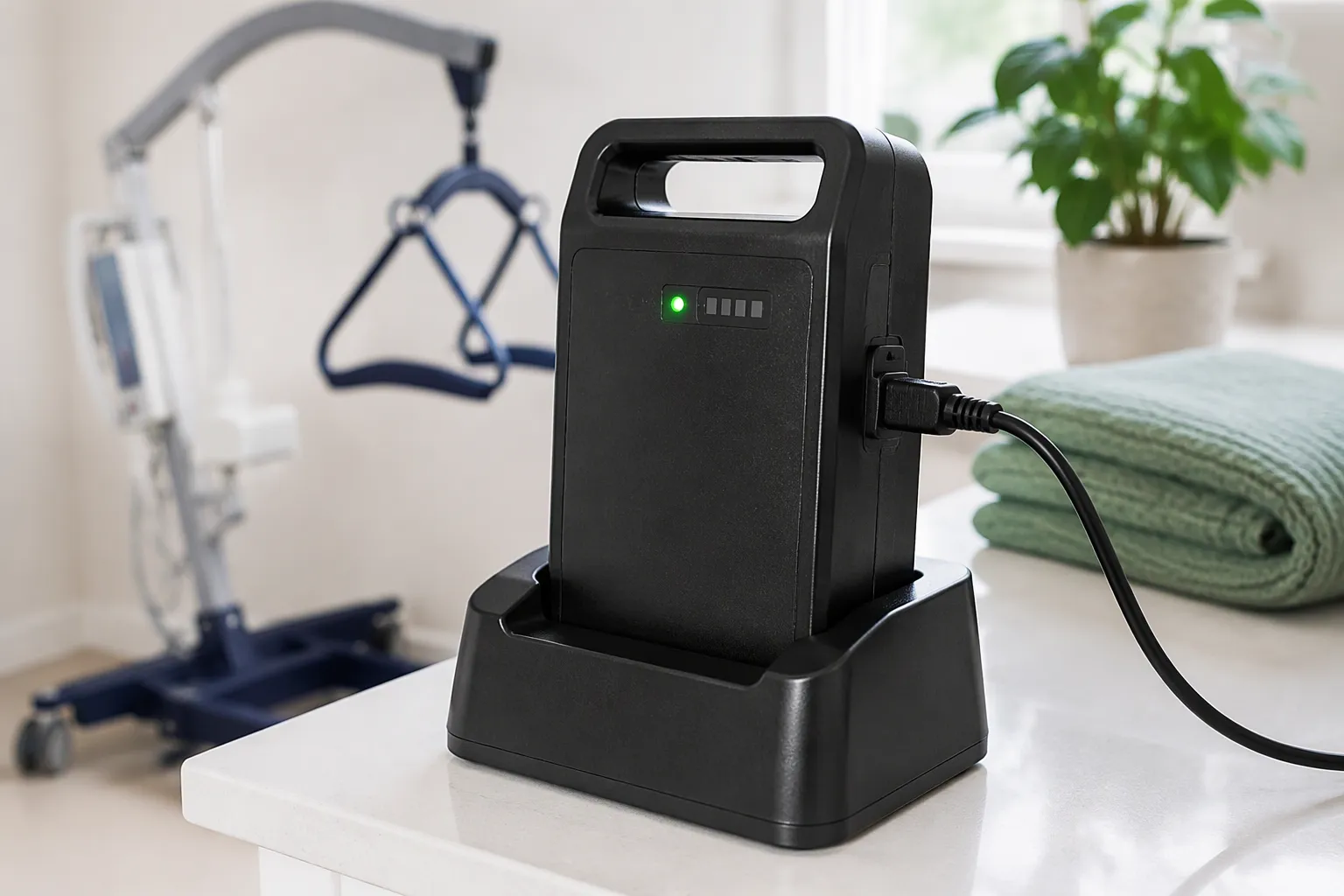
The short answer to how often should a patient lift battery be charged is straightforward: at least once a week, even when the lift sits idle. Regular top-ups prevent deep discharge and keep the unit ready for the next transfer. Caregivers should charge batteries weekly as a simple baseline habit. The manufacturer’s manual remains the final authority on the exact schedule for a specific lift model.
Why Idle Hoist Batteries Still Need Charging
What Happens During Deep Discharge
How Batteries Lose Charge While Sitting
A battery does not hold its charge indefinitely. Even when the hoist is not in use, internal chemical reactions continue at a slow rate. This self-discharge drains the stored energy day by day. The process speeds up in warm rooms and slows down in cool conditions. A battery left idle for weeks can lose a significant portion of its capacity. Hoists are not used for long periods in many care settings, so this slow drain often goes unnoticed until a caregiver needs the lift.
Signs of a Deeply Discharged Battery
A deeply discharged battery shows clear warning signs. The charger may refuse to start, or the indicator light may flash an error code. The lift may move slowly or stop midway through a transfer. Some batteries swell or feel warm to the touch. These symptoms point to a voltage level that has fallen below the safe threshold. Deep discharge damages the internal cells, and the harm is often permanent.
How Regular Charging Protects Battery Health
Keeping the Battery Ready for Use
A weekly top-up keeps the hoist batteries at a healthy voltage level. The caregiver knows the patient lifting equipment will work on demand. This routine removes the risk of a failed transfer during an emergency. A charged battery also delivers full lifting power and smooth operation. The lifter responds instantly when the caregiver presses the control.
Avoiding Costly Battery Replacements
Regular charging protects battery health and extends the service life. A well-maintained battery can last for years. A neglected one may fail within months. Replacement costs add up quickly for any care facility. A simple weekly charging habit costs almost nothing and prevents this expense. The hoist stays reliable, and the budget stays intact.
Manufacturer Guidelines for Hoist Batteries
Checking Your Lift’s User Manual
Where to Find the Charging Schedule
The user manual is the first place to look for a charging schedule. Most lift makers include a dedicated battery section in the manual. This section usually sits near the troubleshooting chapter or the maintenance checklist. Caregivers should check the table of contents for terms like “battery care,” “charging instructions,” or “power system.” Some manuals print the schedule on a quick-start card that ships with the lift. Others place a sticker with charging details directly on the battery pack. A caregiver who cannot find the manual can contact the lift supplier for a digital copy. The serial number on the lift helps the supplier identify the correct document.
Common Recommendations Across Brands
Most lift brands follow a similar pattern for hoist batteries. A full charge before first use is standard. Daily charging after each shift is common for busy facilities. Weekly charging is the typical minimum for lifts in light use. Several brands also recommend a monthly full charge for units in storage. The exact intervals vary by battery chemistry and charger design. Some manuals specify a charge time in hours. Others describe a charge cycle in terms of indicator lights. Caregivers should record the brand-specific numbers in a logbook. This record makes it easy to follow the right schedule for each lift.
Understanding Maintenance Charging
What Maintenance Charging Means
Maintenance charging is a slow, gentle top-up that keeps a battery at full voltage. The charger delivers a small current over a long period. This process counteracts the natural self-discharge of an idle battery. It also prevents the voltage from dropping into the danger zone. Many modern lift chargers offer this mode automatically. The charger switches to a float or trickle state once the main charge finishes. The battery then stays ready without the risk of overcharging. This feature is especially useful for lifts that sit unused for days or weeks.
How Often to Use Maintenance Charge
A caregiver should connect a rarely used lift to its charger at least once a week. The charger then handles the rest through its maintenance mode. Some manufacturers suggest leaving the battery on the charger between uses. Others prefer a weekly session of several hours. The manual for each hoist clarifies which approach the maker supports. A simple routine works well: plug in the lift every weekend and let the charger complete its cycle. This habit keeps the battery healthy without constant attention. It also removes the guesswork from battery care.
How to Charge the Batteries Properly

Step-by-Step Charging Instructions
Connecting the Battery to the Charger
The caregiver should park the hoist in a dry area near a working power outlet. The charger plug goes into the port on the battery pack. The connector fits in one direction only, so the caregiver should never force it. A firm push seats the plug until it clicks. The charger then connects to the wall socket. The caregiver should check that the cable lies flat and clear of walkways. A damaged cable needs replacement before charging begins.
Reading the Charger Indicators
Most chargers use colored lights to show status. A steady red light means the charge cycle is running. A green light signals a completed cycle. Some models include a battery level indicator with several bars. The caregiver should watch these lights at the start of every session. A flashing error light points to a connection problem or a faulty battery. The manual explains each code for the specific hoist model.
Knowing When Charging Is Complete
The charger stops the main cycle on its own. The green light confirms the battery is fully charged. The caregiver should then unplug the charger from the wall. Some manufacturers recommend leaving the unit connected for maintenance mode. Others advise removal after a full charge. The manual settles this question for each lift. A written log of each session helps the caregiver track the pattern.
How Long a Full Charge Takes
Typical Charging Times
A full charge usually takes between four and eight hours. The exact time depends on the battery capacity and the charger output. A mostly empty battery needs the longer end of that range. A top-up session may finish in two or three hours. The caregiver should plan charging around quiet periods, such as overnight. Rushing the process shortens battery life.
What to Do If the Battery Will Not Charge
A battery that refuses to charge may have a loose connection. The caregiver should reseat the plug and try again. A deeply discharged unit may need a longer activation period. Some chargers include a recovery mode for this case. If the light stays red for more than twelve hours, the caregiver should stop the session. The lifter supplier can test the battery and advise on replacement.
Tips to Extend Lifter Battery Life
Use the Correct Charger
Matching the Charger to the Battery
The right charger protects the battery pack and supports long service life. A caregiver should confirm the charger model matches the lift’s battery type. The manual lists the approved charger for each hoist. A mismatched unit may deliver the wrong voltage or current. This mismatch stresses the cells and shortens their lifespan. Caregivers should keep the original charger with the lift at all times.
Why Off-Brand Chargers Can Cause Problems
Off-brand chargers often lack the safety features of the original unit. They may overheat or deliver an uneven current. These faults damage the internal cells over time. A cheap charger can also void the lift warranty. The small savings rarely justify the risk. Caregivers should treat batteries and chargers as a matched pair.
Avoid Full Discharge
When to Recharge During Occasional Use
A caregiver should charge the batteries before the level drops too low. A top-up after each use keeps the voltage in a safe range. For a lift in light use, a weekly session works well. This habit prevents the deep discharge that ruins cells. A simple rule helps: plug in the lift after every few transfers.
Warning Signs to Watch For
The lift gives clear signals when power runs low. A slow lift speed or sluggish response points to a weak charge. Some models show a low-battery indicator on the control panel. A flashing light or an audible beep also warns the caregiver. These signs mean it is time to charge the unit right away.
Store the Battery the Right Way
Best Storage Conditions
A cool, dry location suits battery storage best. Caregivers should avoid hot rooms, direct sunlight, and damp areas. The battery should sit away from metal tools that might touch the terminals. A clean shelf or a dedicated charging station works well. Proper storage slows self-discharge and protects the casing.
Keeping It on Maintenance Charge
A stored battery still needs regular attention. The caregiver should connect it to the charger at least once a month. Many chargers switch to a gentle maintenance mode after a full cycle. This step keeps the unit charged and ready. A calendar reminder makes this routine easy to follow. Consistent care extends hoist battery life and avoids surprise failures. Regular charging your lifter also protects the investment in the equipment.
How Often Should a Patient Lift Battery Be Charged in Different Situations
Daily Use Versus Rare Use
Charging Schedules for Frequent Use
A lift in daily service draws a steady flow of energy from its battery. Caregivers in busy facilities often run dozens of transfers each shift. This workload drains the battery quickly. The manual for most models advises a full charge after every shift. Some facilities place the hoist on its charger between every transfer. This habit keeps the battery near full capacity at all times. A facility that uses the lift around the clock may follow a simple rule: the battery pack must be charged daily. This schedule prevents the voltage from dropping during a busy day. It also keeps the equipment ready for the next patient. A fully charged battery delivers consistent lifting power throughout the shift. Caregivers who follow this routine rarely face a mid-transfer failure.
Charging Schedules for Occasional Use
A lift in light use needs far less attention. Many home care settings use the hoist only a few times each week. The battery drains slowly under this pattern. A weekly charging session keeps the unit in good condition. The caregiver should connect the lifter to its charger every weekend. This single session restores the energy lost to self-discharge. Some manuals suggest a top-up after every few transfers as well. This approach suits a lift that sees a handful of uses per week. The question of how often should a patient lift battery be charged has a simple answer in this setting: once a week is enough. A caregiver who follows this schedule avoids deep discharge without constant monitoring. The battery stays healthy, and the lift remains ready for the next transfer.
Batteries in Long-Term Storage
Monthly Checkups for Stored Batteries
A lift placed in long-term storage still needs regular care. The battery continues to lose energy through self-discharge. A monthly checkup catches any drop in voltage before it becomes a problem. The caregiver should connect the battery pack to its charger once a month. This session brings the unit back to full capacity. Many chargers switch to a maintenance mode after the main cycle. This mode holds the battery at a safe voltage for weeks. A calendar reminder makes this monthly task easy to remember. The caregiver should also inspect the terminals for dust or corrosion during each checkup. A clean connection supports efficient charging. This routine protects the battery during storage and prevents permanent damage.
Recharging Before the Lift Is Needed Again
A lift that returns to service needs a full charge first. The caregiver should plan this step a day before the first transfer. A full charging cycle takes several hours. The unit should sit on its charger until the green light appears. This step confirms a fully charged battery. A caregiver who skips this step risks a slow lift or a failed transfer. The manual for each hoist lists the recommended charge time. A caregiver should also test the lift with a few empty transfers before using it with a patient. This check confirms smooth operation. The question of how often should a patient lift battery be charged applies here as well. A battery in storage needs a charge before use, and a weekly habit keeps it ready. A simple routine of monthly checkups and a pre-use charge protects the equipment. The hoist returns to service with confidence.
Common Charging Mistakes to Avoid
Waiting Until the Battery Is Empty
Why “Charge When Dead” Hurts the Battery
Many caregivers treat a hoist battery like a phone battery. They wait for the power to run out before they plug in the charger. This habit causes real harm. A battery that drains to zero enters a deep discharge state. The internal cells lose capacity, and the damage is often permanent. A dead battery may also refuse to accept a charge at all. The charger senses the low voltage and stops the cycle. The caregiver then faces a failed lift and an expensive replacement.
Better Habits for Rarely Used Lifts
A simple rule works better for a lift in light use. The caregiver should plug in the lifter after every few transfers. A weekly session adds another layer of protection. This approach keeps the voltage in a safe range at all times. The battery never reaches the danger zone. Good charging habits cost little time and prevent costly failures.
Leaving the Battery Off the Charger for Months
The Risk of Long Gaps Between Charges
A hoist in storage still loses energy every day. Self-discharge continues even when the unit sits idle. A battery left off the charger for months will fall to a very low voltage. The cells may swell or fail completely. The caregiver then discovers the problem at the worst moment. A long gap between charges turns a healthy battery into a dead one.
Setting a Simple Reminder Routine
A calendar reminder solves this problem. The caregiver should mark one day each month for a checkup. On that day, the hoist goes on its charger for a full cycle. A weekly reminder works well for lifts in active use. Many caregivers pick a fixed day, such as Sunday evening. This routine makes charging automatic. The batteries stay healthy, and the hoist stays ready.
The question of how often should a patient lift battery be charged has a clear answer for rarely used lifts: at least once a week. Weekly charging prevents deep discharge, keeps the unit ready for the next transfer, and extends battery life. Caregivers should always follow the manufacturer’s instructions for their specific lift model. A simple routine makes this habit easy to keep. They can charge the battery every weekend, and the lift stays reliable and ready.
FAQ
Can a caregiver leave a patient lift battery on the charger all the time?
Many modern chargers switch to a maintenance mode after a full cycle. This feature prevents overcharging. The caregiver should confirm this function in the manual. Some older models require unplugging after the green light appears.
Does a new lift battery need charging before first use?
Yes. Manufacturers ship most lift batteries with a partial charge for safety. A full charge before the first transfer ensures peak performance. The caregiver should follow the manual’s instructions for the initial charge cycle.
How does a caregiver know the battery is failing?
A failing battery shows shorter run times and slower lift speed. The charger may take longer to reach a full charge. Swelling or warmth points to cell damage. The caregiver should replace a failing unit promptly.
Can cold storage damage a lift battery?
Cold slows self-discharge, but freezing temperatures harm the cells. A caregiver should store the lift in a cool, dry room above freezing. Batteries kept in unheated garages may lose capacity over time.
Is it safe to charge a lift battery overnight?
Overnight charging suits most lift models. Smart chargers stop the main cycle and switch to maintenance mode. The caregiver should check the manual for any time limits. A damaged cable or plug needs replacement before charging.
How often should a caregiver test a stored lift?
A monthly test confirms the lift works before an emergency. The caregiver should run a few empty transfers and check the battery level. This quick check catches problems early and protects the equipment.
What shortens a patient lift battery’s lifespan the most?
Deep discharge causes the most damage. Heat, off-brand chargers, and long gaps between charges also shorten life. A weekly charging routine and proper storage protect the battery and extend its service.