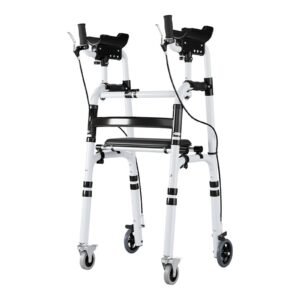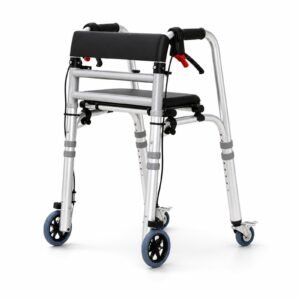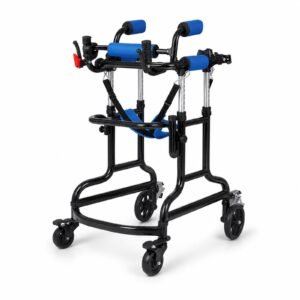
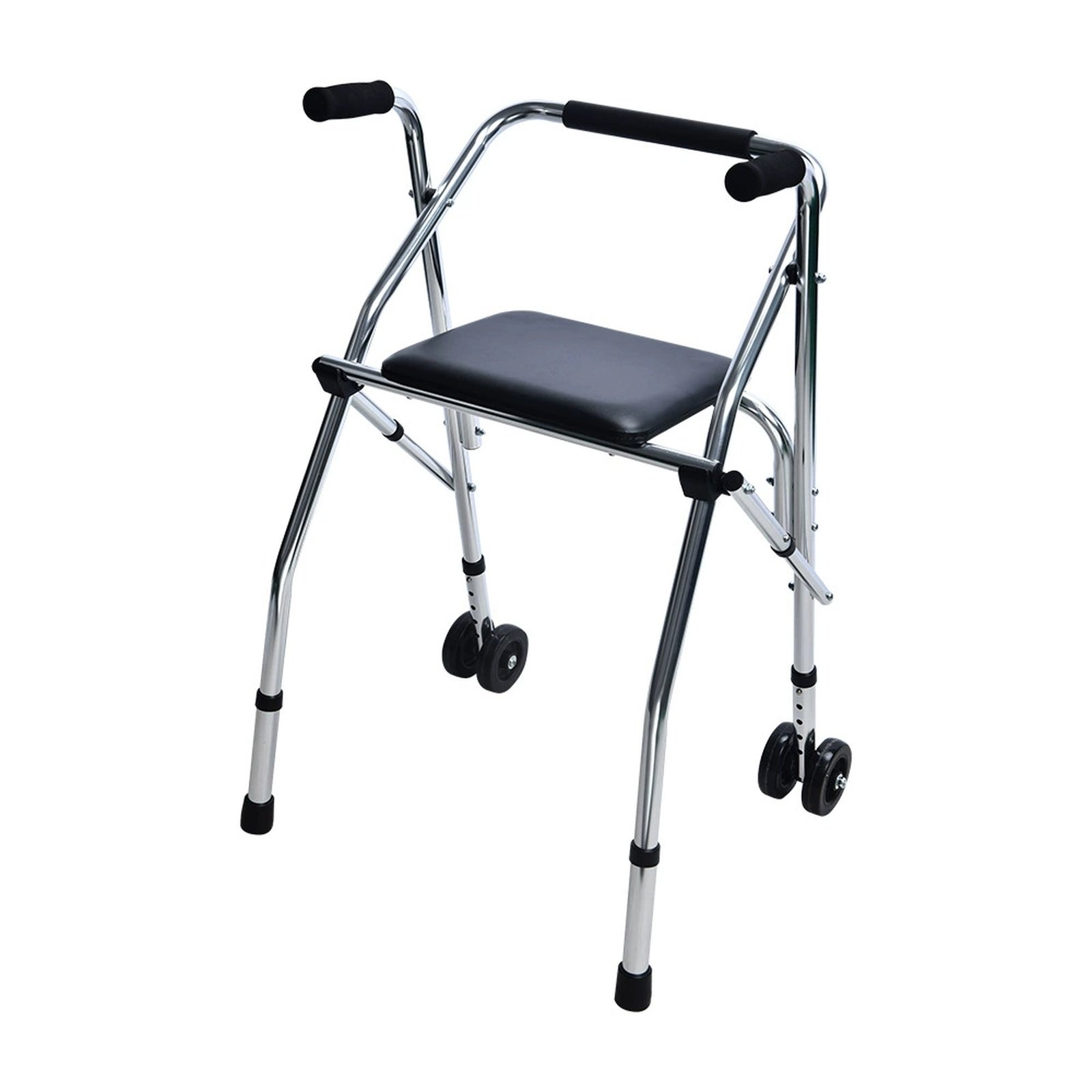
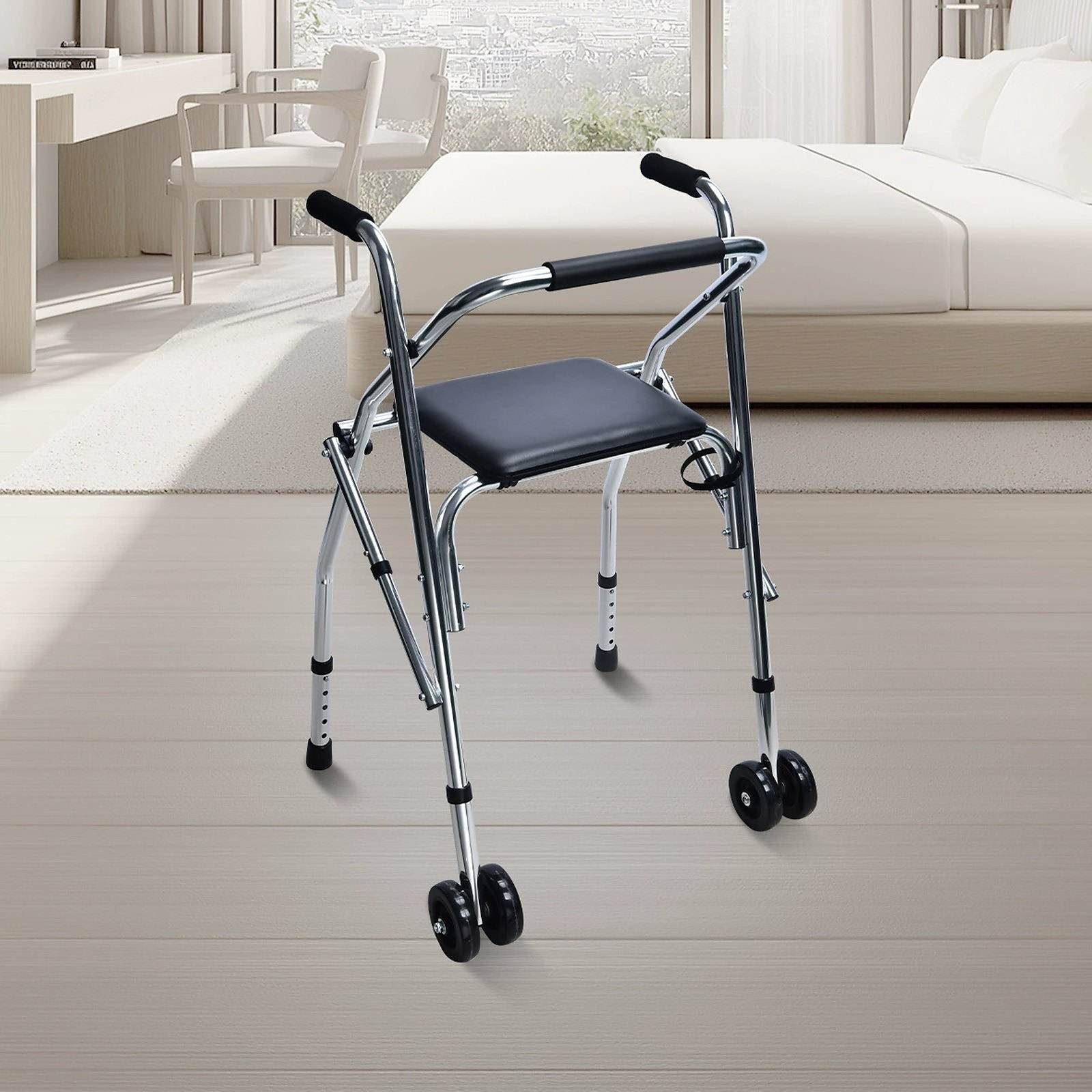
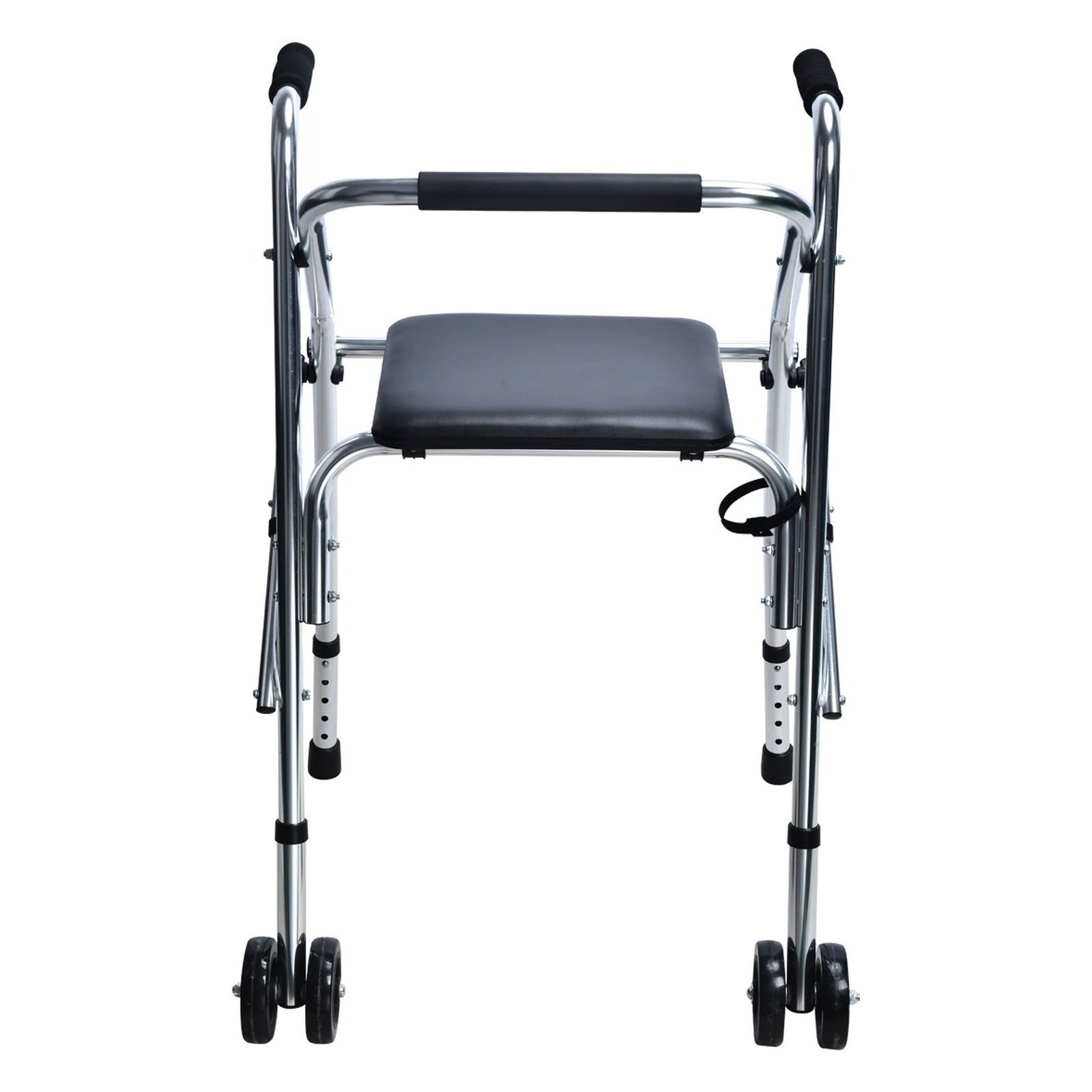
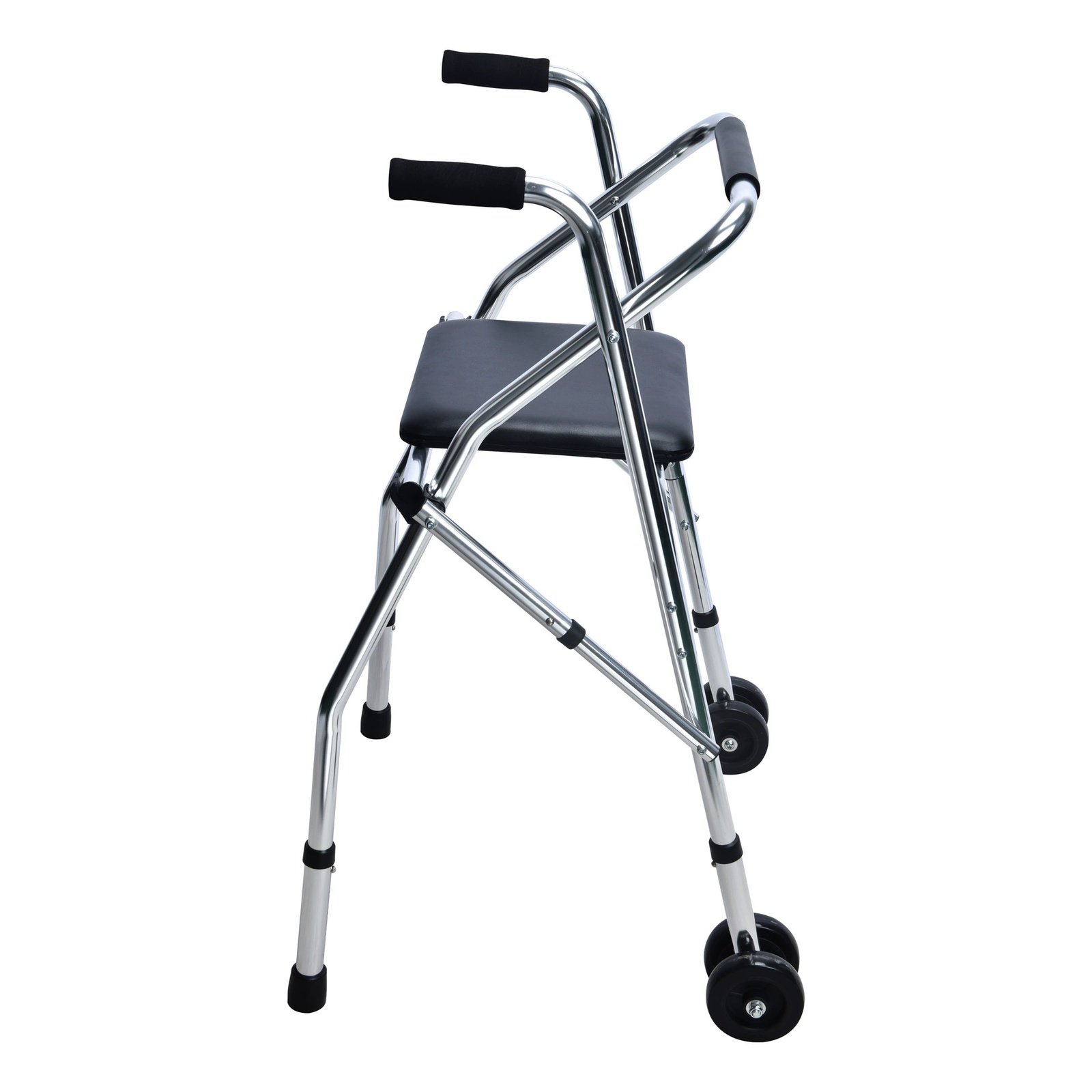
The Home Folding Rollator is a mobility aid designed for individuals with unsteady gait, older adults, and those undergoing rehabilitation training. It supports walking, balance practice, and everyday outings. Constructed from aluminum alloy, the rollator offers a stable frame while remaining lightweight enough for routine handling. Its folding structure allows for compact storage and transport when not in use. Users should verify that the device is placed on level ground, all connections are secure, and adjustment mechanisms are properly engaged before each use. Adequate space should be reserved for sitting down, standing up, turning, and moving around. The product suits home environments, elderly care facilities, rehabilitation spaces, and similar public settings. Cleaning is straightforward—wipe contact surfaces with a mild method and keep them dry. This rollator provides practical support but does not replace professional medical advice or hands-on care from trained staff.
The walker and rollator VT4-WR-046 is designed for practical daily care. It balances user support, operating convenience and routine caregiver efficiency. The configuration and materials shown in the specification table are matched to this product; select the final size and configuration for the user’s body dimensions, mobility, care needs and available space.
Before first use, place the product on a suitable, level surface and check every connection, lock, adjustment point, folding joint and brake or support component. The user should approach or transfer slowly while maintaining a stable posture. A caregiver should assist whenever balance, strength or coordination is limited. This product is a daily-care aid and does not replace medical assessment or a prescribed rehabilitation plan.
For ongoing use, keep contact surfaces clean and dry, inspect fasteners and moving parts at regular intervals, and stop using the product if any component becomes loose, damaged or unstable. Packaging dimensions and weights in the table are supplied for storage, shipping and receiving planning; actual batch labels and the selected configuration take precedence.
| Specification | Details |
|---|---|
| Product Name | Home Folding Rollator |
| Product Category | Walker and Rollator |
| Load Capacity | 125kg |
| Material | Aluminum Alloy |
| Carton Quantity | 1/ |
| Package Weight | 9000 g( 9 kg) |
This product is intended for walking support, gait training, and daily outings. It can be configured for use in homes, elderly care institutions, rehabilitation centers, nursing spaces, or appropriate public facilities. For individuals with unsteady gait, elderly users, and those in rehabilitation, the decision to use the product independently or with caregiver assistance should be based on physical condition. Height, angle, position, or support method adjustments should be completed before first use. The usage area should be flat, dry, and unobstructed, with items that could interfere with operation or passage removed. Extra attention to slip resistance and stability is required in bathrooms, restrooms, or when moving between locations. As a walking aid, this product provides daily assistance and support only and does not replace medical diagnosis, professional rehabilitation programs, or procedures that must be performed by medical personnel.
It is designed for individuals with unsteady gait, older adults, and people undergoing rehabilitation training. The final decision should consider the user’s body size, physical strength, balance ability, and whether a caregiver is available.
Measure the user’s height and arm length, then compare them with the rollator’s handlebar adjustment range and overall width. Also measure doorways, hallways, bathroom entrances, and storage spaces to ensure the rollator can pass through and fit when folded.
It depends on the individual’s balance and coordination. Those with significant instability or low endurance should have a family member or caregiver assist them during use, especially when sitting down, standing up, or navigating tight spaces.
Place the rollator on a flat, level surface. Verify that all folding locks are engaged, the handlebar height is set correctly, the wheels roll freely, and the brake mechanisms—if present—function properly. Ensure there is enough clearance around the user for turning and stepping.
The frame is made of aluminum alloy. Wipe all contact surfaces with a soft, damp cloth using mild soap if needed, then dry thoroughly. Do not use abrasive pads, bleach, or acidic cleaners. Periodically inspect the folding hinges, locking pins, and screws for looseness or wear, and tighten or replace parts as necessary.
Compare the rollator’s weight capacity, seat height if applicable, handlebar adjustment range, wheel size, and folded dimensions against the user’s body measurements and the intended use environment. For home use, prioritize narrow widths for doorways; for outdoor trips, consider wheel durability and frame stability.