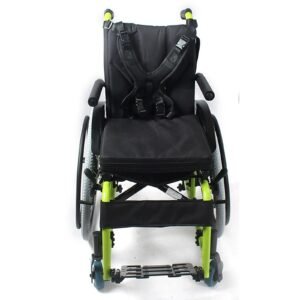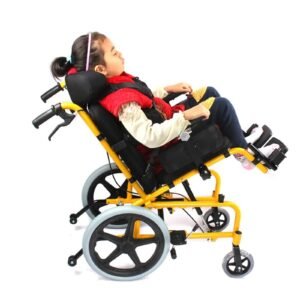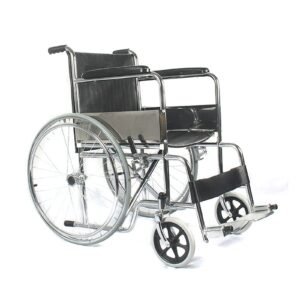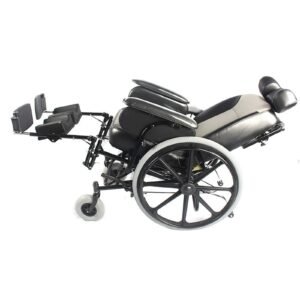


Designed for young users with limited mobility, this manual wheelchair supports indoor and outdoor movement, caregiver-assisted travel, and short-distance transfers. Its aluminum frame keeps the chair light yet sturdy, while adjustable positioning helps children sit naturally and stay stable. Suitable for homes, care facilities, and rehabilitation spaces, it requires simple maintenance—wipe surfaces, keep them dry, and check moving parts regularly. Always confirm the chair is level and all locks are engaged before use, and allow enough room for safe transfers.
The manual wheelchair VT6-MW-020 is designed for practical daily care. It balances user support, operating convenience and routine caregiver efficiency. The configuration and materials shown in the specification table are matched to this product; select the final size and configuration for the user’s body dimensions, mobility, care needs and available space.
Before first use, place the product on a suitable, level surface and check every connection, lock, adjustment point, folding joint and brake or support component. The user should approach or transfer slowly while maintaining a stable posture. A caregiver should assist whenever balance, strength or coordination is limited. This product is a daily-care aid and does not replace medical assessment or a prescribed rehabilitation plan.
For ongoing use, keep contact surfaces clean and dry, inspect fasteners and moving parts at regular intervals, and stop using the product if any component becomes loose, damaged or unstable. Packaging dimensions and weights in the table are supplied for storage, shipping and receiving planning; actual batch labels and the selected configuration take precedence.
| Specification | Details |
|---|---|
| Product Name | Manual Wheelchair for Disabled Children |
| Product Category | Manual Wheelchair |
| Overall Height(Specification1) | 47cm |
| Overall Height(Specification2) | 108cm |
| Overall Height(Specification3) | 47m |
| Overall Height(Specification4) | 47m |
| Overall Length(Specification1) | 128m |
| Overall Length(Specification2) | 135cm |
| Overall Length(Specification3) | 115cm |
| Overall Length(Specification4) | 110cm |
| Overall Width(Specification1) | 38cm |
| Overall Width(Specification2) | 38m |
| Overall Width(Specification3) | 55cm |
| Overall Width(Specification4) | 60cm |
| Material | Aluminum Alloy |
| Carton Quantity | 1 |
| Package Dimensions | 135 × 35 × 42 cm |
| Package Weight | 19 g( 0.019 kg) |
| Package Dimensions2 | 135 × 35 × 42 cm |
| Package Weight2 | 19 g( 0.019 kg) |
The Vatocare Manual Wheelchair for Children with Disabilities is suitable for indoor and outdoor mobility, accompanied travel, and short-distance transfers. It can be configured as needed in homes, elderly care institutions, rehabilitation centers, nursing spaces, or corresponding public facilities. For individuals with limited mobility, the elderly, and those in rehabilitation, the decision to use the wheelchair independently or with caregiver assistance should be based on physical condition, and height, angle, position, or support adjustments should be completed before first use. The usage area should be flat, dry, and unobstructed, with items that could interfere with operation or passage kept clear of the surroundings; special attention should be paid to slip resistance and stability in bathroom, toilet, or transfer scenarios. As a manual wheelchair, this product provides daily assistance and support and cannot replace medical diagnosis, professional rehabilitation programs, or procedures that must be performed by healthcare personnel.
It is made for children with limited mobility, but the exact fit depends on the child’s height, weight, and seated posture. Measure the child first and compare with the chair’s seat dimensions and maximum load.
Only if the child has enough arm strength and upper body control. Many young users need a caregiver to push and steer. If the child tires quickly or has poor balance, always have an adult assist.
Measure the narrowest door frame or hallway where the chair will pass. Then check the wheelchair’s overall width. Leave at least 2–3 centimeters of clearance on each side to avoid scraping walls or getting stuck.
Make sure the ground is level, the brakes are locked, and all folding or adjusting parts are firmly secured. Push down gently on the seat to confirm it is stable, then help the child sit slowly.
It works best on flat, dry surfaces like sidewalks, clinic floors, and paved paths. Avoid gravel, mud, or steep slopes, as these can make steering difficult and increase the risk of tipping.