
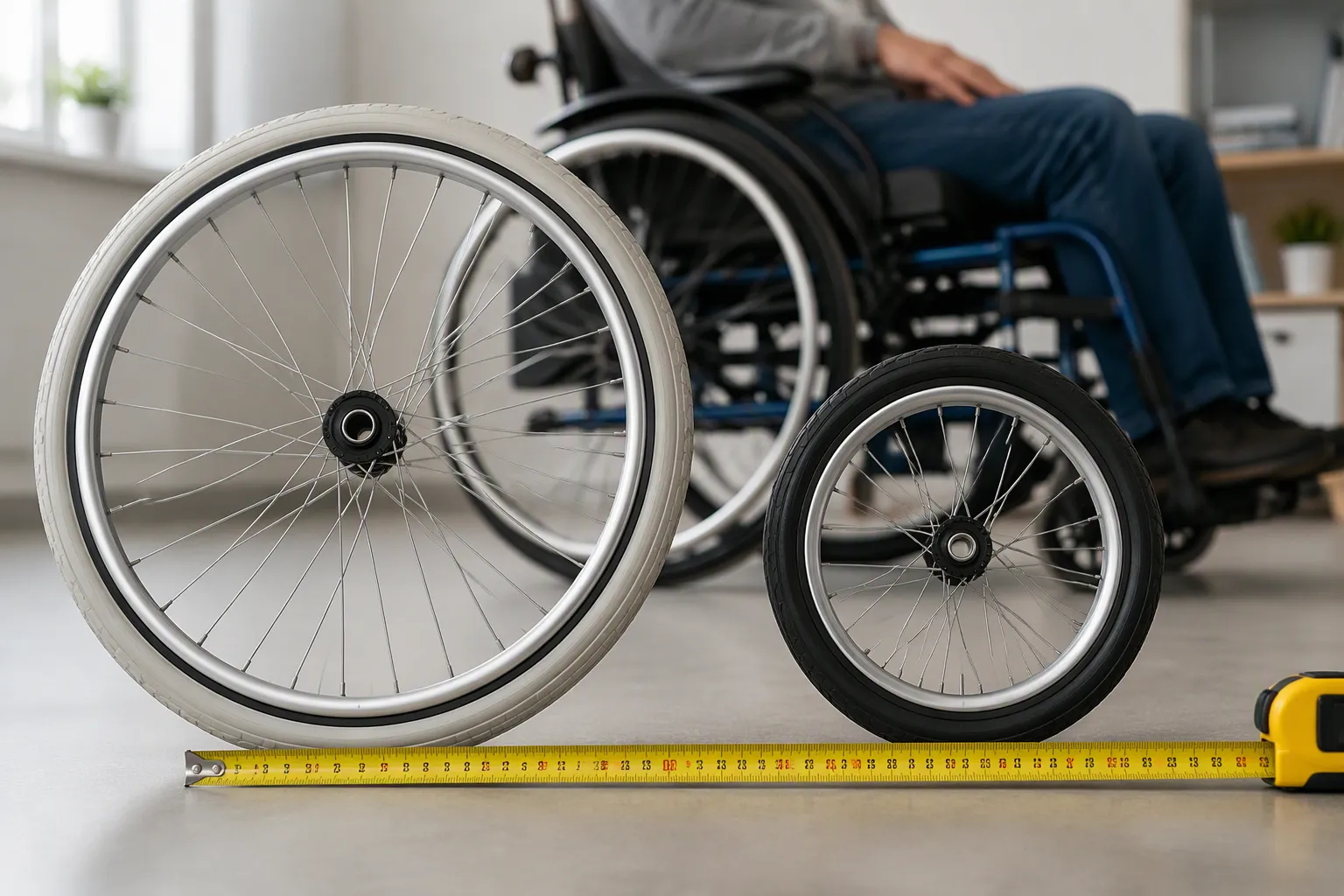
To answer what wheelchair tire sizes are common, manufacturers equip most wheelchairs with three standard diameters: 24 inches, 25 inches, and 26 inches. Corresponding front casters typically measure 6 inches, 7 inches, or 8 inches. The 24″ wheel functions as the default rear size for approximately 90% of adult manual chairs. Selecting a smaller rear wheel substantially alters maneuverability, speed, stability, and terrain handling. Smaller options usually measure 22 inches or 20 inches. These sizes predominantly serve pediatric users, smaller adults, and specific sport or specialty chairs.
What Wheelchair Tire Sizes Are Common
Wheelchair tire sizes follow a small set of industry standards. Manufacturers build most adult manual chairs around a 24-inch rear wheel and a 6-inch or 8-inch front caster. Understanding what wheelchair tire sizes are common helps a user match a chair to daily needs. The sections below break down each standard diameter and the tire options available within it.
Common Rear Wheel Sizes
Rear wheel diameter drives speed, rolling distance, and seat height. Adult manual chairs typically use 20″ to 27″ wheels, and each diameter serves a distinct purpose. A buyer should weigh these options against body size, upper body strength, and daily environment.
24-Inch Rear Wheels
The 24″ wheel is the industry default. Roughly 90% of adult manual wheelchairs ship with this diameter. It offers a middle ground between rolling distance and ease of acceleration. Users who want a predictable, widely supported platform choose this size. Replacement parts, tires, and rims for the 24″ wheel are the easiest to find. A 24″ wheel suits most adults of average height and build.
25-Inch Rear Wheels
The 25″ wheel is a popular upgrade for full-time users. It provides the best balance between long rolling distance and quick acceleration. Many active adults prefer this size for everyday propulsion. The extra inch increases travel per push without a large jump in effort. A 25″ wheel also raises the rear axle slightly, which changes the chair’s center of gravity. Users who want a bit more speed on flat ground often make this switch.
26-Inch Rear Wheels
The 26″ wheel appears on sport chairs and some everyday models. A 25″ or 26″ wheel gives more travel per push, which improves speed on the court. Basketball and racing athletes often select this diameter for that reason. The larger wheel also rolls over small obstacles with less resistance. However, a 26″ wheel requires more effort to start from a standstill. It also raises seat height, which can affect transfers and foot placement.
22-Inch and 20-Inch Rear Wheels
Smaller rear wheels serve pediatric users, smaller adults, and specialty chairs. A 20-inch wheel is easier to start and often used by children or users with less upper body strength. These sizes lower the seat and shorten the reach to the push rim. Sport chairs for younger athletes and some court chairs also use them. The trade-off is lower top speed and more pushes per distance.
Common Caster Sizes
Front casters affect turning precision and ride smoothness. Common wheelchair caster sizes range from 3 to 8 inches, though adult chairs cluster around 5 to 8 inches. The table below compares the main categories.
| Caster Size Category | Diameter Range | Maneuverability | Ride Quality | Commonality |
|---|---|---|---|---|
| Large casters | 6–8 inches | Larger turning radius | Rolls over cracks, thresholds, and grass more easily without getting stuck; better for outdoor use | 8-inch casters are often standard for general indoor/outdoor use |
| Small casters | 3–5 inches | Greater maneuverability in tight spaces; quicker, more responsive feel | More likely to get caught on small obstacles; preferred for indoor use and active users | 4- or 5-inch casters are common on active chairs |
| Most common overall | 5–8 inches | — | — | Most common caster sizes are between 5 and 8 inches in diameter |
6-Inch Casters
The 6-inch caster is a common middle option. It turns sharply indoors and still handles small thresholds. Many active chairs use this size for a responsive feel. A 6-inch caster balances agility with enough diameter to clear typical door tracks.
7-Inch Casters
The 7-inch caster is less common but fills a useful gap. It offers a slightly smoother roll than a 6-inch caster on uneven tile or carpet. Users who split time between indoors and smooth outdoors often find this size practical. It keeps a relatively tight turning radius while improving obstacle clearance.
8-Inch Casters
The 8-inch caster is the standard for general indoor and outdoor use. It rolls over thresholds, uneven tiles, carpets, and rugs more smoothly. It also provides better stability at speed. The trade-off is a larger turning radius, which can feel less agile in tight bathrooms or kitchens. A larger or smaller caster changes the chair’s overall balance, so users should pair caster size with rear wheel diameter.
Tire Types Within Each Size
Every rear wheel and caster diameter comes with a choice of tire construction. The right pick depends on maintenance tolerance, comfort needs, and terrain. The table below summarizes the three main types.
| Tire Type | Durability | Comfort | Maintenance |
|---|---|---|---|
| Solid | Made of durable rubber or polyurethane; will not go flat | Firm ride that can feel bumpy | Low maintenance; no refilling needed |
| Pneumatic | Air-filled; can puncture or go flat | Excellent shock absorption and smooth ride, especially on uneven or rough terrain | Requires regular air pressure checks and puncture repair |
| Semi-Pneumatic (Foam-Filled) | Hollow core or foam inserts; never goes flat | Provides some cushioning benefits of pneumatic tires | No constant air pressure checks needed |
Solid Tires
Solid tires use durable rubber or polyurethane. They never go flat and need almost no upkeep. This makes them ideal for everyday use on smooth surfaces. The main drawback is a firm ride. A solid wheelchair tire transmits more vibration from rough ground to the frame and the user.
Pneumatic Tires
Pneumatic tires contain air and deliver the softest ride. They absorb shock well and improve traction on uneven terrain. They also roll with less resistance on rough ground. The downsides are flats and air pressure maintenance. A pneumatic wheelchair tire needs regular inflation checks and occasional puncture repair.
Hybrid and Foam-Filled Tires
Hybrid and foam-filled tires combine the best traits of the other two. A foam core or semi-pneumatic insert never goes flat. It still provides some cushioning compared to a solid tire. Users who want low maintenance and moderate comfort often choose this type. These tires suit wheelchair wheels used on mixed indoor and outdoor routes.
What Counts as a Smaller Rear Wheel
A smaller rear wheel falls below the 24-inch industry standard. Most manufacturers classify 22-inch, 20-inch, and 16-inch diameters as reduced sizes. Each step down changes how the wheelchair performs and who can use it effectively.
Size Ranges That Qualify
Rear wheel diameter determines seat height, rolling distance, and overall chair geometry. Three size ranges qualify as smaller options for manual wheelchairs.
22-Inch Wheels
The 22-inch wheel is the mildest step down from the standard 24-inch size. It lowers seat height by roughly one inch. Users who need a slightly shorter reach to the push rim often select this diameter. The 22-inch wheel still accepts most tire types and remains compatible with many standard frames.
20-Inch Wheels
The 20-inch wheel serves smaller adults and older children. It reduces seat height by approximately two inches compared to a 24-inch wheel. This size makes transfers easier for users with limited upper body strength. A 20-inch wheel also shortens the turning radius, which helps in tight indoor spaces.
16-Inch and Smaller Wheels
Wheels measuring 16 inches or less appear almost exclusively on pediatric chairs and some specialty models. These sizes suit young children who cannot reach a standard push rim. They also appear on certain sport chairs designed for quick direction changes. A 16-inch wheel limits top speed significantly, so users rarely choose it for long-distance travel.
Why Someone Chooses a Smaller Rear Wheel
A smaller wheel solves specific fit and function problems. The choice depends on body dimensions, age, and intended use.
Seat Height and Foot Reach
A smaller wheel lowers the seat and brings the floor closer to the user’s feet. This helps people with shorter legs or limited hip mobility. A lower seat also makes getting in and out of the chair safer. Users who place their feet flat on the ground gain stability during transfers.
Pediatric and Small-Frame Users
Children need chairs scaled to their bodies. A smaller wheel matches a child’s arm length and seat-to-floor height. As the child grows, caregivers often move up to a larger diameter. Small-frame adults with narrow shoulders also benefit from reduced wheel sizes.
Sport and Specialty Chairs
Athletes in basketball and tennis often use smaller wheels for quicker acceleration. A smaller wheel allows faster direction changes on the court. Some specialty chairs also pair smaller wheels with smaller casters to lower the center of gravity. This combination improves stability during sharp turns.
How a Smaller Wheel Diameter Changes Maneuverability
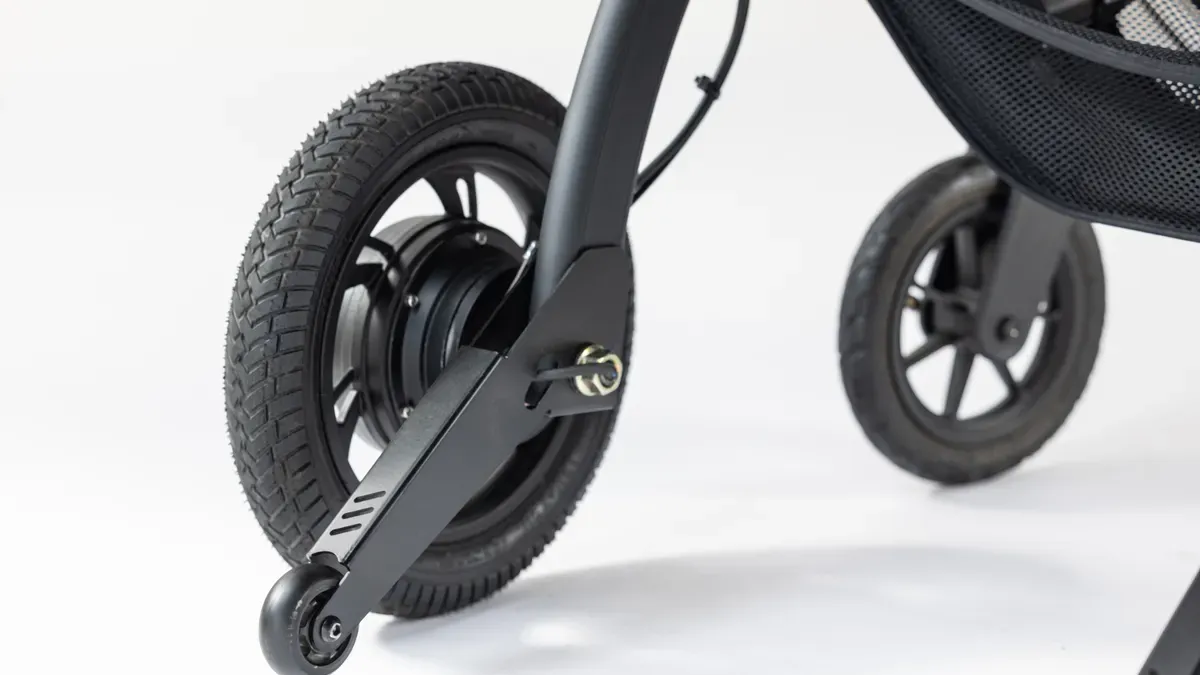
A smaller rear wheel transforms how a wheelchair responds to steering input. The reduced diameter shortens the turning circle and brings the push rim closer to the user’s hands. These changes help in tight indoor spaces. They also introduce new challenges that users must understand before making a switch.
Tighter Turns Indoors
Indoor navigation demands precision. A wheelchair with smaller rear wheels turns more sharply than one with standard 24-inch wheels. The shorter wheelbase geometry allows the chair to pivot within a smaller footprint. This advantage becomes clear in homes with narrow passages and compact rooms.
Navigating Doorways and Hallways
Standard doorways measure 32 to 36 inches wide. A wheelchair with a smaller wheel diameter clears these openings with less back-and-forth adjustment. The user can approach at an angle and correct course quickly. Hallways with tight corners also become easier to manage. A shorter turning radius means fewer multi-point turns to change direction. Users who live in older homes with narrow corridors notice this benefit immediately.
Bathroom and Kitchen Access
Bathrooms rank among the tightest spaces in any home. A smaller wheelchair wheel allows the user to turn around near a sink or toilet without striking fixtures. Kitchen work zones also benefit from improved agility. The user can pivot between a refrigerator, counter, and table with fewer adjustments. These gains matter most for people who live independently and handle daily tasks without assistance.
Easier Hand-to-Rim Positioning
Push rim access affects propulsion efficiency and comfort. A smaller rear wheel lowers the seat height and shortens the distance from the shoulder to the rim. This geometry change reduces the effort needed for each stroke. Users with shorter arms or limited shoulder mobility gain the most from this setup.
Shorter Reach to the Push Rim
A smaller rear wheel diameter lowers the seat height of the wheelchair. This lower seat position improves the user’s ability to comfortably reach the hand rims. Enhanced hand-to-rim positioning allows for more natural arm movement during propulsion. The user does not need to extend the arms as far with each push. This reduced reach decreases strain on the shoulders and wrists over time. The guide also notes that such a setup may improve stability and propulsion mechanics overall.
Quicker Direction Changes
A shorter reach to the rim translates into faster hand placement. The user can grip and release the rim more rapidly during turns. This speed helps in crowded spaces where sudden course corrections are necessary. A wheelchair wheel with a smaller diameter also carries less rotational inertia. The user can reverse direction or spin in place with less physical effort.
Trade-Offs in Tight Spaces
Smaller wheels improve agility but introduce new stability concerns. The lower seat height and shorter wheelbase shift the chair’s balance point. Users must learn to manage these changes to avoid accidents. Awareness of these trade-offs helps users decide whether a smaller size suits their needs.
Rearward Tipping Risk
A smaller rear wheel moves the axle forward relative to the user’s center of gravity. This shift increases the risk of tipping backward. The user must lean forward more deliberately when accelerating or climbing slopes. Anti-tip bars can reduce this risk but add weight and bulk. Users who frequently pop wheelies or navigate curbs should practice caution with smaller wheels.
Caster Flutter and Small Obstacles
Smaller rear wheels often pair with smaller front casters. A smaller caster rolls over cracks and thresholds with less smoothness. The caster may flutter or vibrate at higher speeds on rough surfaces. Small obstacles like door tracks and pebbles can stop the caster suddenly. This sudden stop may pitch the user forward. Tire selection and caster size adjustments can reduce these problems. Users who travel on uneven sidewalks should weigh this trade-off carefully.
How a Smaller Wheel Diameter Affects Speed and Propulsion
A smaller wheel diameter changes the fundamental physics of wheelchair propulsion. Each complete push stroke covers less distance. The user must push more frequently to maintain the same forward speed. These changes affect comfort, endurance, and overall propulsion efficiency.
Distance Covered Per Push
The circumference of a wheel determines the travel distance per full rotation. A 20-inch wheel covers roughly twenty percent less ground than a 24-inch wheel per revolution. This reduction forces the user to increase stroke frequency significantly to travel the same distance.
Lower Top Speed on Flat Ground
Smaller rear wheels limit the maximum achievable speed on flat surfaces. The user cannot generate the same linear velocity with a reduced diameter. This limitation matters less for indoor users who navigate short distances. Outdoor commuters may find the lower top speed frustrating on open pathways or long straight sections.
Rolling Resistance Differences
A smaller diameter wheel experiences higher rolling resistance on soft surfaces. The contact patch geometry changes with wheel size. Smaller wheels deform more against carpet or grass. This deformation increases energy loss per stroke. The tire type also plays a role in resistance levels. A pneumatic tire reduces rolling resistance compared to a solid tire. The combination of small diameter and solid construction produces the highest rolling resistance.
Effort Per Stroke
Propulsion effort depends on the mechanical advantage of the push rim relative to the wheel. A smaller wheel reduces this mechanical advantage. The user must apply more force through the push rim to achieve the same acceleration.
Higher Cadence With Smaller Wheels
A user of a smaller wheelchair wheel must push at a faster rate. This higher cadence increases cardiovascular demand. The arms move through a shorter range of motion more times per minute. Users with good endurance adapt well to this change. Those with limited stamina may fatigue quickly during longer trips.
Shoulder and Wrist Strain
Frequent pushing at high cadence places repetitive stress on the shoulder and wrist joints. The shorter stroke length does not allow full arm extension. This partial range of motion can create muscle imbalances over time. Proper propulsion technique becomes critical with smaller wheels. Users should monitor joint discomfort and adjust their setup accordingly.
Who Feels the Difference Most
The impact of wheel size on propulsion varies by use case. Different users prioritize speed, endurance, or maneuverability.
Everyday Commuters
Daily wheelchair users who travel moderate distances feel the speed reduction most acutely. A commuter covers miles of sidewalk and hallway each day. The extra pushes per mile add cumulative fatigue. These users often prefer 24-inch or 25-inch wheels for better rolling efficiency.
Sports and Racing Users
Athletes face a different calculation. A basketball player values quick acceleration and tight turns more than top speed. A racing wheelchair user maximizes speed above all else. Racing chairs use large diameter wheels and specialized hand rims for maximum distance per push. Sport users choose wheel size based on their activity’s specific demands. Court sports favor smaller wheels for agility. Track racing demands the largest possible diameter.
How a Smaller Wheel Diameter Changes Stability
Reducing wheel diameter shifts the chair’s center of gravity and alters stability across several axes. The user experiences a lower seat position, a changed balance point, and the need for frame geometry adjustments. Each element affects safety and control differently.
Lower Seat Height Effects
A smaller diameter lowers the seat relative to the ground. This change brings the user’s center of mass closer to the floor. The wheelchair becomes more stable during forward motion. It requires different handling during transfers and stops.
Easier Transfers
A lower seat height reduces the vertical distance a user must travel when moving from the chair to a bed or sofa. The transfer requires less lifting strength. It lowers fall risk. Users with limited hip or core strength benefit significantly from this setup. The lower position also allows the user to place both feet solidly on the ground during the transfer motion.
Foot Placement on the Ground
A seat closer to the ground lets the user rest both feet flat on the floor. This foot placement provides a stable base for leaning forward or reaching sideways. The user can brace against the floor to reposition the chair in tight spaces. This stability advantage matters most during one-handed tasks like opening a door.
Changes in Balance Point
The balance point shifts forward when the rear wheel diameter decreases. The axle moves closer to the user’s center of gravity. This change affects how the chair responds to acceleration and slope negotiation.
Rearward Tip Risk
A smaller rear wheel position brings the rear axle forward. This axle shift reduces the safety margin against tipping backward. The user must lean forward more deliberately when starting from a stop or climbing a ramp. The tire grip on the surface also influences how much force the user can apply. Anti-tip bars become a wise precaution for inexperienced users.
Any user who switches to a smaller diameter should practice balance awareness on level ground before attempting slopes or curbs. A forward lean during acceleration prevents most accidental tip-overs.
Wheelie and Curb Handling
The shorter wheelbase makes wheelies more responsive but less forgiving. The user can tip the wheelchair back with less effort. Holding the balance point requires finer control. The smaller wheelchair wheel clears the curb height with less margin. Curb pops demand precise timing as a result. Users who regularly navigate curbs should practice on low obstacles first.
Frame Geometry Adjustments
A change in rear wheel size often requires compensating front-end adjustments. The chair’s handling depends on the relationship between front caster and rear axle.
Caster Angle and Trail
The smaller rear wheel tilts the chair forward slightly. This tilt alters the caster angle and the trail distance. A misaligned caster causes flutter or wobble at speed. Changing caster size or adjusting the fork angle restores proper geometry. Users should check that the front casters operate smoothly after any rear wheel swap. A mismatch between tire types on front and rear also affects steering response.
Axle Plate and Center-of-Gravity Tuning
The axle plate position determines the chair’s fore-aft balance. Moving the axle plate forward or backward tunes the center of gravity. A specialist can adjust the plate to compensate for the new rear wheel position. This tuning optimizes stability without sacrificing maneuverability. Users who switch wheel sizes should consult a technician to reset the axle plate for the new diameter.
Terrain and Daily Use With Smaller Wheelchair Wheels
Terrain determines how well a wheelchair performs with reduced rear wheel diameters. Smaller wheels behave differently on carpet, tile, sidewalks, and grass. Users must match wheel size to their daily environment for the best results.
Indoor and Smooth Surfaces
Indoor surfaces favor the agility of smaller wheels. The shorter turning radius helps users navigate furniture and tight corners. Performance varies across common flooring types.
Carpet and Tile
Carpet creates higher rolling resistance than hard flooring. A smaller wheel sinks slightly into plush carpet and demands more push effort. Low-pile carpet and tile produce less drag. A solid tire works well on tile because it rolls smoothly and needs no inflation. Users who spend most of their day indoors often accept the higher carpet resistance in exchange for better maneuverability.
Ramps and Thresholds
Smaller wheels climb ramps with more effort than larger wheels. The reduced diameter offers less leverage against gravity. Thresholds and door tracks can also stop a small caster suddenly. Users should approach these obstacles at a slight angle and maintain momentum. Proper technique reduces the risk of forward tipping.
Outdoor and Rough Surfaces
Outdoor terrain challenges smaller wheelchair wheels. Rough ground increases vibration and rolling resistance. Tire selection becomes critical for comfort and safety.
Sidewalks and Cracks
Sidewalks contain cracks, expansion joints, and uneven pavement. A smaller wheel drops into these gaps more easily. The impact transmits through the frame to the user. A pneumatic tire absorbs some of this shock. Severely rough surfaces also shorten bearing life and accelerate wear on wheelchair casters.
Grass, Gravel, and Dirt
Soft surfaces demand more propulsion effort from any wheel. A smaller wheel sinks deeper into grass and gravel. Wider tires float better on these surfaces. A knobby tire improves traction on dirt and mud. However, knobby tread increases rolling resistance on pavement. Users who split time between surfaces often keep two wheel sets.
Matching Wheel Size to Lifestyle
Wheel size should reflect how a person uses the chair each day. The right choice balances indoor agility against outdoor capability.
Daily Home and Community Use
Users who stay mostly indoors or on smooth pavement benefit from smaller wheels. The tighter turning radius helps in kitchens and bathrooms. Community use on sidewalks and in stores also works well with 22-inch or 20-inch wheels. A city tire with low rolling resistance suits this routine.
Travel and Transport
Smaller wheels make transport easier. The reduced diameter and lighter weight simplify loading into a vehicle. Travelers who navigate airports and hotels appreciate the compact size. Users should consider a second set of wheels for varied terrain. Matching wheel size to daily activities and environment remains a balancing act involving physical dimensions, mobility, and personal preference.
How to Choose the Right Rear Wheel Size
Start With Your Body and Chair Fit
The correct rear wheel position begins with body measurements and chair geometry. Body dimensions determine seat height and propulsion comfort. A user cannot ignore these physical constraints during selection.
Seat-to-Floor Height
Seat-to-floor height depends directly on rear wheel diameter. A smaller wheel lowers the seat. This change helps users with shorter legs. Users who need feet flat on the ground for transfers benefit most. A proper seat height allows the user to reach the floor comfortably. This position improves safety and independence during daily activities.
Arm and Shoulder Comfort
Arm reach to the push rim affects propulsion efficiency. A smaller wheelchair wheel brings the rim closer. Users with shorter arms or limited shoulder mobility find this position more natural. The reduced reach decreases shoulder strain over time. Proper ergonomics prevent long-term joint damage. Users should check that elbows stay slightly bent at the top of each push.
Match the Wheel to Your Routine
Daily activities should guide wheel size selection. Users must consider their primary environments and movement needs.
Indoor Versus Outdoor Balance
Indoor users prioritize tight turns. Outdoor users need smooth rolling over uneven surfaces. The balance between these environments determines the ideal wheel size.
- Larger rear wheels and pneumatic tires improve outdoor performance and shock absorption.
- Choose configurations that balance indoor maneuverability with outdoor responsiveness.
- Large wheels offer higher speed and propulsion efficiency.
- Small wheels excel at maneuvering through tight turns.
Users who split time equally often choose a 24-inch or 25-inch wheel. This size offers a fair compromise. Indoor-dominant users can drop to 22-inch wheels without major drawbacks. Outdoor-dominant users should stick with 25-inch or 26-inch wheels for better rolling efficiency.
Speed Versus Control Needs
Speed and control create a direct trade-off. Larger wheels deliver more distance per push. Smaller wheels provide quicker direction changes. Racing athletes choose large diameters. Basketball players prefer smaller wheels for court agility. Daily commuters need a mid-range option. Users must weigh their priority before selecting a size.
Talk to a Wheelchair Specialist
Professional guidance prevents costly mistakes. A specialist evaluates body fit, lifestyle, and chair geometry together.
Trials and Adjustments
Users should test multiple sizes before purchasing. A specialist sets up trial wheels on the user’s chair. The user pushes through different environments like hallways and sidewalks. This testing reveals comfort and performance differences. Adjustments to axle plate position and caster size optimize handling for the new diameter.
Insurance and Replacement Parts
Insurance coverage varies by region and policy. A specialist helps navigate these requirements. Replacement part availability also matters. Standard sizes like 24-inch wheels offer easier part access. Users who choose unusual tire sizes may face supply delays. A specialist explains these practical concerns before the user commits to a change.
The correct wheel choice comes from evaluating body fit, daily routine, and professional advice. Each factor matters equally in the decision.
Manufacturers build most adult wheelchairs around 24-inch, 25-inch, or 26-inch rear wheels, with 22-inch and 20-inch options serving smaller users. Front casters commonly measure 6, 7, or 8 inches. A smaller rear wheel delivers tighter maneuverability, lower speed per push, higher cadence, a lower seat height, and altered stability. The ideal choice depends on body fit, daily environment, and personal goals. Readers should test sizes with a specialist before committing to a wheelchair configuration.
FAQ
What is the most common rear wheelchair tire size?
The 24-inch rear wheel is the industry standard. Manufacturers equip roughly 90% of adult manual wheelchairs with this diameter. It balances rolling distance, acceleration, and parts availability. Most users find this size predictable and easy to maintain.
What is the most common caster size?
The 8-inch caster is the standard for general indoor and outdoor use. It rolls over thresholds and uneven surfaces smoothly. Smaller casters of 4 or 5 inches appear on active chairs for tighter turning. Most adult chairs use casters between 5 and 8 inches.
Does a smaller rear wheel make a wheelchair faster?
No. A smaller rear wheel covers less ground per push. The user must push more frequently to match the speed of a 24-inch wheel. Top speed drops on flat ground. Rolling resistance also rises on soft surfaces like carpet or grass.
Can a user switch from a 24-inch wheel to a 22-inch wheel?
Yes, but the chair needs adjustment. The smaller wheel lowers seat height by about one inch. A specialist should reset the axle plate and check caster angle. The user should test the new setup before daily use.
Do smaller rear wheels improve stability?
It depends on the direction of movement. A smaller wheel lowers the seat and improves lateral stability. However, the axle shifts forward and raises rearward tipping risk. Anti-tip bars help prevent accidents during acceleration or slope climbing.
What tire type works best with smaller wheels?
Pneumatic tires absorb shock well and suit rough outdoor surfaces. Solid tires need no maintenance and work on smooth indoor floors. Foam-filled tires offer a middle ground. The right choice depends on terrain and maintenance tolerance.
Should a user choose a smaller rear wheel without professional advice?
No. Wheel size affects seat height, balance, and propulsion mechanics. A specialist evaluates body fit, daily routine, and chair geometry together. Trials with different sizes reveal comfort differences. Professional guidance prevents costly mistakes and safety risks.