
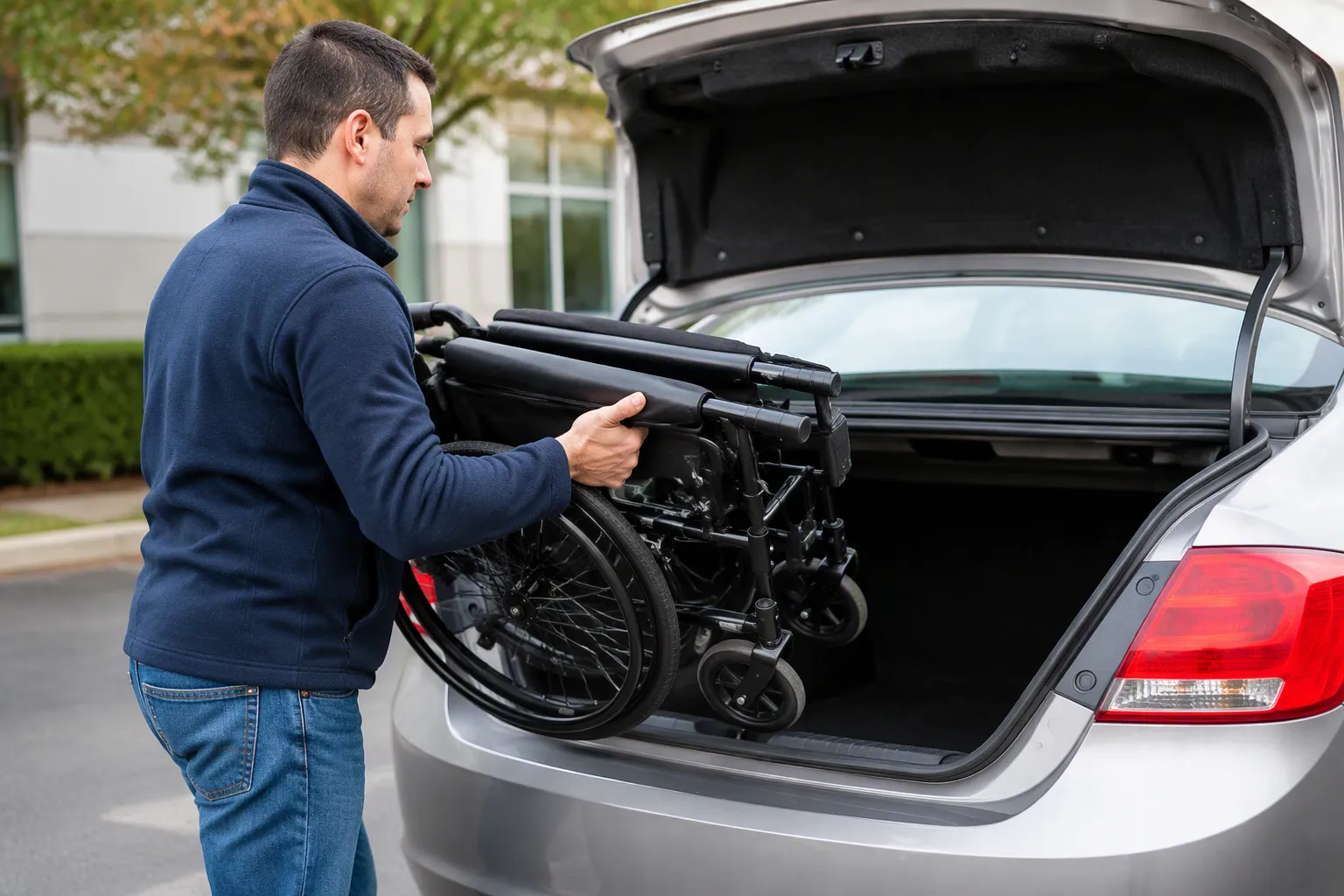
A caregiver faces a hard limit when lifting a wheelchair into a car. A wheelchair weight of 30–40 lbs is borderline, and anything above 50 lbs is unsafe for one person. A travel wheelchair at 15–25 lbs is manageable, but a standard manual wheelchair over 35 lbs becomes difficult to lift repeatedly. The actual weight feels heavier because of trunk height, bending, and twisting. Removing footrests, armrests, cushions, and anti-tip bars reduces the load.
Wheelchair Weight: The 30–40 Lb Borderline
Why 30–40 Lbs Is Borderline
What “Borderline” Means for Your Back
A 30–40 lb wheelchair weight sits in a gray zone. Many caregivers can lift this load once. The spine still absorbs a serious compression force during that single lift. The lower back muscles, spinal discs, and ligaments all share the strain. A load held away from the body multiplies that strain. The trunk lip forces the caregiver to reach forward. The arms extend. The back rounds. The discs compress. A 35 lb chair can feel like 70 lbs on the spine in this position.
Borderline means the lift is possible, not safe. A caregiver with good technique and average strength may complete the task. The same caregiver may feel a sharp pull or a dull ache afterward. That ache signals tissue stress. Repeated stress leads to injury over time. The number on the scale does not capture this risk. Body mechanics, trunk height, and the chair’s shape all change the real load on the back.
How Repetition Turns a Safe Lift into a Risky One
One lift rarely causes harm. Twenty lifts a week do. Caregivers load and unload a wheelchair many times. Each trip to a doctor, store, or family visit requires two lifts. The spine does not fully recover between these events. Cumulative load builds in the discs and muscles. A task that feels fine on Monday may cause pain by Friday.
Repetition also erodes technique. A caregiver grows tired. The hip hinge fades into a rounded back. The load drifts away from the body. Fatigue reduces the margin of safety with every lift. A 30 lb chair lifted with poor form twenty times poses more danger than a 45 lb chair lifted once with perfect form. Caregivers must count repetitions, not just pounds.
Why 50 Lbs Is the Practical Ceiling
The NIOSH Lifting Guideline in Plain English
The National Institute for Occupational Safety and Health (NIOSH) publishes a lifting equation. This equation estimates safe loads for workers. The guideline sets a recommended weight limit for most healthy adults. That limit sits near 51 lbs under ideal conditions. Ideal conditions mean a compact load, a waist-high lift, no twisting, and a firm grip. A wheelchair in a trunk meets none of these conditions.
The NIOSH limit drops fast when conditions worsen. Reaching forward lowers the limit. Twisting lowers it further. Lifting above shoulder height cuts it again. A trunk lift combines all these factors. The real safe limit for this task falls well below 50 lbs. The 50 lb mark serves as a hard ceiling, not a target. Any load above this line exceeds a caregiver’s normal lifting capacity for a trunk-height lift.
Why Trunk Height Changes the Math
Trunk height varies by vehicle. A sedan trunk lip sits around 28–30 inches off the ground. An SUV or hatchback opening sits higher, often 32–36 inches. A higher lip forces the caregiver to lift the chair above waist level. Shoulder muscles take over from the legs. The arms extend further from the torso. The load’s leverage on the spine increases.
A low trunk creates a different problem. The caregiver must bend deeper to clear the lip. The hips hinge past 90 degrees. The lower back rounds under load. Both high and low trunks punish the spine. The ideal lift height stays between knuckle and waist level. No car trunk offers this height. This mismatch explains why a 40 lb chair can overwhelm a caregiver who easily lifts 40 lb boxes at home.
Your Takeaway
One Number to Remember Before You Lift
Fifty pounds marks the practical ceiling for a solo trunk lift. Anything above this number demands a second person or a mechanical aid. A 30–40 lb wheelchair sits in the caution zone. The caregiver must assess form, repetition, and trunk height before every lift. A lighter chair reduces risk. A heavier chair raises it. The scale tells only part of the story. The back pays the full price.
Why Trunk Lifts Are Harder Than the Scale Suggests
The Bend, Twist, and Hoist Motion
How Your Spine Loads During a Trunk Lift
A trunk lift forces the spine into a compromised position. The caregiver bends forward at the hips. The arms reach toward the car. The back rounds slightly under the load. This posture compresses the spinal discs. The further the load sits from the torso, the greater the compression. A 35 lb wheelchair held at arm’s length can place over 200 lbs of force on the lower back. The spine becomes a lever. The load multiplies with every inch of reach.
Why Twisting While Holding Weight Is the Real Danger
Twisting amplifies spinal stress. A caregiver often pivots to swing the chair into the trunk. This rotation happens while the spine carries the full load. The discs face shear forces from two directions at once. Shear forces damage discs more than pure compression. A single twist under load can herniate a disc. Caregivers must move their feet instead of their spine. Pivot the whole body. Never rotate the torso while holding weight.
Trunk Height and Reach Distance
Sedan Trunks vs. SUV and Hatchback Openings
Vehicle design changes the lift difficulty. A sedan trunk lip sits low, around 28 inches. The caregiver must bend deeply to clear the lip. This deep bend rounds the lower back. An SUV or hatchback opening sits higher, around 34 inches. The caregiver must lift the chair above waist level. Shoulder muscles engage. The arms extend. The load moves further from the body. Both vehicle types create unique hazards. Neither offers an ideal lifting height.
How Lifting Above Waist Height Strains the Shoulders
Lifting above waist height shifts work to the shoulders. The deltoids and rotator cuff muscles take over. These muscles are smaller than the legs and back. They fatigue quickly. A caregiver’s strength fades with each repetition. The arms shake. The load drifts. Shoulder impingement and rotator cuff tears become real risks. The actual weight feels heavier with every inch above waist level.
The Awkward Center of Gravity
Why Wheelchairs Shift Weight Away From Your Body
A wheelchair does not behave like a compact box. The frame creates a long, irregular shape. The center of gravity sits far from the caregiver’s body. The load pulls the caregiver forward. The back must counter this pull. A folded wheelchair often weighs more on one end. The caregiver cannot balance the load easily.
How Folded Frames Create Off-Balance Loads
A folded frame traps air and creates odd shapes. The seat fabric sags. The wheels stick out. The chair shifts mid-lift. The caregiver must adjust their grip. This adjustment happens under load. The spine absorbs sudden forces. A balanced load protects the back. A wheelchair rarely offers balance. The caregiver fights the chair’s shape with every trunk lift.
Your Takeaway
Treat Every Trunk Lift as a High-Risk Move
The scale understates the danger. Bending, twisting, reaching, and awkward loads multiply the risk. A 30 lb chair can injure a back as easily as a 50 lb chair. Caregivers must respect every lift. Good form and mechanical aids reduce the danger. The spine remembers every bad lift.
Your Takeaway
Treat Every Trunk Lift as a High-Risk Move
A caregiver must treat every trunk lift as a high-risk move. The scale provides a false sense of security. A 30 lb wheelchair can injure a back just as easily as a 50 lb model. The spine does not measure pounds alone. It measures leverage, posture, and repetition. A light load held at arm’s length strains the back more than a heavy load held close. Caregivers must focus on body mechanics with every single lift.
The bend, twist, and hoist motion creates the real danger. A caregiver bends forward at the hips. The arms reach toward the trunk. The back rounds under the load. Then the caregiver twists to swing the chair into place. This combination loads the spinal discs with compression and shear forces at the same time. One wrong move can cause a herniated disc or a muscle tear. The risk multiplies with fatigue and repetition.
Trunk height adds another layer of hazard. A low sedan trunk forces a deep bend. A high SUV opening forces a lift above waist level. Both positions compromise the spine and shoulders. The caregiver cannot avoid these positions with a standard trunk. The vehicle design dictates the posture. The posture dictates the injury risk.
Caregivers must respect every lift, regardless of the weight. Good form reduces the danger. Mechanical aids eliminate it. A hitch carrier, ramp, or hoist removes the trunk lift entirely. A second person shares the load and cuts the risk in half. These solutions protect the caregiver’s back for years of continued care.
The spine remembers every bad lift. Cumulative damage builds silently over months and years. A caregiver who ignores the warning signs may face chronic pain, limited mobility, or surgery. The person receiving care depends on the caregiver’s health. Protecting the back is not optional. It is a core part of the caregiving role.
Average Wheelchair Weight by Type
The Common Types of Wheelchairs and Their Weight
The average wheelchair weight varies widely across categories. A caregiver must understand these differences before attempting any trunk lift. The common types of wheelchairs and their weight range from 15 lbs to over 400 lbs. Each design serves a different purpose. Each design also creates a different lifting challenge.
Manual Wheelchairs: 35 to 50 Lbs
A standard manual wheelchair weighs between 35 and 50 lbs. This range covers most depot-style chairs found in hospitals and clinics. The frame uses steel or aluminum. The seat and backrest add fabric and foam. The wheels, casters, and hand rims contribute significant mass. A caregiver who lifts this chair into a trunk faces a borderline load. The 35 lb end of the range challenges the back. The 50 lb end exceeds safe solo lifting limits.
These chairs fold for transport. The fold reduces width but not weight. The frame still carries the full mass. A caregiver must grip the frame and hoist the entire assembly. The wheels often catch on the trunk lip. The chair’s bulk makes the lift awkward. A manual wheelchair in this range demands respect from every caregiver.
Travel and Transport Chairs: 15 to 30 Lbs
A travel wheelchair or transport chair offers a lighter alternative. These chairs weigh between 15 and 30 lbs. The frame uses lightweight aluminum. The design eliminates heavy components. Transport chairs often lack large rear wheels. They use small casters instead. This design saves weight but limits independence for the user.
A caregiver can lift a 15 lb transport chair with relative ease. A 30 lb model still sits in the caution zone. The chair folds compactly. The lighter frame reduces spinal compression during a trunk lift. These chairs suit occasional trips and short outings. They do not replace a standard wheelchair for daily use. A caregiver who needs a manageable lift should consider this category first.
Foldable Wheelchair Frames: 15 to 35 Lbs
A foldable wheelchair frame bridges the gap between transport chairs and standard manuals. These chairs weigh between 15 and 35 lbs. The frame uses aluminum or titanium. The design prioritizes portability. A foldable wheelchair in this range offers a practical compromise. The user gains more support than a transport chair provides. The caregiver gains a lighter load than a standard manual chair.
The folding mechanism adds complexity. Hinges and cross-braces create pinch points. The frame may shift during a lift. A caregiver must secure the folded chair before hoisting. The 15 lb end of the range feels manageable. The 35 lb end approaches the borderline zone. A foldable wheelchair works well for caregivers who lift occasionally. It does not solve the problem for daily trunk lifts.
Heavy-Duty and Bariatric Chairs: 40 to 60+ Lbs
A heavy-duty wheelchair supports users with higher body weights. These chairs weigh between 40 and 60 lbs or more. The frame uses reinforced steel. The seat width increases. The wheels grow larger and stronger. Every component adds mass. A heavy-duty wheelchair exceeds the safe solo lifting limit before the caregiver adds the user’s weight.
Bariatric chairs push the range even higher. Some models exceed 60 lbs. The frame must support users over 300 lbs. The engineering demands thicker tubing and stronger welds. A caregiver cannot safely lift these chairs into a trunk alone. The risk of spinal injury rises with every pound. These chairs require mechanical aids or a second person for any trunk lift.
Electric Wheelchair Models: 50 to 400+ Lbs
An electric wheelchair changes the entire lifting equation. These chairs weigh between 50 and 400 lbs or more. The battery pack alone adds 20 to 40 lbs. The motor, frame, and seating system contribute the rest. A lightweight electric wheelchair may weigh 50 lbs. A full-size model with a heavy battery can exceed 400 lbs.
No caregiver can safely lift an electric wheelchair into a trunk. The weight exceeds human capacity. The chair does not fold into a compact shape. The center of gravity sits low and wide. A caregiver who attempts this lift risks catastrophic injury. Electric wheelchairs require ramps, hoists, or accessible vehicles. The trunk lift is not an option.
Weight Ranges That Matter for Trunk Lifting
What Counts as Lightweight, Standard, and Heavy
The wheelchair industry uses general weight categories. These categories help caregivers assess risk before a lift. The table below summarizes the ranges.
| Category | Weight Range | Trunk Lift Risk |
|---|---|---|
| Lightweight travel wheelchairs | 15–25 lbs | Low to moderate |
| Standard manual chairs | 35–50 lbs | Borderline to unsafe |
| Heavy-duty chairs | 40–60+ lbs | Unsafe for solo lift |
| Electric chairs | 50–400+ lbs | Never safe for solo lift |
Lightweight travel wheelchairs sit below 25 lbs. A caregiver can lift these chairs with proper form. Standard manual chairs occupy the borderline zone. Heavy-duty and electric models exceed safe limits. A caregiver must know these categories before attempting any lift.
How to Weigh Your Chair at Home
A caregiver can determine the weight of my wheelchair with a simple method. First, remove all detachable parts. Take off the footrests, armrests, cushion, and anti-tip bars. Second, stand on a bathroom scale alone. Record that number. Third, pick up the folded chair and stand on the scale again. The difference between the two numbers equals the chair’s weight.
This method works for chairs under 50 lbs. A caregiver who cannot lift the chair cannot weigh it this way. For heavier chairs, check the product’s weight in the owner’s manual or manufacturer website. The specification sheet lists the exact weight. A caregiver should record this number and compare it to the 50 lb ceiling. Knowledge prevents injury.
Your Takeaway
Weigh Your Chair Before You Weigh the Risk
A caregiver must know the wheelchair weight before any trunk lift. The average wheelchair weight ranges from 15 lbs to over 400 lbs. Lightweight travel wheelchairs and transport chairs offer manageable loads. Standard manual chairs sit in the borderline zone. Heavy-duty and electric models demand mechanical solutions. A caregiver who skips this step gambles with their spine. Weigh the chair first. Then decide how to lift it. The number on the scale protects the back.
How to Lighten a Foldable Wheelchair Before Lifting
A caregiver can reduce the load before every trunk lift. A foldable wheelchair offers several detachable components. Each removal cuts pounds from the total. The wheelchair’s heaviest part remains the frame and wheels. Stripping the chair takes two minutes. That effort protects the back from unnecessary strain.
Remove Footrests First
Typical Footrest Weight Savings
Footrests add 2 to 5 lbs to the total. These components hang from the front frame. They swing outward during a lift. The extra weight sits far from the caregiver’s body. This distance multiplies the load on the spine. Removing footrests before a lift eliminates this hazard. The chair becomes more compact. The caregiver gains a cleaner grip on the frame.
How to Store Them Safely in the Car
Footrests fit easily in the trunk or back seat. A caregiver should place them flat on the floor. Loose footrests slide during driving. They can damage other items or become damaged. A small canvas bag keeps them contained. The bag sits in a footwell or cargo area. This storage method prevents loss and protects the footrests from bending.
Take Off Armrests and Anti-Tip Bars
Quick-Release Armrest Systems
Many wheelchairs feature quick-release armrests. A caregiver presses a lever or button. The armrest lifts free. This system removes 3 to 6 lbs per pair. The chair narrows without armrests. The folded frame slides into tight spaces. A caregiver should check the owner’s manual for release instructions. Some models require a simple pull. Others need a firm press.
Why Anti-Tip Bars Catch on Trunk Lips
Anti-tip bars extend behind the rear wheels. These bars catch on trunk lips during a lift. The caregiver must adjust the angle mid-hoist. This adjustment twists the spine under load. Removing anti-tip bars eliminates this problem. The bars typically weigh 1 to 2 lbs. A caregiver should store them with the footrests. The chair slides into the trunk without snagging.
Pull the Seat Cushion and Empty Pockets
Cushion Weight and Bulk
A seat cushion adds 2 to 4 lbs. The cushion also creates bulk. A thick cushion prevents the chair from folding flat. Removing the cushion allows a tighter fold. The caregiver should store the cushion inside the car. A clean plastic bag protects it from dirt. The cushion returns to the seat after the trip.
Emptying Bags Before Folding
Wheelchair bags and pouches collect items. Keys, phones, and water bottles add hidden pounds. A caregiver should empty every pocket before folding. This step reduces the actual weight by 1 to 3 lbs. The caregiver should carry these items separately. A small tote bag keeps them organized. This habit prevents surprise loads during the lift.
Your Takeaway
Strip, Fold, Slide—In That Order
A caregiver should strip the chair before every lift. Remove footrests, armrests, anti-tip bars, and cushions. Empty all bags and pockets. Fold the frame flat. Slide the chair into the trunk at an angle. This sequence reduces the load and protects the spine. Two minutes of preparation prevents years of back pain.
Fold and Slide at an Angle
Once the caregiver strips the chair, a foldable wheelchair becomes a manageable package. Its folded profile stays narrow, and the frame offers solid grip points. The caregiver does not need to hoist the entire mass. The goal is to guide the chair sideways into the vehicle. A diagonal approach converts an overhead lift into a controlled push.
The Diagonal Slide Technique
Stand directly in front of the open cargo area. Orient the folded frame at a 45-degree angle. Let one rear wheel lead the motion. Place that wheel onto the cargo lip first. Push forward while the frame rests on the lip. The leading wheel crosses the opening, and the caregiver follows with the trailing wheel. Keep both hands on the frame’s crossbar. This method keeps the load close to the body.
The diagonal slide distributes the chair’s weight across the cargo opening. The caregiver never supports the full weight at arm’s length. The frame slides rather than lifts. A lightweight chair allows the caregiver to guide the frame smoothly. A heavier chair benefits from reduced spinal compression during the slide. The caregiver should grip the seat rail or the lower crossbar. A clean grip avoids pinched fingers.
Using the Trunk Lip as a Pivot Point
The vehicle’s cargo lip acts as a natural pivot. A caregiver rests the leading wheel on the lip and pushes the frame upward. The lip supports the chair’s forward mass. The caregiver then rotates the chair around that contact point. Once the leading wheel passes the lip, gravity helps pull the frame inward. This pivot technique matters for chairs that do not fit easily into the trunk. The caregiver uses leverage, not brute strength.
A folded frame still carries most of its weight near the rear wheels. The pivot point shifts the load to the vehicle structure. The caregiver’s back feels only the push and the angle adjustment. Cargo height still plays a role, but the pivot shortens the reach. The caregiver steps in with the chair, not reaching forward. A short step closes the distance between body and load.
This technique also answers daily questions. A caregiver no longer asks, “Will it fit in my car?” The diagonal position gives the chair the smallest footprint possible. Once the leading wheel crosses the lip, the rest of the frame follows. The caregiver should never twist the torso. Instead, the feet pivot one step at a time. The chair moves forward, not sideways across the body.
Your Takeaway
Strip, Fold, Slide—In That Order
A caregiver should repeat this sequence every time. Remove footrests and armrests. Pull the cushion and empty the bags. Fold the frame. Angle the folded chair. Slide the leading wheel over the cargo lip. Push the frame forward. This process guides the wheelchair into a car without a vertical lift. It also protects the lower back. The diagonal slide and pivot turn a heavy lift into a controlled glide.
Tools That Do the Lifting for You
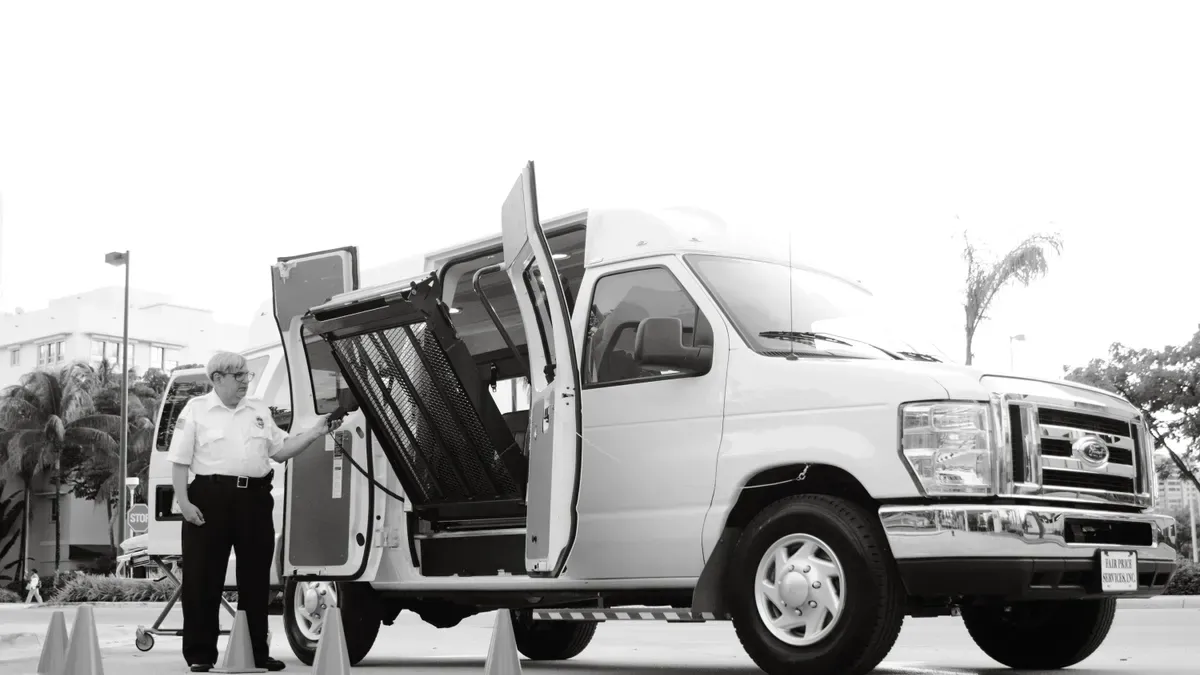
Mechanical aids remove the trunk lift from the caregiving routine. A caregiver who struggles to load the wheelchair into a car can choose from several devices. Each tool shifts the physical burden from the spine to a machine.
Hitch-Mounted Wheelchair Carriers
How They Eliminate the Trunk Lift Entirely
A hitch-mounted carrier holds the wheelchair outside the vehicle. The caregiver rolls or lifts the chair onto a platform. The platform sits at bumper height. This height eliminates the deep bend and overhead reach. The caregiver never lifts the chair into the trunk. The device does the work.
Weight Limits and Vehicle Compatibility
Hitch class determines which carriers a vehicle can support. A standard passenger car often has a Class I or II hitch. These hitches carry lower tongue weights. A Class III or IV hitch handles heavier loads.
| Carrier Model | Required Hitch Class | Weight Capacity |
|---|---|---|
| Ultra Scooter Carriers | Class III receiver required | 275 lbs |
| Carryall Wheelchair Carriers | Class III receiver required | 325 lbs |
| Tilting Platform Lift | Class 3 and 4 compatible | 350 lbs |
Hitches are classified as class I through class V, and tell you how much weight you can tow as well as what size hitch mounts work with your vehicle. Class I and class II hitches are found on cars and minivans and they are smaller hitches with a lower weight capacity. Class III, IV and V hitches are found on SUVs and pickup trucks and they have a wider opening to handle heavier hitch-mounted products.
The tongue weight is how much weight your hitch can support by itself. The rule of thumb is that it should be no more than 10% of your gross trailer weight rating. So, if you have a Class II hitch, which has a gross trailer weight rating of 3,500 lbs., your tongue rating will be 350 lbs. This means that the combined weight of your mobility scooter, accessories, and hitch-mounted carrier must not exceed 350 lbs. or it will create a dangerous driving situation and possibly cause damage to your vehicle.
One popular carrier offers these specifications:
- Compatible with Class III and IV 2″ hitches
- 400 lb. weight capacity
- Platform measures 48″ L x 27.75″ W
Portable and Folding Ramps
Rolling the Chair Up Instead of Lifting
A folding ramp lets the caregiver roll the wheelchair into a car or SUV. The caregiver pushes the chair up the incline. The legs and arms share the effort. The spine avoids the trunk-height lift entirely.
Ramp Length, Slope, and Safety
Ramp length determines the slope. A longer ramp creates a gentler angle. A shorter ramp saves space but increases the effort. The caregiver should choose a ramp with a slope no steeper than 1:12. This ratio means one inch of rise for every twelve inches of length. Safety edges prevent the chair from rolling off the side.
Trunk and Vehicle Hoists
Manual Crank vs. Electric Hoists
A manual crank hoist uses a hand crank to lift the chair. The caregiver turns the handle. The hoist raises the chair into the trunk or onto a carrier. An electric hoist uses a motor. The caregiver presses a button. The motor does the lifting. Electric hoists cost more. They also reduce physical effort to nearly zero.
Installation and Cost Considerations
Hoist installation varies by vehicle. Some models mount inside the trunk. Others attach to a hitch or roof rack. Professional installation ensures safety. Costs range from a few hundred dollars for a manual model to over a thousand for an electric system. The investment protects the caregiver’s back. That protection outweighs the price for anyone loading a heavy wheelchair every day.
Your Takeaway
The Best Lift Is the One You Never Do
A caregiver should avoid lifting in cars whenever possible. A hitch carrier, ramp, or hoist removes the trunk lift. These tools protect the spine and extend a caregiver’s career. The best lift is the one that never happens.
Wheelchair-Accessible Vehicles
Why an Electric Wheelchair Needs a Different Solution
An electric wheelchair weighs far more than any caregiver can lift. Most models exceed 50 lbs, and full-size versions reach 400 lbs or more. The battery pack alone adds significant mass. These chairs do not fold into a compact shape. A trunk lift is physically impossible.
A caregiver must choose a vehicle designed for accessibility. A standard car trunk cannot accommodate an electric wheelchair. The weight and bulk demand a ramp or lift system. The caregiver rolls the chair into the vehicle instead of lifting it. This approach protects the spine and eliminates strain.
Ramp and Lift-Equipped Vans
A wheelchair-accessible van offers the safest transport solution. These vehicles feature enlarged interiors and ramps or powered lifts. The caregiver rolls the wheelchair directly into the cabin. No lifting occurs at any point.
Buyers face several options when shopping for an accessible van. The table below summarizes the cost ranges and features.
| Vehicle Category | Cost Range | Key Features |
|---|---|---|
| Used wheelchair van | $18,000–$75,000 | Lower cost, no warranty guarantee, accessible entry |
| Pre-owned van (used chassis, new conversion) | $50,000–$83,000 | May carry warranties, selected conversion type |
| New fully converted van | $65,000–$98,000 | Side-entry or rear-entry, power or manual operation, in-floor or fold-out ramps |
The overall price range for a wheelchair van spans $30,000 to $100,000. A base vehicle starts around $20,000. The mobility conversion adds $15,000 to $30,000. Common features include spacious interiors, flexible seating, and powered or manual ramp options. A caregiver should weigh these costs against the long-term value of back protection.
Your Takeaway
The Best Lift Is the One You Never Do
A caregiver should avoid lifting a wheelchair whenever possible. An electric wheelchair demands a ramp-equipped van or a professional transport service. A hitch carrier, ramp, or hoist removes the trunk lift for manual chairs. These tools protect the spine and extend a caregiver’s career. The best lift is the one that never happens.
When to Stop Lifting and Call for Help
The 50-Pound Rule
Why This Threshold Protects Your Back
Fifty pounds marks a clear stopping point for any solo trunk lift. The NIOSH lifting equation sets the recommended limit near 51 lbs under ideal conditions. A trunk lift never meets ideal conditions. The caregiver bends forward, reaches away from the body, and often twists. Each factor lowers the safe limit. A wheelchair weight above 50 lbs exceeds what one person can lift without serious risk. This threshold protects the spine from compression and shear forces. A caregiver who respects this limit avoids the injuries that end caregiving careers.
How to Weigh a Chair You Cannot Lift
A caregiver cannot use a bathroom scale for a chair that exceeds their lifting capacity. The owner’s manual lists the exact weight. The manufacturer’s website provides specification sheets. A local medical equipment supplier can weigh the chair on a commercial scale. A caregiver should record this number and compare it to the 50 lb ceiling. Knowledge replaces guesswork. The number determines the transport method.
Caregiver Physical Limitations
Prior Back, Shoulder, or Heart Conditions
A previous injury changes the lifting equation. A caregiver with a history of disc problems, rotator cuff tears, or heart conditions faces higher risk. Scar tissue weakens the affected area. The spine may not tolerate even a 25 lb load. A physician can assess individual capacity. A caregiver should discuss lifting tasks during regular checkups. Honest communication prevents avoidable harm.
Age, Fatigue, and Balance Concerns
Age reduces muscle mass and reaction time. Fatigue impairs judgment and coordination. A tired caregiver may misjudge the load or lose balance. A fall while holding a wheelchair causes injury to both people. Balance problems increase this danger. A caregiver should assess energy levels before every lift. A simple rule applies: when in doubt, do not lift.
Any Electric Wheelchair, Every Time
Why There Is No Safe Solo Lift
An electric wheelchair exceeds human lifting capacity in every configuration. The table below shows typical weights for powered mobility devices.
| Device Type | Typical Weight Range | Key Lifting Consideration |
|---|---|---|
| Lightweight electric wheelchair | 35–55 lbs (battery included) | Confirm all-in weight, not just frame weight |
| Ultra-light mobility scooter | 35–50 lbs | Ideal for users who need to lift without assistance |
| Fully assembled scooter (general) | Over 60 lbs | Difficult to handle without assistance |
| Heaviest disassembled scooter piece | Under 40 lbs recommended | Removable battery or seat can reduce weight |
Even the lightest electric wheelchair sits at the borderline. Most models exceed 50 lbs. The heaviest disassembled piece should stay under 40 lbs for solo lifting to be feasible. The full device should remain under 60 lbs. These constraints mean that many powered mobility devices cannot be lifted alone into a trunk without risking injury.
Non-Negotiable Transport Options
An electric wheelchair requires a ramp-equipped van, a hitch carrier, or a professional transport service. No caregiver should attempt a solo trunk lift with any powered device. These options eliminate the lift entirely. The caregiver rolls the chair into the vehicle or hands the task to a trained professional.
Your Takeaway
Set Your Limit Before Your Back Sets It for You
A caregiver must establish a personal stop-lifting threshold. Fifty pounds marks the absolute ceiling. Any prior injury, fatigue, or electric wheelchair demands a different solution. Professional transport services exist for these situations. Protecting the back is part of protecting the person receiving care.
Professional Wheelchair Transport Services
What These Services Do
A professional transport service removes the lifting burden from the caregiver. These companies provide non-emergency medical transportation (NEMT) for people who use a wheelchair. A trained driver arrives in an accessible vehicle. The vehicle features a ramp or lift, a wheelchair securement system, and a passenger restraint. The driver handles the loading and unloading. The caregiver rides along without physical strain.
These services assess the wheelchair’s size, weight, and the passenger’s transfer ability before pickup. The driver secures the chair to the vehicle floor. The passenger wears a seatbelt or harness. The caregiver avoids any trunk lift. This option suits anyone who cannot safely load a chair alone.
How to Find and Vet a Provider
A caregiver must verify a provider’s credentials before booking a ride. A legitimate provider discloses its full legal name, business address, and operating name. In Pennsylvania, for-hire passenger carriers typically need PUC authority. Consumers should verify the PUC number and authorized service territory rather than relying on logos or decals.
Insurance matters just as much. Personal auto insurance does not cover paying passengers. Providers must carry commercial coverage matching their transportation authority. Vague claims like “fully covered” or mismatched business and insurance names are red flags.
A caregiver should confirm these items:
- Operating identity and authority, including the PUC number where required
- Commercial passenger insurance with proof of financial responsibility
- An accessible vehicle with a ramp or lift, a wheelchair securement system, and a passenger restraint
- Driver credentials, including CPR certification and first aid training
A provider should also supply documentation on request. Common required items include a DMV commercial vehicle registration, proof of commercial vehicle insurance, a vehicle safety systems inspection certificate, a DMV driving record printout, a first aid certificate, a CPR certificate, pre-employment drug and alcohol test results, and MCSA 5875 and 5876 forms for each driver.
Your Takeaway
Set Your Limit Before Your Back Sets It for You
A caregiver must establish a personal stop-lifting threshold. Fifty pounds marks the absolute ceiling. Any prior injury, fatigue, or electric wheelchair demands a different solution. Professional transport services exist for these situations. Protecting the back is part of protecting the person receiving care.
Safer Lifting Habits for the Loads You Can Handle
Warm Up and Position the Car First
Parking and Trunk Positioning
A caregiver should park on level ground before any lift. Sloped pavement shifts the load and challenges balance. The trunk should face away from traffic. This position gives the caregiver room to move without stepping into the street. Opening the trunk fully removes the lid from the lifting path. A caregiver should stand close to the bumper. This stance shortens the reach distance and reduces spinal strain.
A Two-Minute Stretch Routine
Cold muscles tear more easily. A brief warm-up prepares the body for lifting. The caregiver should march in place for thirty seconds. Arm circles loosen the shoulders. A gentle hip hinge stretch activates the hamstrings. Side bends wake up the obliques. This routine takes two minutes. It raises muscle temperature and improves flexibility. Warm muscles handle the load better.
Use Your Legs, Not Your Back
The Hip-Hinge Stance
The hip hinge protects the lumbar spine during a wheelchair lift. A caregiver bends at the hips and knees while keeping the spine neutral. This technique reduces compression on the front of the spine. A stooped-back lift does the opposite. It squeezes the spinal discs and raises injury risk.
Bending forward compresses (squeezes) the front of the spine, making it more likely to break a bone in the spine, whereas leaning or bending backward separates the spine and reduces the chance of a broken bone.
| Recommended (reduces lumbar stress) | Discouraged (increases lumbar stress) |
|---|---|
| When bending or lifting objects, keep the spine in neutral, and bend at the hips and knees (hip hinge); keep objects close to the body | Don’t twist or bend your spine when lifting objects |
| When coughing or sneezing, stabilize trunk in neutral by hugging a pillow, or placing hands on knees while hip hinging, or place hand in small of back to help keep back in neutral | Avoid forceful trunk flexion while coughing or sneezing |
| Maintain the natural curves in your neck and back while sitting and standing | Avoid leaning over towards your work, or standing in a pelvic tilt |
Keeping the Load Close to Your Body
Distance multiplies spinal force. A wheelchair held at arm’s length strains the back far more than the same load held against the torso. The caregiver should pull the folded frame close before lifting. This habit reduces leverage on the spine. The legs do the work. The back stays straight.
Ask for a Second Pair of Hands
Two-Person Lift Cues
Two caregivers can share the load and cut individual strain. One person counts to three before the lift. Both lift together. The taller caregiver takes the heavier end. Clear communication prevents jerky movements. Each person grips a solid frame point. The chair moves smoothly into the trunk.
When a Spouse or Neighbor Can Help
A spouse, neighbor, or friend can assist with loading. This help matters for heavier chairs or tired caregivers. Asking for assistance is not weakness. It is smart injury prevention. A second person turns a risky solo lift into a safe team effort. Caregivers should plan ahead and request help before fatigue sets in.
Your Takeaway
Good Form Buys You Years of Caregiving
Proper technique extends a caregiver’s ability to help. Warming up, using the legs, and asking for help reduce injury risk. These habits protect the back during every wheelchair lift. A caregiver who masters these skills stays strong for years.
Your Takeaway
Good Form Buys You Years of Caregiving
Good form is not a one-time effort. It is a habit a caregiver builds with every lift. The body learns the hip hinge through repetition. The legs grow stronger. The back stays neutral. These small choices compound over months and years. A caregiver who lifts with care protects the spine from cumulative damage. That protection extends a caregiving career by years.
Poor form works the opposite way. A rounded back here and a twist there add up. The discs weaken. The muscles tighten. One day a routine lift causes sudden pain. The caregiver then faces rest, treatment, and limited activity. The person receiving care loses their primary helper. This outcome hurts everyone involved.
A caregiver should treat each wheelchair lift as a chance to practice good mechanics. Warm up first. Park on level ground. Open the trunk fully. Stand close to the bumper. Hinge at the hips. Keep the load near the torso. Ask for a second pair of hands when the load feels heavy. These steps take only a few extra minutes. They pay back in comfort and mobility.
Strength also matters. A caregiver who exercises regularly handles loads better. Core work supports the spine. Leg exercises build lifting power. Shoulder stretches maintain range of motion. A simple routine three times a week makes a difference. The caregiver stays capable and confident.
Rest plays a role too. Tired muscles fail under load. A caregiver should plan lifts around energy levels. Morning lifts often feel easier than evening ones. Splitting tasks across the day reduces fatigue. A short break between trips restores focus and coordination.
The caregiver’s health is the foundation of care. A strong back keeps the routine running. A healthy shoulder keeps the chair moving. Good form is an investment in that foundation. It costs nothing but attention. It returns years of service. A caregiver who masters these habits stays ready for every trip, every errand, and every day of care.
A wheelchair weight of 30–40 lbs remains borderline. Anything over 50 lbs exceeds safe solo limits. Trunk height, twisting, and repetition multiply the risk. A caregiver should strip the wheelchair before each lift. Remove footrests, armrests, cushion, and anti-tip bars. A hitch carrier, ramp, or hoist eliminates the strain. Electric models require an accessible vehicle. Never load a heavy wheelchair into a car alone. Lifting a wheelchair into a car without help threatens the spine. Over 50 lbs, any physical limitation, or any electric model means calling a professional transport service. Protecting the back protects the person in their care.
FAQ
What is the maximum wheelchair weight one caregiver can lift into a trunk?
Fifty pounds marks the practical ceiling for a solo trunk lift. A 30–40 lb wheelchair sits in the borderline zone. Anything above 50 lbs exceeds safe limits. The caregiver risks spinal injury with heavier loads.
Can one caregiver lift a standard manual wheelchair alone?
A standard manual wheelchair weighs 35–50 lbs. The lighter end challenges the back. The heavier end exceeds safe solo limits. A caregiver should use a carrier or ask for help with these chairs.
How does trunk height affect wheelchair lifting difficulty?
A low sedan trunk forces a deep bend. A high SUV opening forces a lift above waist level. Both positions strain the spine. The caregiver cannot avoid these postures with a standard trunk.
What parts can a caregiver remove to lighten a wheelchair?
A caregiver can remove footrests, armrests, anti-tip bars, and seat cushions. These parts add 8–17 lbs total. Emptying bags and pockets saves another 1–3 lbs. Stripping the chair reduces spinal strain.
Is it safe to lift an electric wheelchair into a car trunk?
No. Electric wheelchairs weigh 50–400+ lbs. No caregiver can safely lift one alone. These chairs require a ramp-equipped van, a hitch carrier, or a professional transport service. A trunk lift is impossible.
When should a caregiver stop lifting and call for help?
A caregiver should stop at 50 lbs, any prior injury, or any electric wheelchair. Fatigue and balance problems also signal stop. Professional transport services handle these situations safely. Protecting the back protects the care recipient.
What tools eliminate the need to lift a wheelchair into a trunk?
A hitch-mounted carrier, folding ramp, or vehicle hoist removes the trunk lift. These tools shift the burden from the spine to a machine. The caregiver rolls or guides the chair instead of hoisting it.
How can a caregiver weigh a wheelchair at home?
A caregiver can weigh a chair under 50 lbs on a bathroom scale. Stand alone first, then hold the folded chair and stand again. The difference equals the chair’s weight. For heavier chairs, check the owner’s manual.