

Are 8-inch rollator wheels enough? Yes, they are enough for standard door thresholds and mildly cracked sidewalks. They do have limits on higher thresholds and severely uneven surfaces. The answer depends on a person’s specific thresholds and the sidewalks they use most. Knowing their own home and neighborhood surfaces gives them a clear answer. A mobility aid with properly sized wheels handles daily routes well. Riders simply need to match their rollator to the terrain they face.
What 8-Inch Rollator Wheels Can Handle
A rollator with 8-inch wheels manages many everyday surfaces without trouble. The wheel size provides enough clearance for common obstacles around the home and neighborhood. Users who understand these capabilities gain confidence in their daily mobility.
Standard Door Thresholds
Door thresholds appear at the bottom of most exterior and interior doorways. These raised strips create a small barrier between rooms or between indoor and outdoor spaces. A rollator with 8-inch wheels typically rolls over these obstacles with minimal effort.
Typical Height Range
Most standard residential doorways feature thresholds between a half inch and three-quarters of an inch tall. The four 8-inch wheels on a typical rollator handle this height range well. The wheel diameter provides sufficient ground clearance for the frame to pass over the raised strip. A mobility aid with this wheel configuration manages standard residential doorways without requiring the user to lift the device.
Some older homes have slightly taller thresholds that reach one inch. Even at this height, 8-inch front wheels often clear the obstacle when the user approaches with steady momentum. The key lies in maintaining a smooth, consistent push rather than stopping directly before the threshold.
The Smooth Approach Method
The technique for crossing a threshold matters as much as the wheel size itself. A steady, confident push carries the rollator over the raised strip. Users should avoid slowing down right before the threshold. Instead, they maintain their normal walking pace and let the wheels roll over the obstacle.
The front wheels contact the threshold first. Their curved shape allows them to ride up and over the edge. The rear wheels follow the same path moments later. This sequence happens naturally when the user keeps a consistent forward motion.
Small and Medium Sidewalk Cracks
Sidewalks in most neighborhoods develop cracks over time. Weather changes, tree roots, and ground settling all contribute to surface damage. A rollator with 8-inch wheels handles many of these imperfections without issue.
Cracks Under a Half Inch
Hairline cracks and small gaps under a half inch wide pose no real challenge. The wheels roll right over them. Users barely notice the bump. These minor sidewalk cracks exist on almost every street, and they do not stop a rollator with properly sized wheels.
The wheel’s circumference bridges the gap entirely. The tire maintains contact with the concrete on both sides of the crack. This continuous contact keeps the ride smooth and stable.
Slightly Uneven Concrete Joints
Concrete sidewalks consist of separate panels with joints between them. These joints can shift over time and create slight height differences. A rise of a quarter inch to a half inch between panels falls within the capability of 8-inch wheels.
The wheels ride up the small step without catching. The frame absorbs the minor bump. Users feel a slight vibration but maintain their balance and forward motion. Regular sidewalk joints rarely cause problems for this wheel size.
Indoor Floor Transitions
Homes contain various floor surfaces that meet at different heights. Carpet edges, tile strips, and room dividers all create small transitions. A rollator with 8-inch wheels navigates most of these indoor changes effectively.
Carpet to Hardwood Edges
The transition from carpet to hardwood creates a small height difference. Carpet sits slightly higher than the hard surface beneath it. This edge typically measures less than a half inch. The wheels roll from one surface to the other without catching.
Thick carpet presents a slightly different challenge. The wheels sink into the pile and create more rolling resistance. However, the 8-inch size still provides enough clearance to move across the transition point. Users may need slightly more push force on plush carpet, but the wheels do not get stuck.
Low-Profile Room Dividers
Some homes use low-profile strips or saddles to divide rooms. These dividers typically measure a quarter inch to a half inch in height. They serve as decorative transitions between different flooring materials. A rollator with 8-inch wheels crosses these strips with ease.
The wheels roll over the divider and continue onto the next surface. The user experiences a small bump but no interruption in movement. Even thresholds between kitchen tile and living room hardwood pose no problem for this wheel size.
Smooth Outdoor Surfaces
Well-maintained outdoor surfaces give 8-inch rollator wheels their best chance to perform. Smooth pavement allows the wheels to roll freely and keeps the ride comfortable. Users who travel on these surfaces enjoy reliable mobility without fighting the ground beneath them.
Well-Maintained Asphalt Paths
Fresh asphalt offers one of the easiest surfaces for a rollator with 8-inch wheels. The smooth, continuous top layer provides excellent rolling conditions. The wheels maintain constant contact with the pavement and encounter no sudden edges or gaps.
Parks, walking trails, and residential streets often feature this type of surface. A user who travels these routes outdoors enjoys a stable and predictable ride. The wheels glide across the asphalt with minimal resistance. Pushing the rollator requires little effort on this terrain.
Asphalt does develop minor imperfections over time. Small surface cracks and shallow depressions appear with wear and weather. An 8-inch wheel absorbs these minor flaws without difficulty. The tire rolls over shallow dips and rises without losing momentum.
Temperature changes affect asphalt more than many people realize. Hot summer days soften the surface and create slight ruts in high-traffic areas. These ruts rarely exceed a quarter inch in depth. The 8-inch wheels handle this level of unevenness without any problem.
Rain creates another consideration for outdoor use. Wet asphalt becomes slippery and reduces tire grip. Users should exercise caution on wet surfaces regardless of wheel size. The tread pattern on the tire plays a major role in maintaining traction during damp conditions.
Flat Brick or Paver Walkways
Brick and paver walkways add charm to many homes and public spaces. These surfaces consist of individual units set in a pattern with sand or mortar joints between them. A well-installed walkway creates a relatively flat surface for rollator wheels.
The key word here is “flat.” A properly laid paver path keeps all units at the same height. The joints between pavers remain tight and level. An 8-inch wheel rolls across this surface with only a gentle vibration from the texture.
The textured surface actually provides a benefit for tire grip. The slight bumps and grooves give the tire more contact points. This texture improves traction compared to smooth concrete. Users gain better control on slight inclines or declines along the path.
Paver walkways do shift over time. Ground settling, frost heaves, and tree roots push individual units out of alignment. A paver that rises a half inch above its neighbors creates a small bump. The 8-inch wheels manage this minor height difference without catching.
More significant shifts create larger problems. A paver that rises one inch or more above the surrounding surface acts like a small step. The wheel may catch on the edge instead of rolling over it. Users should inspect their regular routes and note any problem areas.
Loose or missing pavers present another challenge. A gap where a paver once sat creates a hole in the walking surface. The front wheel can drop into this gap and stop the rollator suddenly. Users should avoid paths with missing or severely displaced pavers.
Wet pavers become particularly slippery. The smooth surface of many brick and stone pavers offers little grip when wet. Users should take extra care on these surfaces after rain. Proper tire tread helps, but caution remains the best safety measure.
When 8-Inch Rollator Wheels Are Not Enough
Certain obstacles exceed the capabilities of 8-inch wheels. Users who encounter these challenges need to recognize the limits of their mobility aid. Understanding these boundaries helps people plan safer routes and avoid dangerous situations.
High or Rounded Door Thresholds
Door thresholds vary widely across different buildings and homes. Some exceed the height range that 8-inch wheels manage effectively. These taller barriers require extra effort or a different approach.
Thresholds Over One Inch Tall
A threshold taller than one inch creates a significant obstacle for standard rollator wheels. The wheel must climb a step that approaches one-eighth of its total diameter. This ratio makes the climb difficult without lifting the front of the rollator.
The wheel contacts the vertical face of the threshold. Forward motion alone cannot push the wheel over the edge. The user must stop and lift the front wheels manually. This interruption breaks the natural walking rhythm and requires physical effort.
Raised door thresholds appear in older buildings, commercial entrances, and some accessible housing. A user who encounters these barriers regularly faces frustration with every crossing. The rollator becomes less of a mobility aid and more of a burden.
Some users develop techniques to manage taller thresholds. They approach at an angle or use momentum to force the wheels over the edge. These methods work occasionally but risk tipping the rollator or causing a fall. A safer solution involves choosing a different route or upgrading to larger wheels.
Steeply Curved or Beveled Thresholds
Threshold shape matters as much as height. A steeply curved or beveled threshold creates a ramp-like surface that can stop wheel rotation. The curve rises too quickly for the wheel to maintain contact with the ground.
Standard thresholds have a relatively flat top with slight bevels on each side. These gentle slopes allow wheels to roll up and over without losing traction. A steeply curved threshold presents a different challenge entirely.
The wheel hits the curve and loses forward momentum. The tire cannot grip the steep surface and spins in place. The user pushes harder but the rollator does not advance. This situation creates frustration and potential strain on the user’s arms and shoulders.
Beveled thresholds with angles greater than 45 degrees cause similar problems. The wheel encounters an incline too steep to climb. It stops at the base of the bevel and refuses to progress. Users must lift the front wheels or find an alternate path.
Deep Sidewalk Cracks and Potholes
Sidewalk damage varies from minor cosmetic flaws to serious structural failures. Small cracks pose little threat to 8-inch wheels. Deep cracks and potholes create genuine hazards that can stop a rollator suddenly.
Cracks Over One Inch Wide
A crack wider than one inch exceeds the bridging capability of an 8-inch wheel. The wheel drops into the gap instead of rolling over it. This sudden drop stops the rollator and may throw the user off balance.
The geometry of the situation explains the problem. An 8-inch wheel has a radius of four inches. A crack wider than one inch allows the wheel to sink significantly before contacting the far edge. The wheel becomes trapped in the gap.
Sidewalk cracks of this size often result from tree root damage, ground settling, or frost heaves. They appear frequently in older neighborhoods with mature trees. Users who travel these areas regularly encounter this hazard.
The risk increases when cracks run parallel to the direction of travel. The front wheel enters the crack and follows it instead of crossing. This action steers the rollator off course and may cause a tip. Users must remain vigilant and steer around these wider gaps.
Broken or Sunken Concrete Panels
Concrete panels can break or sink over time. A sunken panel creates a step down that the wheel must navigate. A broken panel creates jagged edges and unstable surfaces.
A sunken panel that drops more than one inch creates a significant obstacle. The wheel rolls off the edge and falls to the lower surface. This drop generates a jolt that travels through the frame to the user’s hands and arms. Repeated jolts cause fatigue and discomfort.
Broken pavement presents even greater risks. Sharp edges can catch the wheel and stop it abruptly. Loose concrete fragments create unstable footing. The wheel may roll onto a fragment that shifts under pressure.
A rollator with large wheels handles these conditions better than an 8-inch model. The larger diameter bridges gaps and absorbs drops more effectively. Users who frequently encounter broken pavement should consider upgrading their equipment.
Loose Gravel and Soft Ground
Paved surfaces provide predictable rolling conditions. Loose gravel and soft ground behave differently. The surface shifts under the wheel and creates unpredictable resistance.
Unpaved or Dirt Pathways
Dirt paths offer no hard surface for wheels to roll across. The wheel presses into the ground and creates a rut. This rut increases rolling resistance and makes pushing the rollator harder.
Soft dirt after rain becomes nearly impassable. The wheels sink several inches into the mud. The user must pull the rollator free with each step. This effort quickly exhausts the user and defeats the purpose of a mobility aid.
Dry dirt paths present fewer problems but still challenge 8-inch wheels. Small rocks and roots create obstacles. Dust and loose soil reduce tire grip. The ride becomes bumpy and unpredictable.
For frequent use on grass or gravel, wheels should be 8 inches or larger and preferably pneumatic. Smaller all-terrain tires may be acceptable only for occasional sidewalk use. Users who regularly travel unpaved paths need equipment designed for those conditions.
Pea Gravel or Stone Driveways
Pea gravel and stone driveways consist of loose, rounded stones. These stones roll under wheel pressure instead of providing a stable surface. The wheel pushes stones aside and sinks into the layer beneath.
For loose gravel and soft ground, the recommended minimum wheel diameter is at least 8 inches, with 10 inches or more being ideal. Larger wheels help the rollator press over loose stones instead of sinking into them, improving stability on uneven outdoor terrain.
The table below summarizes wheel size recommendations for different surfaces.
| Wheel Size | Recommended Surface |
|---|---|
| 8-inch wheels | Good for indoor use |
| 10-inch wheels | Suitable for grass and gravel |
| 12-inch wheels | Best for rough terrain |
A rollator with large wheels manages gravel driveways far better than a standard model. The increased diameter distributes weight over a larger area and reduces sinking. Users who live on gravel roads or have gravel driveways should prioritize wheel size when selecting a rollator.
Curb-Sized Obstacles
Curbs and raised edges represent a distinct category of obstacle. They differ from cracks and thresholds in both height and shape. A standard street curb rises several inches above the road surface. This height exceeds the climbing ability of an 8-inch wheel. Users who encounter curbs regularly face a significant barrier to their mobility.
Standard Street Curbs
A standard street curb measures between four and six inches in height. This dimension dwarfs the obstacles that 8-inch wheels manage. The wheel cannot climb a vertical face of this size. Forward momentum alone will not carry the rollator over the edge.
The geometry creates an insurmountable problem for the wheel. An 8-inch wheel has a radius of four inches. A four-inch curb equals the entire radius of the wheel. The wheel would need to climb a step as tall as its own center point. This feat requires lifting the front of the rollator entirely off the ground.
Users who approach a curb with an 8-inch rollator must stop completely. They cannot roll over the obstacle at any speed. The wheel contacts the vertical face and stops dead. Pushing harder only risks damaging the wheel or bending the frame.
Some users attempt to lift the front wheels manually. This technique requires significant upper body strength. The user must tilt the rollator back and lift the front wheels onto the curb. Then the user must push forward while the rear wheels remain on the street. This maneuver is difficult and dangerous for many people.
The rear wheels present an even greater challenge. Once the front wheels sit on the curb, the rear wheels must climb the same height. The user cannot lift the rear wheels while maintaining balance on the front. This situation creates a genuine risk of tipping or falling.
A curb ramp offers a safer alternative. Many cities install curb cuts at intersections for wheelchair access. These ramps provide a gradual slope instead of a vertical face. An 8-inch wheel rolls up a properly designed curb ramp without difficulty. Users should plan routes that include these accessible features.
Driveway aprons create another option. Many residential driveways slope down to meet the street. This slope acts as a natural ramp. A user who travels through a driveway entrance avoids the curb entirely. The 8-inch wheels roll down the apron and onto the street surface smoothly.
Users who cannot find a ramp or driveway face a difficult choice. They can lift the rollator over the curb with assistance. They can fold the rollator and carry it across. They can choose a different route altogether. None of these options preserve the independence that a rollator should provide.
Large wheels change this equation entirely. A rollator with 12-inch wheels can climb a standard curb with a proper approach. The larger diameter provides the necessary clearance and climbing ability. Users who face curbs regularly should consider this upgrade.
Raised Patio or Garden Edging
Patios and gardens often feature raised edges or borders. These structures separate different outdoor areas. They create visual interest and define spaces. They also create obstacles for rollator users.
A raised patio edge typically measures two to four inches in height. This range falls between a standard threshold and a full street curb. An 8-inch wheel may manage the lower end of this range with effort. The upper end exceeds its capability.
The material of the edging affects the difficulty. A smooth concrete edge allows the wheel to slide up with enough force. A rough stone or brick edge catches the tire and stops rotation. A rounded edge presents a steep curve that defeats the wheel’s climbing ability.
Garden edging made of metal or plastic creates a different problem. These thin strips sit close to the ground. An 8-inch wheel rolls over them without issue. The trouble comes from the soil or mulch behind the edging. Soft ground causes the wheel to sink and lose momentum.
Raised planter boxes present a similar challenge. These structures often stand 12 to 18 inches tall. No rollator wheel can climb a vertical face of this height. Users must navigate around them or find an alternate path.
Wooden deck edges create another common obstacle. A deck typically sits several inches above the ground. The edge board forms a vertical face that stops an 8-inch wheel. A ramp provides the only safe way to transition between ground level and deck level.
Some patios feature multiple levels connected by steps. Each step creates a barrier for rollator users. An 8-inch wheel cannot climb even a single step without assistance. Users who live in homes with multi-level outdoor spaces face constant challenges.
The solution for these obstacles often involves modification rather than technique. Homeowners can install ramps at patio edges and deck transitions. These ramps create gradual slopes that 8-inch wheels manage easily. A simple wooden ramp costs little and solves the problem permanently.
Portable ramps offer another option for users who travel to different locations. These lightweight ramps fold for transport and set up in seconds. They provide a safe transition over curbs, steps, and raised edges. Users who encounter these obstacles away from home can carry a ramp with them.
Garden paths should remain at ground level whenever possible. A path that stays flat allows 8-inch wheels to roll freely. Raised edging along the path creates unnecessary barriers. Users should design outdoor spaces with mobility in mind.
An 8-Inch-Wheel Example in Real Life
A practical 8-inch-wheel example demonstrates what these specifications mean on an everyday route. The four eight-inch wheels provide enough ground clearance for many common barriers. Visualizing a specific doorway and a specific sidewalk makes the answer concrete.
A Typical Front Door Threshold
What Happens on the First Push
An older home often has a threshold about three-quarters of an inch tall. A user approaches with a steady pace. The rollator’s front wheel contacts the raised edge first. The rounded tire shape rides up and over the transition. The rear wheel follows the same path one moment later. The device never pauses. This smooth climb happens because the wheel’s diameter allows it to bridge the height change while maintaining forward momentum. The user experiences only a slight bump through the handles.
Where the Wheel Catches
A threshold that reaches one inch in height changes the outcome. The front wheel strikes the vertical face before the tire can climb. The frame halts completely at the base. Pushing forward does nothing but grind the tire against the edge. The user must tilt the device backward and lift the front wheel onto the top surface. That action turns a simple doorway into a physical challenge that requires strength and balance.
A Cracked Neighborhood Sidewalk
Rolling Over a Hairline Crack
A hairline crack measures under 0.005 inch at its widest visible point. These sidewalk cracks cover most residential streets. A gauge placed across the surface records the reading at the widest and deepest sections. The front wheel simply rolls over the gap without losing contact with the concrete. The user feels nothing more than a faint vibration. These minor surface flaws do not interrupt travel at any speed.
Hitting a Wider, Raised Crack
Wider cracks create a different problem. A raised crack with a vertical offset of one quarter inch marks the pass/fail line on many municipal sidewalk inspections. A straightedge laid flat across the joint reveals the gap beneath. The table below summarizes the measurement and the corrective action for each defect type.
| Defect Type | How It Is Measured | Threshold / Measured Value | Corrective Action |
|---|---|---|---|
| Narrow / hairline crack (no offset) | Crack gauge placed over the widest visible surface point, then re-checked at the deepest section; both readings recorded | Tapers to under roughly 0.005 inch width | Monitor or seal; epoxy injection often impractical |
| Raised crack / vertical offset | Straightedge laid flat across the joint or crack, spanning at least a foot on each side; ruler or gauge slid under the highest point of the offset | 1/4 inch (quarter-inch) pass/fail line | Under 1/4 inch: monitor and reinspect; 1/4 inch or more: shave/grind or panel replacement |
This standard applies to sidewalk joints across most cities. At the quarter-inch offset, the defect stops being cosmetic and becomes a genuine hazard. The front wheel strikes the raised edge and catches. The user must stop and lift the frame over the offset. This forced stop happens on every crossing and interrupts the natural walking rhythm.
Factors That Make a Difference
Wheel performance depends on more than just the diameter. Several design elements work together to determine how well a rollator handles thresholds and cracked pavement. Users who understand these factors make better choices when selecting or upgrading their equipment.
Wheel Width and Tire Design
Wide vs. Narrow Tires
Wide tires distribute weight across a larger contact patch. This distribution reduces pressure on soft surfaces and improves stability. Narrow tires cut through gravel and loose debris more effectively. However, they sink into soft ground and lose grip on uneven pavement. A moderate width offers the best balance for most users.
Solid vs. Pneumatic Tires
Solid tires never go flat and require no maintenance. They transmit more vibration through the frame to the user’s hands. Pneumatic tires contain air and absorb shock from rough surfaces. They provide a smoother ride on cracked sidewalks and uneven joints. The trade-off involves potential flats and regular pressure checks.
Tread Pattern and Grip
Tread pattern directly affects traction on wet or loose surfaces. A smooth tire offers maximum contact on hard, dry pavement. A textured tread grips better on damp asphalt and packed dirt. Users who travel outdoors in varied weather benefit from a moderate tread design.
Front Wheel Type
Swivel Wheels vs. Fixed Wheels
Swivel wheels rotate 360 degrees and allow tight turns in small spaces. They help users navigate around obstacles and through doorways. Fixed wheels track straight and require more effort to steer. Most rollators use swivel front wheels for maneuverability.
Wheel Locking Mechanisms
Locking mechanisms secure the wheels during transfers and rest periods. A loop lock engages the brake and holds the wheel in place. Some models feature a parking brake that locks both rear wheels simultaneously. These features prevent unwanted movement on slight inclines.
Rollator Frame and Weight
Lightweight Frames and Stability
Lightweight frames made of aluminum or carbon fiber reduce user fatigue. They maneuver easily in tight indoor spaces. However, lighter frames transfer more vibration and offer less momentum over obstacles. Users who primarily walk indoors benefit from a lighter design.
Heavier Frames for Better Momentum
Heavier frames build momentum that carries the wheels over small obstacles. Steel frames provide this advantage at the cost of increased weight. The extra mass helps the rollator push through grass and minor surface irregularities. Users who travel outdoors frequently may prefer this stability.
Ground Clearance
Ground clearance dictates whether a rollator rolls over an obstacle or hits it. Wheel size alone cannot predict performance. The distance between the lowest frame point and the walking surface determines the limit. An 8-inch rollator provides enough clearance for daily thresholds. Users still need to inspect the underside of the device before they rely on it outdoors.
Axle Height and Obstacle Climbing
Axle height follows wheel diameter. An 8-inch wheel positions its axle roughly four inches above the ground. This height lifts the rotation center above standard threshold heights. A three-quarter-inch threshold rises only a fraction of that distance. The wheel rotates cleanly over the edge, and the frame never touches the barrier. Obstacle climbing depends on this relationship. A lower axle pushes the frame into the threshold. A higher axle improves climbing, but achieving that height requires a larger wheel.
One rule matters here. Axle height provides an advantage only when the obstacle face is beveled or sloped. A vertical curb stops the tire quickly, regardless of axle elevation. The wheel strikes the flat face and cannot rotate upward. Users should not mistake theoretical clearance for actual climbing power.
Frame Design and Bottom Clearance
Frame design determines bottom clearance. This measurement describes the gap between the ground and the lowest crossbar or bracket. Many rollators keep these components above the four-inch axle line. Other models place support bars closer to the floor for manufacturing convenience. That design choice creates hidden problems on cracked sidewalks.
A low bar scrapes against raised concrete joints. The wheels roll over the offset, but the frame hangs on the edge. Users feel a sudden jolt and a complete stop. They must lift the entire device to free the crossbar. This interruption occurs on every crossing until they change routes or equipment.
Users can measure bottom clearance before purchase. They slide a straight ruler under the rollator until it touches the lowest point. They compare the reading with the tallest threshold on their normal path. That simple test reveals the exact margin between success and frustration.
Measure the lowest part of the frame before choosing a rollator. A quarter inch of extra clearance often changes daily mobility.
Frame geometry also affects turning stability. A crossbar set high and narrow keeps clearance but reduces lateral support. Designers trade one benefit for another on every model.
Wheel Size to Terrain Mapping
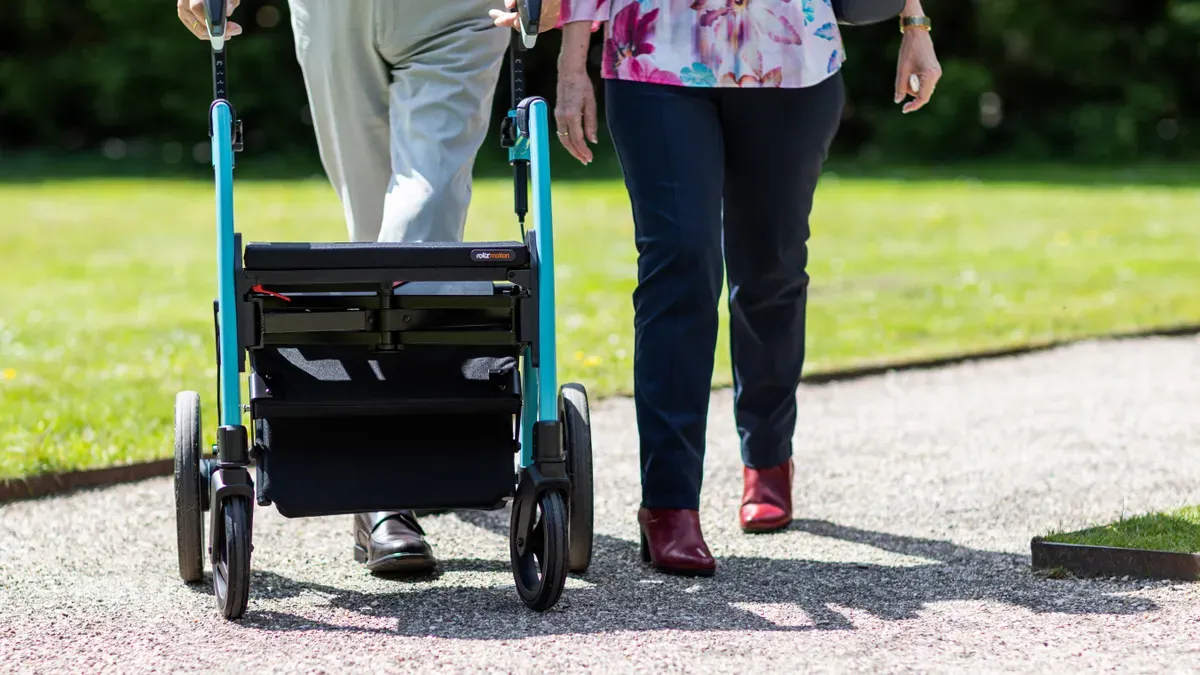
Matching Wheels to Indoor Surfaces
Carpet, Tile, and Hardwood
Indoor floors demand smooth, predictable rolling. A 6-inch wheel maneuvers easily on tile and hardwood, yet it can catch on lips between flooring materials. An 8-inch wheel serves as the sweet spot for most users. It handles carpet, tile, and hardwood without difficulty. Treaded, non-marking rubber rolls across these surfaces without leaving scuffs. This design also adds stability on sidewalks and driveways.
- 6-inch wheels: lightweight and highly maneuverable indoors; ideal for smooth surfaces like hardwood and tile, but they can get caught on lips between flooring materials.
- 8-inch wheels: considered the sweet spot for most users; handle indoor floors (carpet, tile, hardwood) without difficulty and also manage outdoor terrain.
Thresholds and Room Transitions
Room transitions create small barriers between flooring types. An 8-inch wheel rolls over most residential thresholds with steady momentum. A 6-inch wheel may catch on taller lips. Users should measure each transition before choosing a mobility aid.
Matching Wheels to Outdoor Surfaces
Smooth Sidewalks and Paths
Paved paths suit 8-inch wheels well. The diameter bridges minor joints and keeps the ride stable. Pneumatic or knobbed treads absorb vibration on packed dirt and pavement.
Cracked Concrete and Rough Pavement
Cracked concrete punishes small wheels. An 8-inch wheel manages cracks under a half inch. Wider gaps and raised offsets stop the wheel and force the user to lift the frame.
When to Step Up to 10-Inch or 12-Inch Wheels
Rough Terrain and Loose Surfaces
Wheel size to terrain mapping guides every upgrade decision. A rollator with large wheels handles grass, gravel, and dirt paths far better than an 8-inch model. The table below summarizes the recommended wheel size for each surface condition.
| Surface condition | Recommended wheel size | Why it fits |
|---|---|---|
| Indoor smooth surfaces (tile, hardwood) | 6-inch smooth wheels | Compact and stable on smooth floors; avoids catching on indoor irregularities. |
| Outdoor surfaces (pavement, packed dirt, grass) | 8–12 inch pneumatic or knobbed-tread wheels | Larger wheels with air-filled or thick treads absorb vibration and grip uneven or wet ground. |
| Rough terrain (gravel, slopes) | 8–12 inch pneumatic/knobbed tires with wider wheelbase | Tires roll over obstacles and provide stability on inclines and uneven terrain. |
All-Terrain Rollator Options
Upgrade to 10-inch wheels for grass, gravel, dirt paths, and uneven sidewalks. Choose 12-inch wheels for hiking trails, sandy paths, forest floors, rocks, and roots. These larger wheels improve stability on uneven outdoor terrain. A rollator built for indoor and outdoor use with 8-inch wheels covers daily routes. Riders who face rough ground often need a dedicated all-terrain model. Matching wheel dimensions to the environment keeps every trip safe and comfortable.
Practical Tips for Navigating Obstacles
Lifting the Front Wheels
How to Tilt and Roll Over Thresholds
To cross a tall threshold, a user must first lift the front set onto the raised edge. The user tilts the rollator back, pushes forward, and lets the rear set follow. This deliberate pause prevents a serious accident: a front tire that catches unexpectedly can stop the frame while the body keeps moving. Users should never rush this sequence, even on a familiar doorway.
- When going up, the user tips the front pair onto the curb and pushes through.
- If stepping up a curb without a ramp, the user tilts the front pair up slightly, steps up, then brings the rear pair afterward.
Using the Rollator’s Built-In Lift Bar
Many models include a horizontal lift bar near the rear legs. Pressing down on this bar pivots the frame and raises the front pair off the ground. A user who lacks upper-body strength relies on this lever action rather than lifting the entire device. The bar reduces the physical effort needed for each crossing. It also keeps the user’s torso upright, which protects the lower back from strain during repeated maneuvers.
Approaching Obstacles at an Angle
Why a 45-Degree Angle Helps
A perpendicular approach forces the tire against a vertical wall. That angle maximizes resistance and stops forward progress. A 45-degree approach changes the geometry entirely. The tire meets the edge gradually, and the effective height decreases. A larger diameter improves the outcome even further, because a bigger wheel spans more of the obstacle’s face before the frame arrives.
Turning to Reduce Resistance
A slight turn produces the same benefit as an angled approach. The user steers the front pair diagonally across a crack or raised joint. This diagonal path lets the tire ride along the edge rather than stopping dead. The turning motion shifts the user’s weight onto the rear pair, which improves tire traction on the pavement surface. Combining a gentle turn with steady momentum makes most sidewalk defects passable.
Using Anti-Tip Features
Engaging Wheel Locks for Stability
Anti-tip features protect users during obstacle crossings. Rear wheel locks engage with a simple lever. The user locks both rear sides before lifting the front pair over a threshold. This action prevents the mobility aid from rolling backward. A locked rear gives the user a firm base to push against during the maneuver. Without this step, the frame can slide backward just as the user commits to the crossing.
Proper Body Positioning for Safety
Body positioning determines whether a crossing succeeds or fails. The user stands close to the frame, keeps both hands on the handles, and bends at the knees. Leaning forward shifts weight dangerously toward the front. Hips stay behind the rear pair. This posture keeps the center of gravity inside the base. Large wheels offer more stability during this movement, but the body position matters just as much. Users who practice this positioning indoors develop a habit that carries over to every outdoor trip.
Choosing the Right Rollator for Your Environment
Models with Upgraded 8-Inch Wheels
Manufacturers design certain models specifically for users who move between indoor and outdoor spaces. These rollators feature 8-inch wheels as the industry standard for multi-environment use. The wheels provide adequate shock absorption for standard sidewalks and roll over moderate threshold bumps effectively. They balance agility and terrain capability without sacrificing too much indoor turning capability. The W01 Carbon Fiber Walker is one model that utilizes 8-inch wheels perfectly for reliable, everyday structural support. A buyer should look for models with reinforced forks and sealed bearings. These features extend wheel life and maintain smooth rotation over thousands of rolling cycles.
Adding Larger Wheels or Terrain Tires
Some users need more capability than 8-inch wheels provide. They can upgrade to a rollator with large wheels for better outdoor performance. A wheel size of 10 or 12 inches handles gravel, grass, and deep cracks far better. The larger diameter bridges gaps and absorbs impacts that would stop smaller wheels. Terrain tires with aggressive tread patterns add grip on loose or wet surfaces. Users should verify that their frame accepts larger wheels before purchasing an upgrade kit. Frame clearance and brake alignment must accommodate the new size.
Maintaining Your Rollator for Better Performance
Keeping Wheels Clean and Free of Debris
Regular cleaning preserves wheel performance and extends component life. Dirt, hair, and small stones collect around the axle and create drag. A user should wipe the wheels with a damp cloth after outdoor trips. A soft brush removes debris from the tread grooves. Hair wrapped around the axle requires special attention. It acts like a brake and slows rotation. A pair of tweezers or a small pick removes tangled hair quickly. Clean wheels roll smoothly and reduce the effort needed to push the rollator.
Checking Tire Pressure and Tread Wear
Pneumatic tires require regular pressure checks. A soft tire increases rolling resistance and reduces stability. Users should inflate tires to the pressure printed on the sidewall. Solid tires need no inflation but still require inspection. The user should examine the tread for flat spots, cracks, or embedded objects. Worn tread loses grip on wet pavement and loose surfaces. Large wheels with smooth tread become hazardous in rain. Replacement tires cost little and restore safe performance immediately.
Final Verdict
The Bottom Line for Indoor Use
Most Homes Are Safe with 8-Inch Wheels
The evidence settles the indoor question clearly. Most standard residential doorways fall within the capability of 8-inch wheels. The typical threshold measures only a half-inch to three-quarters of an inch. The rollator rolls over that raised edge with steady momentum. Users move from room to room without lifting the frame. For anyone who asks, are 8-inch rollator wheels enough — the answer for indoor use is yes.
Measure Your Own Thresholds to Be Sure
A simple measurement confirms that conclusion. A resident should check every doorway in the home. A threshold taller than one inch exceeds the safe climbing limit. Compare that reading against the device’s bottom clearance. Most homes pass the test, though a few older houses fail. The measurement takes five minutes and prevents future frustration.
The Bottom Line for Outdoor Use
Fine for Mildly Damaged Sidewalks
Outside, an 8-inch model handles typical neighborhood streets well. Hairline cracks and low concrete joints cause no pause. The table below compares wheel performance.
| Wheel size | Indoor performance | Outdoor performance |
|---|---|---|
| ~6 inches | Nimble and easy to turn in tight indoor spaces | Catches on uneven ground |
| 8 inches or more | Slightly less agile indoors | Rolls smoothly over cracks, grass, and uneven pavement; air-filled tires further reduce jarring |
For combined indoor and outdoor use, consider these recommendations:
- A 4-wheel model with an 8-inch minimum wheel diameter is the recommended minimum.
- A sturdy frame handles sidewalk cracks and grass.
Avoid Severe Cracks and Loose Surfaces
Outdoor surfaces create hidden limits. Consider these guidelines:
- Outdoor surfaces increase rolling resistance and vibration, so a bigger wheel is preferred for soft or rough ground.
- Air-filled or cushioned tires reduce jarring and improve control on cracked concrete and hard-packed trails.
- Regular outdoor trips demand quality bearings, responsive brakes, and a stable stance.
- Solid tires perform adequately when the path remains firm.
Models with 8-inch or larger wheels handle most outdoor surfaces well, including sidewalks, packed dirt paths, and short grass. Avoid steep inclines, loose gravel, or wet surfaces regardless of the tire type.
When to Consider Larger or Different Wheels
10-Inch or 12-Inch Wheels for Rough Terrain
The verdict shifts for rough terrain. A rollator with large wheels offers a clear upgrade. These large wheels press over loose gravel and deep cracks instead of stopping at them. The large wheels also improve balance on uneven joints. The larger wheel absorbs the impacts that an 8-inch wheel transmits. Users who face steep curbs or broken pavement should move to 10-inch or 12-inch wheels.
All-Terrain Rollators for Heavy Outdoor Use
Heavy outdoor travel demands a dedicated design. All-terrain rollators combine oversized tires with reinforced frames and wide treads. These models maintain stability on grass, dirt paths, and uneven sidewalks. The final decision rests on matching the equipment to the environment.
Are 8-inch rollator wheels enough for most daily routes? Yes. They clear standard door thresholds and sidewalks with small cracks. Limits appear at higher thresholds, deep cracks, and loose gravel. Wheel width, tire type, and approach technique change real-world performance. A user should measure every threshold and inspect usual walking paths before deciding. Anyone facing tougher terrain often needs large wheels or an all-terrain mobility aid. With the right knowledge and a few smart techniques, every user stays safe and mobile.
FAQ
Are 8-inch rollator wheels enough for a standard front door threshold?
Yes. Most residential thresholds measure between a half inch and three-quarters of an inch tall. An 8-inch wheel provides enough ground clearance to roll over this height with steady momentum. The user maintains a normal walking pace and lets the wheel ride up and over the raised edge.
Can 8-inch wheels handle cracked sidewalks?
They handle cracks under a half inch wide without trouble. The wheel bridges the gap and maintains contact with the concrete on both sides. Wider cracks and raised offsets stop the wheel. Users must then lift the front of the rollator or choose a different route.
What tire type works best on uneven pavement?
Pneumatic tires absorb shock and reduce vibration on cracked concrete. Solid tires never go flat but transmit more bumps to the user’s hands. A moderate tread pattern improves grip on wet or loose surfaces. Users who travel outdoors often benefit from air-filled tires.
Do 8-inch wheels work on gravel or grass?
No. Loose gravel and soft grass cause the wheels to sink and lose momentum. The surface shifts under pressure and creates unpredictable resistance. Users who face these conditions regularly need 10-inch or 12-inch wheels. An all-terrain rollator handles gravel and dirt paths far better.
How does a user cross a tall threshold with 8-inch wheels?
The user tilts the rollator back and lifts the front wheels onto the raised edge. Then the user pushes forward and lets the rear wheels follow. Many models include a built-in lift bar near the rear legs. This lever action reduces the physical effort required.
When should a user upgrade to larger wheels?
A user should upgrade when standard routes include curbs, deep cracks, or loose surfaces. Ten-inch wheels suit grass and gravel. Twelve-inch wheels handle hiking trails and rocky paths. The larger diameter bridges gaps and absorbs impacts that stop smaller wheels.
Does wheel width affect performance on thresholds?
Yes. Wide tires distribute weight across a larger contact patch and improve stability. Narrow tires cut through gravel but sink into soft ground. A moderate width offers the best balance for most daily routes. Tire design matters as much as wheel diameter.
How does a user maintain 8-inch wheels for better performance?
The user wipes the wheels with a damp cloth after outdoor trips. A soft brush removes debris from the tread grooves. Hair wrapped around the axle requires removal with tweezers. Pneumatic tires need regular pressure checks. Clean wheels roll smoothly and reduce pushing effort.