
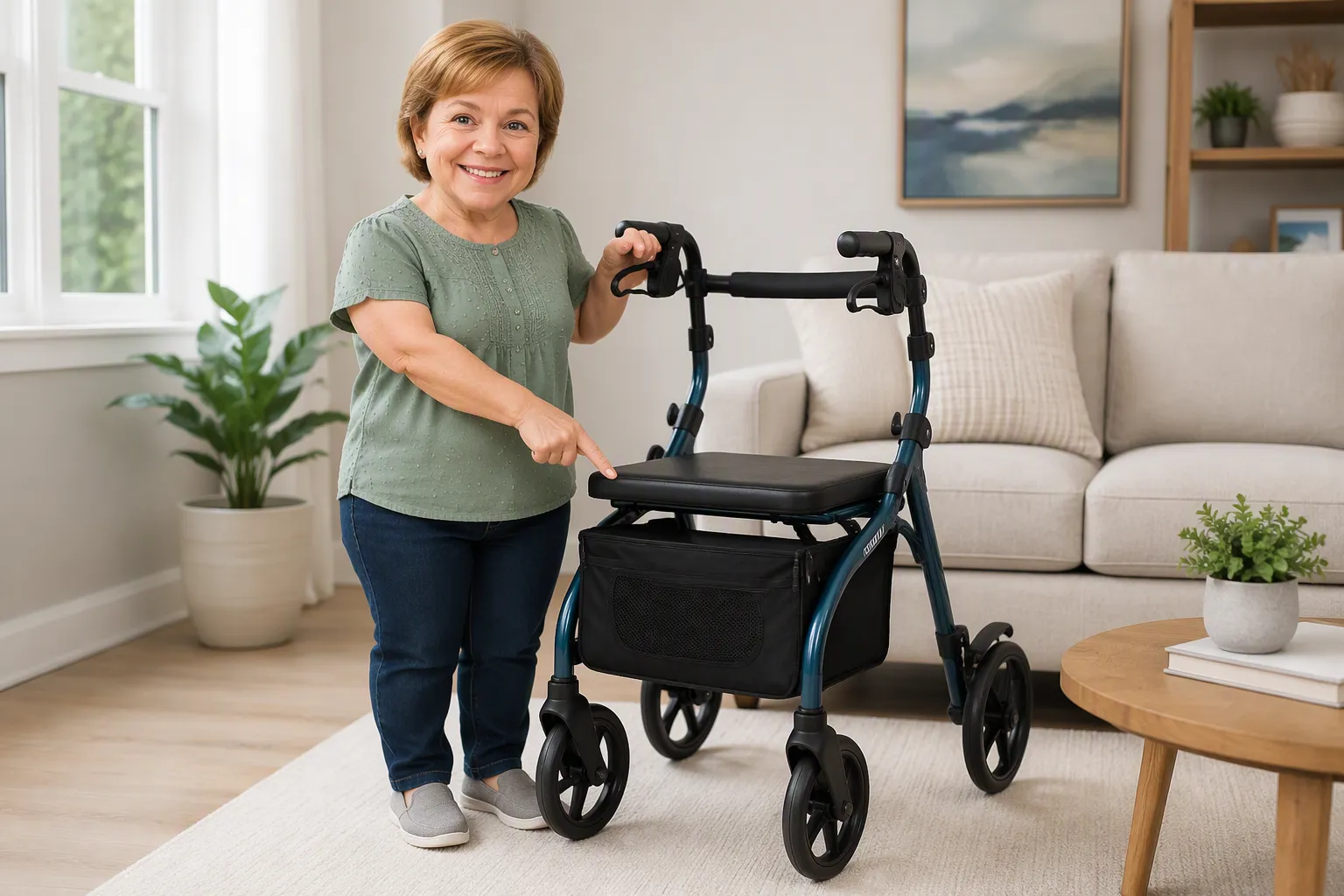
The question “how high should a rollator seat be?” has a simple answer: the feet are flat on the ground, and the knee rests at a 90-degree angle. Many short adults find the measurement falls between 18 and 20 inches. Leg length decides the right height, not an average chart. A rollator walker with adjustable settings can fit even very short users. The National Health and Aging Trends Study found that 29.4% of older adults used assistive devices outside the home. That number underscores why a safe, comfortable fit matters. The floor provides the reference point for measuring correctly.
How High Should a Rollator Seat Be?
The correct seat height for a rollator depends on one measurement: the distance from the floor to the back of the user’s knee. This number varies from person to person. A short adult cannot rely on general sizing charts. She needs her own body measurements to find the right height.
The Simple Rule: Feet Flat, Knees at 90 Degrees
A properly fitted rollator seat allows the user to sit with both feet resting flat on the ground. The knees bend at approximately 90 degrees. This position distributes body weight evenly through the hips and thighs. It also keeps the feet in contact with the floor for stability.
When the seat sits at the correct level, the user does not slide forward or perch on the edge. The thighs rest parallel to the ground. The lower legs drop straight down from the knee. This posture reduces strain on the lower back and keeps the hips in a neutral position.
Why Your Leg Length Sets the Seat Height
Leg length determines the proper seat height for every individual. A person with a 16-inch lower leg needs a different seat position than someone with a 20-inch lower leg. Height alone does not provide enough information. Two people of the same height can have different leg lengths and torso lengths.
The lower leg measurement runs from the floor to the crease at the back of the knee. This distance sets the target seat height. A rollator seat that matches this number lets the user sit comfortably without dangling feet or compressed thighs.
Typical Seat Height Range for Short Users
Petite users need a lower seat than standard models provide. Mobility aid guidelines offer clear recommendations for this group:
- Petite users (under 5’3″): recommended rollator seat height is 18″–20″.
- This petite category includes users under 5 feet 2 inches.
- These models are also described as low-seat or petite rollators, with handles adjustable down to about 28″.
A short user should look for a rollator walker with a minimum seat height of 18 inches or lower. Some compact models adjust down to 17 inches. This range accommodates most adults under 5 feet 2 inches.
Why Average Height Charts Miss the Mark
Average height charts group people into broad categories. These charts assume that height correlates directly with leg length. That assumption fails for many short users. A person may have a long torso and short legs. Another may have short legs and a long torso at the same overall height.
Manufacturers design standard rollators for the average adult. The average American woman stands about 5 feet 4 inches tall. The average man stands about 5 feet 9 inches. A rollator built for these averages often sits too high for someone under 5 feet 2 inches.
Rising Above the Guesswork
A short user cannot trust height categories alone. She needs to measure her own body. The number that matters is the lower leg length. This measurement provides a precise target for seat adjustment.
Guessing leads to discomfort and safety problems. A seat that sits too high forces the feet to dangle. A seat that sits too low pushes the knees above the hips. Both positions cause problems during sitting and standing.
Using Your Own Numbers
Personal measurements replace guesswork with certainty. The user measures her lower leg from the floor to the back of the knee. She writes this number down. Then she compares it to the rollator’s seat height specifications.
This approach works for every body type. It does not matter if the user stands 4 feet 10 inches or 5 feet 2 inches. Her own leg length provides the exact target. A rollator with an adjustable seat can then meet that target.
Measure Your Personal Seat Height
A short user needs her own numbers before she shops for a rollator. Two measurement methods provide reliable results. Each method takes only a few minutes. The user can perform both at home with common household items.
Method 1: Inside Leg Measurement
The inside leg measurement provides the most direct path to the correct seat height. This number represents the distance from the floor to the back of your knee crease. Another term for this spot is the knee fossa height. The measurement captures the exact length of the lower leg. A short user should take this measurement while wearing the shoes she plans to wear with the rollator.
Tools for Measuring
The user needs a few simple tools for this task. A tape measure provides the primary instrument. A hardcover book or a rigid ruler works as a straight edge. A pencil and paper record the result. A wall or doorframe offers a stable reference point.
The user should stand straight against the wall. She places the book or ruler between her legs at knee level. She raises the book until it touches the back of her knee crease. The book must stay level. A helper can hold the book in place while the user steps away. Then the user measures from the floor to the top of the book.
Recording Your Target Number
The user writes down the measurement in inches. This number becomes her target seat height. She should repeat the measurement two or three times. Consistent results confirm accuracy. If the numbers vary, she takes an average.
This target number guides every rollator purchase decision. A rollator with an adjustable seat range that includes this number will fit properly. A model with a minimum seat height above this number will not work.
Method 2: The Hard Chair Test
The hard chair test offers a practical alternative. This method uses the body’s own sense of comfort as a guide. The user sits on a firm chair and evaluates the fit. Then she measures the chair’s seat surface.
Setting Up a Flat, Firm Chair
The user selects a chair with a flat, hard seat. A wooden dining chair or a metal folding chair works well. She avoids soft cushions or padded seats. A soft surface compresses under body weight. That compression changes the effective seat to floor height.
The user sits on the chair with her back straight. Her feet rest flat on the floor. She checks the position of her knees. The knees should bend at approximately 90 degrees. The thighs should rest parallel to the ground. If the knees sit higher than the hips, the chair is too low. If the feet dangle, the chair is too high.
Measuring Floor to Seat Surface
The user stands and measures the chair. She runs the tape measure from the floor to the top of the seat surface. This distance represents the appropriate seat-to-floor height for her body. She records this number as her second target.
The two methods should produce similar results. A small difference of half an inch or less is normal. A large difference suggests a measurement error. The user should repeat both methods to find the source of the discrepancy.
Turning Your Measurement Into a Rollator Height
The user now holds a target number. She can compare this number to product specifications. This step transforms a body measurement into a buying decision.
Comparing Specs With Your Number
Manufacturers list seat height ranges for every rollator walker. The user reads the spec sheet carefully. She looks for the minimum and maximum seat settings. Her target number must fall within this range.
A rollator with a seat range of 18 to 22 inches fits a user with a target of 19 inches. A rollator with a minimum of 21 inches does not fit that same user. The lowest setting matters most for short users. A model that adjusts down to 17 inches accommodates nearly every petite adult.
Adding Shoe or Cushion Allowance
Shoe thickness affects the effective height of the seat from the floor. Thick-soled shoes add half an inch or more. The user should measure while wearing her typical walking shoes. This step ensures accuracy.
A seat cushion adds another variable. Some users add a cushion for comfort. A cushion raises the effective seat height by its own thickness. The user should account for this addition. She subtracts the cushion thickness from her target number. This adjustment keeps the fit correct after she adds the cushion.
Finding the right height requires patience and attention to detail. The effort pays off in comfort and safety. A properly fitted rollator supports independent mobility for years.
Why Getting the Seat Height Right Matters
A rollator walker functions well only when its seat matches the user’s lower leg length. The right height protects the body during every sit-and-stand cycle. Small errors in adjustment carry real consequences. Posture, stability, and movement all respond to that one setting.
Staying Safe and Stable
Reducing Fall Risk
The correct position keeps both feet planted on the floor. This stable base lets the user center her weight. A seat set too high forces her feet to dangle. She cannot push through her heels to stand. A seat set too low tilts her knees above her hips. That shift moves her center of gravity forward. The body loses its natural base. The user must then grip the handles tightly and lean. The handles cannot overcome the imbalance. Falls become more likely during this transition.
Protecting Your Back and Hips
The right seating position preserves spinal alignment. It also reduces strain on the hip joints. At the proper seat level, the pelvis rests level. The lower back keeps its natural curve. A high seat compresses the backs of the thighs. This compression cuts circulation and creates pressure points. A low seat produces a rounded spine. The hips then absorb extra stress. Over time, poor alignment causes pain. A correctly adjusted rollator prevents that discomfort. This protection keeps the user mobile and active.
Making Sit-to-Stand Easier
Using Your Legs Effectively
Legs supply the power for rising from a seat. The body needs a knee angle near 90 degrees to engage the thigh muscles. That angle creates optimal leverage. With feet flat on the ground, both legs push evenly. This coordinated push lifts the body without extra strain on the arms. Correct positioning puts the ankle, knee, and hip in one vertical line. This alignment transfers force straight down. The user rises without rocking forward. Each repetition taxes the joints less. When the seat position is wrong, one leg bears more force. The arms must compensate. That compensation reduces the benefit of the device.
Keeping Your Balance
A stable base begins with feet on the ground. The user’s senses detect the surface underfoot. That feedback helps the brain maintain equilibrium during the transfer. The feet grip the ground to anchor the body. The brakes keep the frame stationary. Together, these elements create a safe transfer. The frame remains steady while the user shifts weight. This steadiness comes directly from the correct seat level. Without that foundation, the body relies too much on the upper limbs. A smooth sit-to-stand motion follows. The correct posture turns a risky moment into a controlled action.
Adjusting Your Rollator Seat Height to Fit You
A short user can adjust most rollator walker seats at home. The process takes only a few minutes. The right tools and a careful approach produce a safe, comfortable fit.
Locating the Adjustment Points
Leg Extensions and Push Buttons
Most rollators use telescoping legs with push buttons. The user presses the button and slides the leg tube up or down. A series of holes along the tube marks each height setting. The button pops into a hole to secure the position. Some models use numbered markings for easy reference.
Frame Settings and Quick-Release Levers
Higher-end models may include quick-release levers. The user flips the lever open, moves the frame section, and closes the lever. This design allows faster seat height adjustment. The user should check the owner’s manual for specific instructions on her model.
Making Small, Safe Adjustments
Adjusting One Side at a Time
The user should adjust one leg at a time. She moves the first leg to the target setting. Then she matches the second leg to the same position. This method prevents the frame from tilting during the process. A level seat requires both sides at equal heights.
Locking Everything Firmly
Every push button must click into place. Every lever must close completely. The user should tug gently on each leg to confirm the lock. A loose leg can collapse during use. This step protects the user from injury.
The Feet-Flat, Knee-Bend Test
Checking the Fit
The user should lock the brakes before sitting. She sits on the seat with her back straight. Both feet must rest flat on the floor. Her knee should bend at roughly 90 degrees. If her feet dangle, the seat sits too high. If her knees rise above her hips, the seat sits too low.
Fine-Tuning Until Comfortable
Small changes make a big difference. The user should adjust the height by one hole at a time. She repeats the test after each change. She should use the seat for a few minutes to confirm comfort. A properly fitted rollator feels stable and natural. The user can then adjust the handles to match her arm length.
Choosing a Rollator With a Low Enough Seat Height
Looking for a Low Minimum Seat Height
Reading the Spec Sheet Carefully
The spec sheet holds the most important number for a short user. She needs to find the minimum seat height setting. This number tells her whether the rollator will fit her body. The Universal Seat Height Aluminum Rollator specifies a seat height adjustment range of 18 to 22 inches in 1-inch increments. Its minimum seat height is 18 inches. This range satisfies the requirement for users who need a low setting.
Why the Lowest Setting Matters Most
A short user cannot rely on the maximum setting. She needs the lowest option to match her leg length. Two compact models illustrate this point clearly.
| Model | Seat Height (from floor) |
|---|---|
| Drive Universal Height Aluminum Rollator RTL10261 | 18 inches (lowest in the 18–22 inch range) |
| Nova Zoom 18 Junior Short Walker Rollator 4218 | 18 inches |
Both models offer a seat to floor height of 18 inches. This measurement accommodates most petite adults. A rollator walker with a higher minimum will not work for this group.
Selecting the Right Wheels and Frame
Smaller Wheels for a Lower Seat
Wheel size affects the seat height directly. Smaller wheels allow the frame to sit closer to the ground. A rollator with 6-inch wheels typically offers a lower seat than one with 8-inch wheels. A short user should prioritize compact designs with smaller casters.
Frames That Allow a Low Rollator Seat
Frame geometry also determines the minimum height. Some frames use a lower crossbar design. This design lets the seat drop closer to the floor. A petite user should look for frames specifically marketed as junior or compact models.
Checking Handles, Brakes, and Weight
Adjustable Handle Height
The right handle height keeps the user comfortable during walking. Physical therapy guidelines recommend a specific range for short users.
| User Height | Recommended Rollator Handle Height |
|---|---|
| Under 5’2″ | 31″–33″ |
A user can find this measurement with the standing wrist rule. She follows a simple process:
- Wear everyday shoes.
- Stand up straight with arms hanging naturally at her sides.
- Measure from the floor to the wrist crease. This measurement equals the ideal rollator handle height. For users under 5’2″, the typical result is 31″–33″.
- When holding the handles, the elbows should bend slightly at 15–20 degrees. The shoulders stay relaxed, and the back stays upright.
The wrist level provides a reliable reference point. The right handle height lines up with your wrist height when the arms hang down. A handle set too high forces the shoulders to rise. A handle set too low causes the user to stoop. Both positions create strain.
Brake Levers Within Easy Reach
Brake levers must sit close to the hand grips. A short user has a smaller hand span. She should test the brakes before buying. She needs to reach them without shifting her grip.
Lifting and Folding Effort
A lightweight rollator walker makes daily use easier. A short user may have less upper body strength. She should choose a model under 15 pounds. The fold mechanism should operate with one hand. This feature helps during car transport and storage.
Common Mistakes That Throw Off Seat Height
Even a well-made rollator can fail its user when the seat height is wrong. Several common errors lead to poor fit. Each mistake carries consequences for comfort and safety.
Buying by Average Height
Why One-Size-Fits-All Fails Short Users
Height charts group people into broad categories. They ignore the wide variation in leg length among individuals. A short user who buys a rollator based on her overall height may end up with a poor fit. The seat may sit too high or too low for her body. A mobility aid that is technically fine but poorly sized can increase strain and reduce confidence. Handle height should allow a comfortable, slight bend in the elbow. A handle set too high can raise the shoulders and fatigue the upper back. A handle set too low can force a forward lean, which can reduce stability and strain the wrists.
Trying the Rollator Before Buying
A short user should test any rollator before purchase. She needs to sit on the seat and check the fit. She should also grip the handles and test the brakes. This trial reveals problems that spec sheets cannot show. The wrist measurement provides a reliable guide for handle height. The user should follow a simple process:
- Wear the shoes she normally uses, since footwear affects standing height.
- Stand upright with arms hanging naturally at her sides.
- Measure from the floor to the wrist crease. This equals the ideal handle height.
- When gripping the handles, her elbows should bend slightly at about 15–20 degrees. Her shoulders stay relaxed, and her back stays upright.
- Always prioritize the wrist measurement over general height charts for accuracy.
Setting the Seat Too High
Dangling Feet and Pressure Points
A seat set too high leaves the feet dangling above the floor. This position creates pressure points along the backs of the thighs. Circulation suffers. The user cannot push through her heels to stand. She must rely on her arms instead.
Harder Standing and Higher Fall Risk
When a rollator walker is set too high, the user struggles to rise. Her feet cannot reach the ground for leverage. She must grip the handles and pull herself up. This motion shifts her weight forward. The risk of a fall increases. A seat that sits too high also forces the shoulders to rise. This position creates fatigue in the upper back.
Ignoring Casters and Brake Position
Wheel Size Changes the Effective Seat Height
Wheel size directly affects seat height. Larger wheels raise the frame. A rollator with 8-inch wheels sits higher than one with 6-inch wheels. A short user should account for this difference. She should measure the seat height with the wheels installed.
Brakes You Cannot Reach Safely
Brake levers must sit within easy reach. A short user has a smaller hand span. She may struggle to grip the brakes on a standard model. Poor brake access leads to several problems:
- Poor posture
- Wrist strain
- Shoulder pain
- Reduced stability
- Forward leaning while walking
- Increased risk of falls
- Difficulty squeezing brakes
- Feeling unstable
A short user should test the brakes before buying. She needs to reach them without shifting her grip. This check prevents accidents during daily use.
A short user should aim for a rollator seat height that lets her feet sit flat on the floor with her knees slightly bent. This often means about 18–20 inches, but her own leg length decides the exact number. She should choose a compact or low-seat rollator walker if that is what it takes to get the right fit. The right height keeps her safe, steady, and comfortable. A seat set too high or too low causes problems. The search for the right rollator is worth the effort.
FAQ
How high should a rollator seat be for someone under 5 feet tall?
A user under 5 feet tall typically needs a seat height between 17 and 19 inches. Her lower leg length determines the exact number. She should measure from the floor to the back of her knee. A rollator with a minimum seat height of 18 inches or lower fits most users in this range.
Can a short person use a standard rollator?
A standard rollator often sits too high for a short user. Most standard models have a minimum seat height of 20 inches or more. A petite user should look for compact or junior models. These designs adjust down to 17 or 18 inches.
What happens if the rollator seat is too high?
A seat set too high forces the feet to dangle. The user cannot push through her heels to stand. She must rely on her arms instead. This position increases fall risk and creates pressure points along the thighs.
How does a short user measure her ideal seat height?
She measures from the floor to the back of her knee crease. She performs this measurement while wearing her walking shoes. She repeats the process two or three times for accuracy. The average number becomes her target seat height.
Do smaller wheels help a short user?
Smaller wheels allow the frame to sit closer to the ground. A rollator walker with 6-inch wheels typically offers a lower seat than one with 8-inch wheels. A short user should prioritize compact designs with smaller casters.
Can a user adjust the seat height at home?
Most rollators use telescoping legs with push buttons. The user presses the button and slides the leg tube to the target setting. She adjusts one side at a time. She confirms each button clicks into place before sitting.
What handle height works for a short user?
A user under 5 feet 2 inches typically needs a handle height between 31 and 33 inches. She measures from the floor to her wrist crease while standing with arms at her sides. Her elbows should bend slightly at 15 to 20 degrees when gripping the handles.
Why does seat height matter for safety?
The correct seat height keeps both feet flat on the floor. This position lets the user center her weight during sit-to-stand transfers. A proper fit reduces fall risk and protects the back and hips. It also makes standing easier and more controlled.