
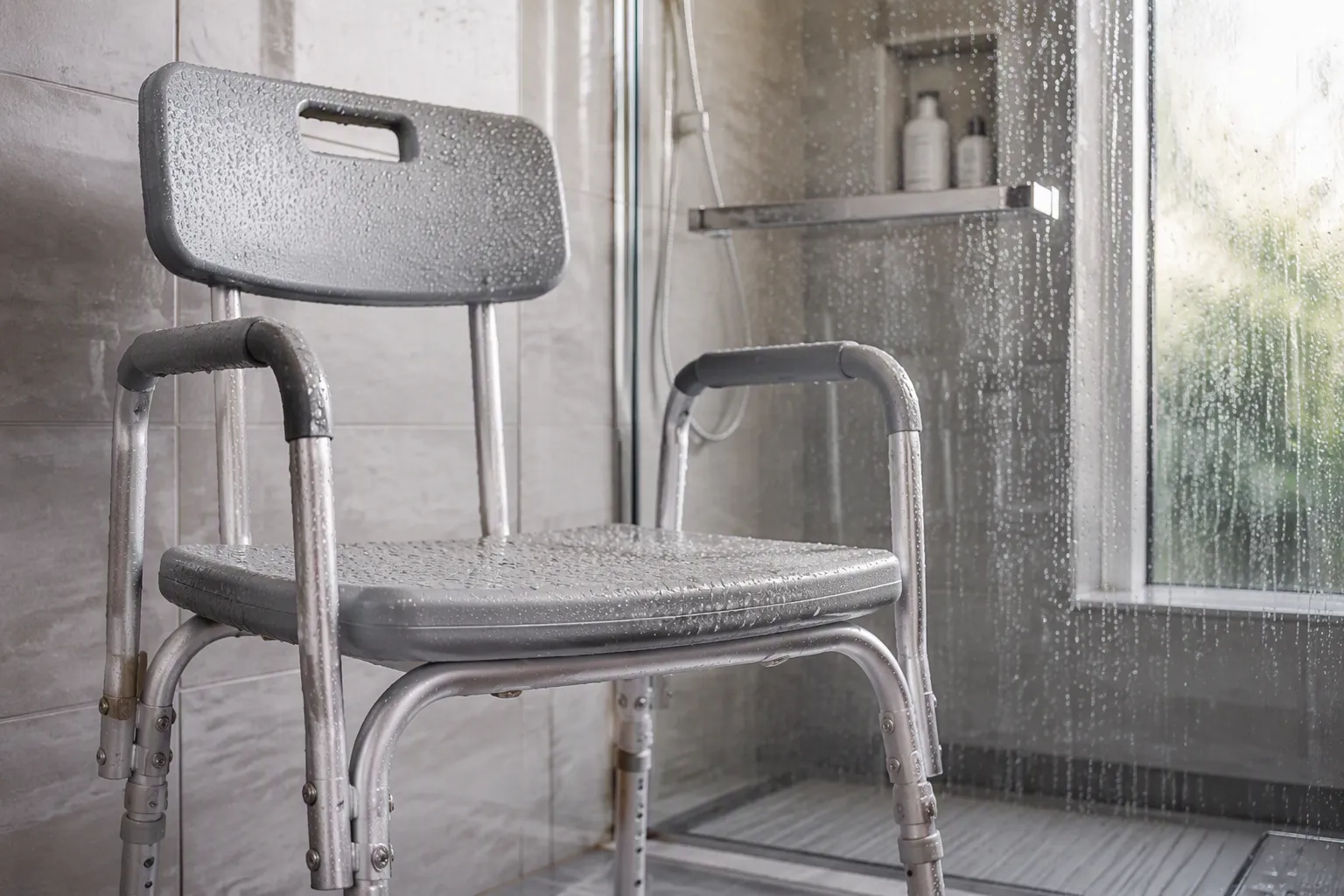
No, an aluminum shower chair will not rust, even in a humid bathroom. Rust attacks iron and steel. Aluminum may corrode instead, which is a different process. This distinction explains why aluminum shower chair rust concerns are largely unfounded. A rust-resistant aluminum shower chair stays in good condition for years with simple care. Users simply rinse the shower chair, dry it, and ventilate the space. The aluminum frame resists damage well in daily use.
The Short Answer on Aluminum Shower Chair Rust
Aluminum Does Not Rust
Why Rust Is an Iron Problem
Rust is a specific chemical outcome. It describes the iron oxide that forms when iron or steel meets water and oxygen. Iron loses electrons and reacts with both substances to produce Fe₂O₃·nH₂O, the reddish-brown flaky material most people recognize. Alloys without iron cannot produce this material. Aluminum contains no iron, so the aluminum shower chair rust question has a simple chemical answer: the metal lacks the ingredient rust requires.
This places rust inside a larger family of reactions. Oxidation sits at the top of the hierarchy, corrosion sits beneath it, and rust sits at the bottom as one narrow branch. Rust is therefore a type of corrosion, and corrosion is a type of oxidation. A rusty nail, a tarnished silver spoon, and a crumbling concrete step all involve oxidation, yet only the nail rusts. The distinction matters for anyone comparing shower chairs, because a rust-free stainless-steel frame and an aluminum frame resist the bathroom environment through different mechanisms.
What Aluminum Does Instead
Aluminum responds to oxygen and water in a very different way. The metal forms a continuous alumina (Al₂O₃) layer that measures only 5–10 nm thick. This film appears instantly on exposure to oxygen or water, even at very low oxygen pressure. The layer stays stable in near-neutral pH, roughly 5 to 9, which covers the pH of seawater at about 8 to 8.2. That stability explains why the protective film persists in marine settings and other humid spaces.
Research on high-humidity environments adds useful detail. Exposed aluminum oxide adsorbs water vapor and builds a nanoscale surface film whose thickness scales with relative humidity. A thicker film provides more medium for ion transport. Dissolved aluminum ions localize near the air-water interface and diffuse much faster there than near the oxide itself, which accelerates the transport that drives pit formation and growth. Lowering humidity increases confinement within the thin film and slows atmospheric corrosion. All-atom reactive molecular dynamics simulations on LLNL’s Ruby supercomputer produced this mechanistic basis for lifetime prediction models. The practical takeaway for a bathroom is straightforward: humidity influences the rate of surface change, not the presence of rust.
Corrosion Is Not Rust
How the Two Processes Differ
Corrosion is the broader category. It proceeds through oxidation-reduction reactions in which electrons transfer from the metal to another substance. Rust is the iron-specific outcome of that process. The table below summarizes the contrast.
| Aspect | Rust | Corrosion |
|---|---|---|
| Chemical process | Specific reaction forming iron oxides | General decomposition via chemical or electrochemical reactions |
| Affected materials | Only iron and steel | Many materials, including metals, plastics, and ceramics |
| Scope | A specific form of corrosion | The broader category |
| Examples | Rusty nails, tools, vehicles | Tarnished silver, rusting iron, concrete decomposition |
The hierarchy runs from oxidation to corrosion to rust. Aluminum, copper, and steel all corrode under the right conditions, yet only iron-bearing metals rust. A durable stainless steel frame resists rust through alloying elements such as chromium, while aluminum resists through its oxide film. Neither material is immune to every form of attack.
What Corrosion Looks Like on Aluminum
Aluminum corrosion rarely announces itself with red flakes. The early stage often appears as a dull, chalky white or gray film on the surface. Pitting comes next, with small dark cavities that penetrate the metal. Advanced cases show flaking or blistering where the oxide layer lifts away. These signs differ sharply from the orange-brown staining of iron rust, and a homeowner who knows the difference can inspect a shower chair with confidence. The metal may show surface changes after years of service, yet the chair has not rusted. It has corroded, and the damage usually stays cosmetic when the owner maintains the protective layer.
Why Aluminum Resists Rust
The Protective Oxide Layer
How the Layer Forms Naturally
Aluminum reacts with oxygen the moment it meets the air. This reaction happens on its own, without heat, electricity, or any applied coating. The metal surface combines with oxygen to form aluminum oxide, a ceramic-like compound that bonds tightly to the underlying metal. The film is extremely thin, typically between 5 and 10 nanometers, yet it covers every exposed surface evenly. Freshly cut or machined aluminum develops this layer within minutes of exposure.
The same process unfolds in a humid bathroom. Water vapor carries dissolved oxygen to the metal surface, and the oxide film grows a little thicker as humidity rises. This natural growth is the reason a shower chair needs no factory-applied rust-proof construction to survive wet conditions. The metal builds its own shield, and that shield forms continuously wherever air or moisture reaches the surface.
How the Layer Heals Itself
The oxide layer possesses a remarkable quality: it repairs itself. When a scratch breaks through the film, fresh aluminum sits exposed to the surrounding air. Oxygen immediately reacts with that bare metal and rebuilds the oxide coating over the damaged spot. The new film forms within seconds to minutes, and the surface returns to its protected state.
This self-healing behavior separates aluminum from many other metals. A scratched painted steel surface stays exposed and begins to rust at the breach. A scratched aluminum surface closes the wound on its own. The repair is not infinite, however. Deep gouges that remove large amounts of metal, or repeated damage in the same spot, can overwhelm the healing capacity. The metal then relies on the owner to limit further wear. Even so, the self-sealing property gives aluminum a clear advantage in a shower chair that sees daily bumps and scrapes.
What Weakens the Protection
Scratches and Abrasion
Mechanical damage poses the most common threat to the oxide film. Grit trapped under a chair foot, a dropped shampoo bottle, or a scouring pad dragged across the frame all cut into the surface. Shallow scratches heal quickly through the natural oxidation process. Deep scratches remove enough metal to slow the healing, and repeated abrasion in one area thins the film faster than it can rebuild.
Abrasion also roughens the surface. A rough surface traps water and dirt more easily, and trapped moisture extends the time the metal stays wet. Owners should lift the chair rather than drag it across tile, and they should avoid abrasive sponges on the frame. These small habits preserve the smooth finish and keep the oxide layer intact.
Harsh Chemicals and Cleaners
Chemical attack weakens the oxide layer in a different way. Strong acids dissolve the film outright, and strong bases break down its structure. Both leave the bare metal exposed to the next splash of water. The table below shows how common bathroom chemicals affect the protective layer.
| Chemical | pH / Nature | Effect on Aluminum Oxide Layer |
|---|---|---|
| Bleach (sodium hypochlorite) | 11–13 (alkaline) | Reacts strongly, causing discoloration, dark spotting, and accelerated pitting |
| White vinegar (acetic acid) | 2–3 (acidic) | Strips the oxide layer, leaving surface dull, rough, and prone to staining |
| Generic acidic descalers | 1–4 (acidic) | Rapid, visible pitting, sometimes within a single use |
| Undisclosed alkaline degreasers | 9–13 (alkaline) | Loss of shine and streaking; too aggressive for reactive aluminum |
Several household products deserve special caution around an aluminum frame:
- Chlorine bleach and chlorinated cleaners — rapidly pit and etch aluminum surfaces
- Oven cleaners (lye/sodium hydroxide) — aggressively attack and dissolve aluminum
- Drain cleaners — caustic formulas eat through aluminum quickly
- Ammonia-based window cleaners — can discolor and streak aluminum surfaces
- Undiluted muriatic acid — too aggressive, causes immediate etching
A single exposure to a strong descaler can leave permanent pits. Repeated contact with milder products produces gradual dulling and streaking. The metal remains resistant to corrosion in ordinary bathroom conditions, yet it cannot withstand deliberate chemical assault. Owners who choose mild soap over harsh sprays keep the oxide layer healthy and the frame looking new. This simple choice helps shower chairs stay protected from rust and corrosion for many years.
Aluminum vs. Other Shower Chair Materials
Steel and Iron Shower Chairs
Why They Rust Quickly in Bathrooms
Steel and iron frames contain iron, and iron reacts with water and oxygen to form rust. A humid bathroom supplies both ingredients constantly. Steam condenses on the frame, splashes reach the legs, and damp air surrounds the metal for hours after each shower. Paint and powder coatings slow the process, yet chips and scratches expose bare metal. Once rust starts, it spreads beneath the coating and weakens the frame.
Signs of Rust to Watch For
Owners should inspect steel frames for orange-brown stains, rough patches, and flaking paint. Rust often appears first at welded joints, screw holes, and the rubber feet. These spots trap water and lose their coating quickly. A frame with bubbling paint or reddish streaks near the floor deserves immediate attention.
Plastic and Composite Shower Chairs
Where They Hold Up Well
Plastic and composite models never rust. They resist water well, cost little, and suit temporary needs such as travel or post-surgery recovery. Molded seats stay comfortable, and the surfaces wipe clean easily.
Where They Fall Short
Plastic weakens under repeated stress. Legs flex, seats crack, and UV exposure makes the material brittle over time. Many plastic models carry low weight limits, and their lightweight build feels less stable on wet tile. These shower chairs also offer limited adjustability.
Why a Rust-Resistant Aluminum Shower Chair Wins
Lightweight and Strong
Aluminum delivers an excellent strength-to-weight ratio. A user can lift and reposition the chair with one hand, yet the frame supports full adult weight without bending. This combination makes the chair easy to move between the bathroom and storage.
Built for Wet Environments
Aluminum suits wet conditions because its oxide layer regenerates after scratches. A rust-resistant aluminum shower chair handles steam, splashes, and daily rinsing without structural decline. The metal stays strong in wet bathroom environments where steel would fail. Buyers who want a lightweight, corrosion-resistant bath chair will find aluminum fit for wet environments and free of rust risk. A rust-proof design of this kind serves years of dependable use.
What Causes Corrosion in a Humid Bathroom
Moisture and Standing Water
Puddles and Trapped Water
Water collects in predictable places on any shower chair. The seat surface holds shallow pools after each use. Rubber feet trap a ring of moisture against the floor. Joints and hollow tubing collect drips that cannot escape. Repeated exposure to water and humidity keeps the metal wet for long stretches, and a wet surface gives corrosion chemistry the time it needs to proceed. Owners who shake off the chair and tip it to drain reduce that contact time.
Poor Ventilation
A bathroom without a working fan or open window stays humid long after the shower ends. Steam condenses on every cool surface, including the chair frame. High humidity slows drying and extends the wet period. A running exhaust fan clears the air in minutes and shortens the window of risk.
Chemical Exposure
Harsh Cleaning Products
Many common cleaners attack the protective oxide film on aluminum. The table below summarizes the main offenders.
| Cleaning product or condition | Effect on aluminum |
|---|---|
| Harsh cleaners | Promote corrosion; users should check aluminum for early signs of trouble |
| Alkaline agents (pH above 8) or strong bases | Attack the protective oxide film; high-pH water slowly dissolves and weakens the metal |
| Harsh abrasives or steel wool | Scratch the oxide layer and reduce corrosion resistance |
Soap and Shampoo Buildup
Soap scum and shampoo residue collect on the frame and trap moisture underneath. The film holds water against the metal and blocks airflow. A weekly rinse with mild soap removes the buildup before it hardens.
Physical Wear
Scratches From Daily Use
Dragging the chair across tile picks up grit. Dropped bottles and scouring pads cut into the finish. Each scratch thins the oxide layer and gives moisture a foothold. Lifting the chair instead of dragging it prevents most of this damage.
Worn Protective Coatings
Some shower chairs carry painted or anodized finishes. Chips and worn patches expose bare metal and create uneven protection. Owners should touch up small chips and watch for dull or chalky spots that signal a failing coating. These habits keep the chair reliable in wet conditions and limit the slow work of corrosion.
How to Prevent Corrosion on Your Shower Chair
Daily Care Habits
Rinse and Dry After Use
A quick rinse removes soap residue and minerals from the frame. The user then wipes the surface with a soft towel. Drying takes less than a minute and removes the water film that drives surface change. A dry shower chair stays cleaner and looks better for years.
Keep the Bathroom Ventilated
A running exhaust fan clears steam after every shower. An open window works well in mild weather. Good airflow shortens the wet period on the frame and the floor. A dry bathroom protects every metal fixture inside it, including the shower chair.
Cleaning the Right Way
Mild Soap and Water
A solution of gentle dish soap and warm water handles most soil. The user applies it with a soft cloth or sponge. A thorough rinse follows, then a quick dry. This routine removes buildup without harming the protective oxide layer on aluminum.
Cleaners to Avoid
Strong chemicals damage the frame. The owner should skip bleach, vinegar, ammonia, and acidic descalers. Abrasive pads and steel wool scratch the surface and thin the oxide film. Mild products clean just as well and keep the finish intact.
Regular Inspections
Check Joints and Feet
Joints and rubber feet collect moisture and dirt. The user should inspect these spots every few weeks. Loose fasteners deserve a quick tighten. Worn feet deserve replacement. These small checks prevent wobble and keep the shower chair stable on wet tile.
Spot Early Warning Signs
A chalky white film, dark spots, or dull patches signal early surface change. The owner should clean these areas and dry them well. Small chips in painted finishes deserve a touch-up. Early action stops minor issues from growing into real damage. These habits keep shower chairs free of rust and ready for daily use.
When to Replace Your Aluminum Shower Chair
Signs of Serious Damage
Pitting and Flaking
Pitting appears as small dark cavities that penetrate the metal surface. Flaking shows the oxide layer lifting away in thin sheets. Both signals mean the protective film has failed in that area. A shower chair with widespread pitting loses strength at those points. Owners should replace the chair when pits grow deep or spread across load-bearing sections.
Loose or Wobbly Parts
A stable chair keeps the user safe on wet tile. Wobble at the joints or feet signals worn fasteners or cracked fittings. Tightening screws helps for a short time. Persistent looseness means the frame has sustained structural damage. The owner should retire the chair at that point. A shower chair should be replaced if rust, cracks, worn rubber tips, or instability appear.
Making the Chair Last Longer
Simple Upkeep That Pays Off
Routine care extends the service life of any aluminum shower chair. Quality models typically last three to five years with proper maintenance. These habits make the difference:
- Wash the seat frequently with mild soap and water to prevent mold and mildew growth; a disinfectant spray handles deeper cleaning.
- Perform periodic inspections for signs of wear or damage.
- Replace worn-out components and tighten loose screws to maintain safety.
- Dry all surfaces with a clean towel and let the chair air dry in a well-ventilated area.
- Apply protective coatings to metal parts to limit corrosion.
Storage Between Uses
A clean, dry, well-aerated storage spot protects the frame between showers. Owners should use a cover to keep out dust and moisture. They should also inspect the frame regularly for cracks or weaknesses, confirm that arms, bolts, and screws stay secure, and check that wheels slide without obstruction. Prompt replacement of worn parts preserves safety and cleanliness. These steps keep shower chairs ready for daily use and free of rust.
An aluminum shower chair does not rust, even in a humid bathroom. The metal lacks iron, so the aluminum shower chair rust concern does not apply. Corrosion remains possible, yet simple habits prevent it. Owners should rinse and dry the shower chair after each use, ventilate the bathroom, and inspect the frame regularly. These steps keep shower chairs safe and reliable for years.
FAQ
Does an aluminum shower chair rust after years of daily use?
No. Aluminum contains no iron, so the metal cannot form rust. Years of daily use may dull the finish or leave chalky spots. These changes reflect surface corrosion, not rust. Regular rinsing and drying keeps the frame in good condition.
Can humidity alone damage an aluminum shower chair?
Humidity alone causes little harm. The oxide layer forms faster in moist air and protects the metal beneath. Damage requires a combination of moisture, chemical exposure, and physical wear. Good ventilation removes the moisture that supports surface change.
Is a stainless steel frame a better choice than aluminum?
Both materials resist rust well. A stainless steel frame weighs more and costs more. Aluminum offers easier lifting and repositioning. Buyers should match the material to their needs. Each option serves wet bathrooms effectively when the owner maintains it.
How often should someone inspect a shower chair for corrosion?
A monthly inspection catches problems early. The owner should check joints, feet, and welded areas for chalky film or dark spots. Wobbly parts deserve immediate attention. Early action prevents small issues from becoming safety hazards.
Do scratched aluminum shower chairs still resist corrosion?
Shallow scratches heal on their own. Fresh metal meets oxygen and rebuilds the oxide film within minutes. Deep gouges slow this process and need monitoring. Owners should lift the chair instead of dragging it to limit damage.
Which cleaners damage an aluminum shower chair?
Bleach, vinegar, ammonia, and acidic descalers attack the oxide layer. Abrasive pads scratch the surface and thin the film. Mild dish soap and warm water clean effectively without harm. A soft cloth protects the finish during cleaning.
How long does an aluminum shower chair last?
Quality models last three to five years with proper care. Routine rinsing, drying, and ventilation extend service life. Regular inspections catch wear before it spreads. Owners should replace the chair when pitting, cracks, or instability appear.
Can corrosion make an aluminum shower chair unsafe?
Severe corrosion weakens load-bearing sections. Deep pitting and flaking reduce frame strength. Loose joints and wobbly feet signal structural damage. Owners should retire the chair at that point. Prompt replacement protects the user on wet tile.