

Two rollators can share the same listed weight yet feel completely different in a user’s hands. A rollator with mass clustered near the middle is far easy to lift compared to one with weight pushed toward the front or top. Where a person grabs matters as much as what they grab. Well-placed handles and frame bars cut lifting effort in half. The folding mechanism also changes the experience. A rollator walker that locks into a rigid shape is easy to lift as one solid piece. A floppy frame swings open and fights the user. Finally, wheel size and position shift the natural lifting angle. Small wheels and rear-set wheels change how the rollator tilts, which changes how heavy it feels.
Center of Mass and Frame Balance Make a Rollator Easy to Lift
Why Weight Near the Center Feels Lighter
The Physics of Lifting a Rollator
A rollator behaves like any physical object when a person lifts it. The force required to raise it depends on its total mass, but the effort a person feels depends on where that mass sits. When a manufacturer concentrates the heaviest components near the center of the frame, the rollator rotates less during a lift. The user’s hand stays under the mass, and the object moves as a single stable unit. When weight sits far from the hand, the rollator acts like a lever with a long arm. The user must fight torque, not just gravity. That torque makes a 15-pound rollator feel like a 25-pound one.
A simple test reveals this principle. A person can hold a hammer close to the head with little effort. The same hammer held at the end of the handle strains the wrist. A rollator follows the same rule. Mass near the midpoint of the frame keeps the lifting hand close to the center of gravity. Mass at the front or top moves the center of gravity away from the hand. The user then applies extra force to stop the rollator from rotating. That extra force is the difference between a rollator that feels easy to lift and one that feels awkward and heavy.
How a Low Center of Gravity Reduces Wrist and Back Strain
A low center of gravity changes the body mechanics of a lift. When the heaviest parts of a rollator sit low, the user does not need to bend the wrist backward or round the lower back. The hand stays in a neutral position, and the shoulder carries the load. A high center of gravity forces the user to lift with the arm extended and the wrist cocked. That posture concentrates stress on the small muscles of the forearm and the lumbar spine. Over many repetitions, such as daily car trunk loading, that stress leads to fatigue and pain.
A low center of gravity also shortens the distance between the hand and the mass. The user lifts with the biceps and shoulders instead of the fingertips. This shift distributes force across larger muscle groups. The result is a lift that feels controlled and sustainable. Caregivers who lift a rollator walker multiple times each day notice this difference immediately. The rollator feels lighter, even when the scale says otherwise.
Front-Heavy vs. Balanced Frames
Why Front-Loaded Rollators Tip Forward When Lifted
A front-loaded rollator carries too much mass ahead of the lifting hand. The front wheels, the front frame section, and any front-mounted accessories pull the center of gravity forward. When a user lifts the rollator by a rear frame bar, the front end drops. The user must then compensate with a stronger grip and a higher lift. That compensation adds effort and reduces control. In a car trunk, a front-heavy rollator may swing forward and strike the bumper or the trunk lid. On a stair landing, it may pitch away from the user’s body.
The tipping motion also creates a safety risk. A sudden forward tip can pull the user off balance. A caregiver may drop the rollator to avoid a fall. A front-heavy design turns a simple lift into a two-handed wrestling match. The user must hold the frame with one hand and steady the front with the other. That extra step doubles the time and effort of every lift.
Signs of a Well-Balanced Frame at a Glance
A well-balanced frame shows several visible cues. The seat sits near the midpoint between the front and rear wheels. The manufacturer places the heaviest components, such as the brake mechanism and the main hinge, close to that midpoint. The rear frame bars sit directly above the rear wheels. The front section carries only the caster forks and a light basket. When a person lifts the rollator by the rear bars, the front end rises at the same rate as the rear. The rollator stays level in the air.
A balanced rollator also hangs straight when a user holds it by a single lift point. It does not rotate toward the front or the rear. The user can carry it with one hand and keep the other hand free for a door or a handrail. That single-hand carry is the clearest sign of good balance. A well-balanced frame turns a heavy object into a manageable one.
How Frame Material Placement Affects Balance
Aluminum vs. Steel and Where the Weight Sits
Material choice changes where mass sits in the frame. Steel offers high strength, but it adds density. A steel frame carries more weight in every tube, so the manufacturer must place that weight carefully. Aluminum offers a lower density. A designer can use thicker tubes at stress points and thinner tubes along secondary spans. This strategy keeps strength where the user needs it and removes mass from areas that do not carry load.
The frame is the rollator’s backbone, and its material placement decides the center of gravity. Modern rollators often use 6061 T6 aluminum with precision extrusion. This process varies the internal wall thickness of each tube. The manufacturer reinforces load-bearing joints and reduces material along secondary spans. The result is a frame that stays strong and lightweight. The center of gravity stays low and central, between the front caster wheel axis and the rear wheel baseline. That placement prevents tipping during sudden stops or slope changes.
| Design factor | Effect on center of gravity |
|---|---|
| Aluminum tube wall thickness | Reduces unnecessary frame mass while keeping strength at joints, helping the center of gravity stay low and central |
| Frame geometry and tube placement | Calibrates the center of gravity between the front caster axis and rear wheel baseline, preventing tipping and supporting a stable gait |
Why a Lighter Frame Isn’t Always the Easier Lift
A lightweight construction does not guarantee an easy lift. A 12-pound rollator with all its mass at the front feels heavier than a 15-pound rollator with mass at the center. The lighter rollator forces the user to fight rotation. The heavier rollator moves as a stable unit. The user’s muscles work against torque in the first case and against simple gravity in the second. Torque demands more effort from smaller muscles and creates faster fatigue.
A lightweight frame also may lack the rigidity that a lift requires. A flexible frame bends under load. The user must grip harder to control the flex. That extra grip tension tires the hand and forearm. A rigid frame with well-placed mass transfers force directly to the hand. The user feels the full weight, but the weight stays predictable. Predictable weight is easier to manage than a lighter load that shifts and twists. For these reasons, a shopper should compare rollators by balance and rigidity, not by the number on the spec sheet alone.
Chassis and Component Layout in a Rollator Walker
Where the Seat Sits Matters
High Seats vs. Low Seats and Lifting Feel
A high seat raises the rollator’s center of gravity. The user must lift the frame higher to clear a car trunk lip or a stair edge. That extra height increases the effort on the shoulders and back. A low seat keeps the mass closer to the ground. The user lifts the rollator walker with less vertical travel. The lift feels shorter and more controlled.
How Seat Position Shifts the Balance Point
The seat acts as one of the heaviest key parts on the chassis. A seat placed near the midpoint keeps the balance point central. A seat pushed toward the front or rear shifts that balance point away from the natural grip. A forward seat makes the front end drop during a lift. A rearward seat makes the back end sag. A centered seat keeps the rollator level in the air.
Wheel and Basket Placement
Why a Front Basket Makes Lifting Harder
A front basket adds mass ahead of the lifting hand. That forward weight pulls the center of gravity toward the front wheels. The user must grip harder to stop the rollator from tipping forward. A loaded front basket makes the problem worse. Even a lightweight basket changes the lifting feel when it sits far from the hand.
Rear-Mounted Baskets and Better Balance
A rear-mounted basket keeps added weight close to the rear frame bars. The user’s hand sits near that mass during a lift. The rollator stays balanced and moves as one unit. Many rollators place the basket behind the seat for this reason. Rear placement also keeps the front end light for easier tilting over curbs.
Brake and Cable Routing
How Exposed Cables Catch on Car Trunks
Exposed brake cables create snag points during a lift. A cable loop can catch on a trunk latch, a door handle, or a seat belt. The user must stop, free the cable, and restart the lift. That interruption adds effort and frustration to every trip.
Clean Routing for Smoother Lifts
Internal cable routing solves this problem. According to a product review of the 6 Best Rollator Walkers for Seniors, the brake cables on a particular rollator are routed inside the aluminum frame. This internal routing prevents the cables from snagging on doorknobs or furniture. A clean routing path also protects the cables from wear. The user lifts the rollator without catching loose lines on nearby objects. Key components that benefit from clean routing include:
- Brake cables
- Brake response
- Parking brakes
- Handles
- Height-adjustment mechanisms
- Folding mechanisms
- Fasteners
- Seat
- Backrest
- Storage attachments
- Frame condition
A tidy chassis layout reduces snags and keeps every lift smooth.
Lift Points and Handle Design on Rollators
Finding the Natural Grab Points
Frame Bars vs. Seat Handles
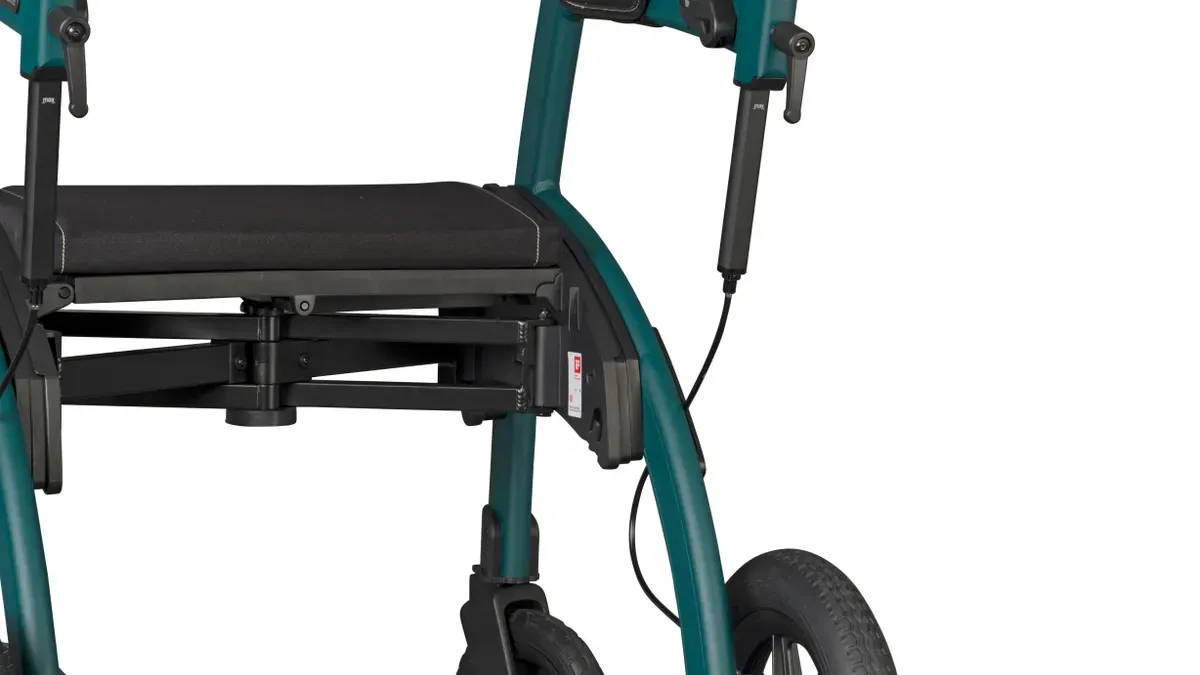
A person who wants to lift a rollator walker must first decide where to place their hands. The frame bars offer the most direct connection to the structural core. These bars run along the sides and rear of the chassis. They carry the main load and transfer force without flex. A user who grips a rear frame bar lifts the rollator as a rigid unit. The mass stays centered, and the rollator moves without twisting.
Seat handles offer a different experience. Some rollators include a handle built into the seat edge or the seat frame. This handle sits close to the center of the chassis. That placement sounds ideal, but the seat handle often sits lower than the natural grip height. A user must bend further to reach it. The lower grip also changes the lifting angle. The wrist rotates, and the shoulder carries more strain. A seat handle works well for a short lift, such as pulling the rollator toward the body. It works poorly for a full lift into a car trunk.
The best grab points combine height and rigidity. A rear frame bar at hip height lets the user lift with a straight back and a neutral wrist. A seat handle forces a bend and a twist. For repeated lifting, the frame bar wins every time.
Why a Dedicated Lift Strap Changes Everything
A dedicated lift strap solves the grab-point problem outright. This strap attaches to the frame at a balanced point. It hangs free when the rollator is open. The user grabs the strap and lifts. The strap centers the load under the hand. It also eliminates the need to search for a bar or a handle. The user finds the strap by touch alone.
A lift strap offers another advantage. It folds flat when not in use. It adds almost no weight to the rollator. It does not interfere with the seat or the brake system. A caregiver who lifts the device many times each day appreciates this small feature. The strap turns an awkward two-hand lift into a simple one-hand carry. A shopper should look for a rollator with a dedicated lift strap or an aftermarket strap that attaches to a balanced frame point.
Handle Shape and Grip Comfort
Contoured Grips vs. Straight Bars
Handle shape changes how a user’s hand interacts with the rollator. Contoured grips follow the natural curve of the palm. They spread pressure across a wider area. The user’s fingers wrap around a shape that matches their hand. That match reduces the grip force needed to hold the rollator steady. A straight bar offers no such match. The user must squeeze harder to prevent the hand from sliding. That extra squeeze tires the forearm and the fingers.
Contoured grips also guide the hand to the correct position. The user does not need to adjust their grip after every lift. The shape tells the hand where to sit. That consistency reduces fumbling and improves control. For a user with limited hand strength, a contoured grip makes the difference between a confident lift and a dropped rollator.
How Grip Width Affects Lifting Effort
Grip width determines how much leverage a user has during a lift. A narrow grip forces the hand to work at a mechanical disadvantage. The user must apply more force to control the load. A wider grip distributes the load across more of the hand. The user gains leverage and control. The rollator feels lighter, even when the weight has not changed.
Grip width also affects wrist alignment. A grip that is too narrow forces the wrist to bend inward. A grip that is too wide forces the wrist to bend outward. Both positions strain the joint. The ideal width keeps the wrist straight and the forearm aligned with the load. A shopper should test the grip width with a full lift, not just a quick touch. The right width makes the lift feel natural. The wrong width makes every lift a struggle.
Padding, Texture, and Hand Fatigue
Why Soft Grips Feel Lighter Over Time
Hand fatigue changes how heavy a rollator feels. A hard grip concentrates pressure on a small area of the palm. That pressure builds with every lift. After several lifts, the hand aches, and the user perceives the rollator as heavier. A soft grip spreads pressure across a larger area. The hand stays comfortable longer. The user maintains a steady grip without extra effort.
Padded rollator handles reduce hand fatigue during prolonged use. The padding absorbs some of the force that would otherwise travel through the palm. The user’s hand does not need to work as hard to maintain control. Over a full day of errands, that difference adds up. The rollator feels lighter because the hand is not fighting pain.
Best Grip Materials for Caregivers
Caregivers face the highest demand on grip comfort. They lift a rollator many times each day. They also lift it from awkward angles, such as from a car trunk or a stair landing. The right grip material protects their hands and reduces fatigue.
Textured handle surfaces prevent slippage and support hand comfort. A textured surface gives the hand something to grip, even when the palm is sweaty or the weather is wet. The texture also adds a small amount of cushioning. A caregiver can maintain a secure hold without squeezing harder.
The best grip materials for caregivers include:
- Closed-cell foam, which resists moisture and holds its shape
- Rubberized compounds, which offer high friction and durability
- Gel inserts, which absorb vibration and pressure
- Textured polymer wraps, which add grip without bulk
A caregiver should also look for height-adjustable handles. These handles let the caregiver set the grip at the best height for their body. A handle set too low forces a bend. A handle set too high forces a reach. Both positions add strain. Adjustable handles solve this problem. They also let different users share the same rollator without discomfort.
The design of the lift points and handles decides how a rollator feels in the hand. A well-placed frame bar, a dedicated lift strap, and a comfortable grip make an easy to lift rollator out of any model. A shopper who tests these features in the store will know within seconds whether a rollator will serve them well.
Folding and Locking Mechanisms That Make Lifting Easier
One-Step Folds vs. Multi-Step Folds
Why a One-Hand Fold Feels Lighter to Lift
A one-hand fold lets a user collapse the rollator with a single motion. The user pulls a strap or presses a lever. The frame folds in one smooth action. This design saves energy before the lift even begins. The user does not need to set down a bag or free a second hand. A one-step fold also keeps the rollator balanced during the collapse. The mass stays centered, so the user can move directly into a lifting position.
The Extra Effort Hidden in Two-Step Folds
A two-step fold demands more from the user. The user must release one latch, then fold the frame, then secure a second lock. Each step adds time and motion. The user may need to bend twice or shift their grip. That extra effort accumulates over many trips. A rollator walker with a two-step fold also tends to shift during the process. The user must steady the frame with one hand while folding with the other. That awkward posture makes the lift feel heavier.
Automatic Locks and Stay-Closed Latches
How a Locked Frame Stays Rigid When Lifted
An automatic lock engages when the rollator folds. The frame stays rigid and closed. The user lifts one solid unit. A rigid frame transfers force directly to the hand. The user does not fight flex or sway. This rigidity makes the rollator feel lighter and more predictable.
Why a Floppy Folded Rollator Feels Heavier
A floppy folded rollator swings open during a lift. The user must grip harder to control the movement. The shifting mass pulls at the wrist and shoulder. A stay-closed latch prevents this problem. It holds the frame tight and keeps the load stable.
Folded Shape and Compactness
Flat Folds vs. Bulky Folds in a Car Trunk
Folded shape varies between models. Some rollators fold nearly flat like a sports bag. Others stay bulkier because of the seat, backrest, or forearm supports. A compact design reduces the size and load distribution a person must manage. A flat fold slides into a trunk with less effort. A bulky fold forces the user to angle the rollator and reach deeper. The loading sill height and the drop to the trunk floor define the physical lift more than floor dimensions alone. A user must clear that edge both when loading and unloading.
How Folded Shape Changes Your Grip
Folded shape also changes where a user can grip. A flat fold offers a narrow profile and a clean grab point. A bulky fold may block the natural handle. The user must reach around the seat or backrest. That awkward reach forces a poor lifting posture. A compact folded shape reduces this problem. It keeps the grip point clear and close to the body.
A shopper should check the folded shape against the actual trunk opening and loading path. A shape that appears to fit can still be awkward to maneuver. The best rollators for portability combine a one-step fold, an automatic lock, and a flat folded profile. These features make a rollator lightweight and fold easily for daily transport.
Wheel Placement and Frame Geometry
Wheel Size and Lifting Angle
Small Wheels vs. Large Wheels on Curbs
Wheel size changes how a rollator walker clears a curb or a step. Small wheels sit close to the ground. They demand a higher lift angle to clear an obstacle. The user must raise the front end farther before the wheels pass over the edge. Large wheels roll over a curb with less vertical travel. The user tilts the rollator and lets the wheels do the work. That lower lift angle reduces strain on the wrist and shoulder.
How Wheel Size Changes the Tilt Point
The tilt point is the spot where the rollator pivots during a lift. Small wheels create a tilt point near the front of the frame. The user must lift the rear higher to balance the load. Large wheels move the tilt point closer to the center. The rollator pivots with less effort. A balanced tilt point keeps the weight under the hand and makes the lift feel lighter.
Front vs. Rear Wheel Position
Rear-Set Wheels and Easier Tilting
Rear-set wheels sit behind the main frame section. This position shifts the pivot point toward the user’s hand. The user tilts the rollator with a short, natural motion. The front end rises first, and the rear wheels follow. That sequence gives the user control during a curb or trunk lift. Front-set wheels reverse this motion. The user must push the rear down before the front rises. That awkward sequence adds effort to every lift.
Wide vs. Narrow Wheelbase for Stability
A wide wheelbase offers side-to-side stability. The rollator resists tipping when the user leans on one side. A narrow wheelbase fits through tight doorways and crowded spaces. The trade-off affects lifting. A wide base feels stable on the ground but awkward in the air. A narrow base lifts with less bulk. The user should match the wheelbase to the daily environment.
Frame Angles and Natural Lift Paths
How Frame Slope Guides Your Lift
Frame angles guide the hand along a natural path. A sloped rear frame lets the user lift with a straight wrist. The hand follows the frame line without bending. That alignment reduces strain on the forearm. A vertical frame forces the hand to rise straight up. The wrist must adjust at the top of the lift. A sloped design keeps the motion smooth from start to finish.
Why Some Frames Force Awkward Wrist Angles
Some frames place the grab point at an angle that fights the hand. The user must rotate the wrist inward or outward to hold the bar. That rotation strains the joint over time. A well-designed frame keeps the grip parallel to the forearm. Rollators with this geometry feel lighter because the hand works in its strongest position. A shopper should test the grip angle with a full lift before buying.
How to Test If a Rollator Is Easy to Lift in a Store
The One-Hand Lift Test
What to Feel For in the First Two Seconds
A shopper should grab the rollator by its natural lift point and hold it with one hand. The first two seconds reveal the most important information. A well-balanced rollator stays level and does not rotate. The hand feels the full weight, but the weight stays predictable. A poorly balanced model tips forward or backward immediately. The user must adjust their grip and fight the rotation. That adjustment signals a design problem.
Spotting Tipping Before You Buy
Tipping shows up as a sudden pull toward the front or rear. A front-heavy rollator walker drops its front end when lifted. A rear-heavy model sags at the back. Either motion forces the user to compensate with a stronger grip. A shopper should watch for this motion during the one-hand test. A model that stays level passes the test. A model that tips fails, regardless of its listed weight.
The Trunk and Stair Simulation
Practicing a Car Trunk Lift in the Aisle
A trunk simulation in the store reveals design flaws that a simple lift cannot. The shopper should measure the trunk opening, cargo height, and remaining cargo space. The folded rollator must fit the actual vehicle and loading path. A compact fold on paper may still force the loader to twist their body. The intended user and caregiver should both simulate the lift. This step tests real-world lifting effort, grip, and body mechanics. A model that feels stable while walking can become too heavy for a high trunk. An 18-pound rollator may overwhelm an older spouse, even when it walks well.
| Simulation step | What it tests | Design flaw it can reveal |
|---|---|---|
| Measure trunk opening and cargo space | Whether the folded rollator fits the vehicle | A compact fold may still force body twisting |
| Simulate the lift with user and caregiver | Real-world effort, grip, and body mechanics | A heavy model may be left at home |
| Have the loader fold, grip, and lift | Fold action, grip, and perceived weight | A stable walker can become awkward at a high trunk |
| Compare weights across models | Whether weight is a daily transport barrier | An ultralight model may be preferable for frequent travel |
Testing a Curb or Step Lift Safely
A curb simulation tests the tilt point and wheel position. The shopper should tilt the rollator as if lifting it over a step. Rear-set wheels pivot toward the hand and make the tilt easier. Front-set wheels force an awkward sequence. The shopper should feel for a natural lift path and a straight wrist.
Questions to Ask Before You Buy
What to Ask About Folded Dimensions
A buyer should ask whether the folded rollator fits their car trunk or storage space. They should measure the trunk and compare it to the folded dimensions. Some rollators fold more compactly than others. A shopper should also ask about rollator width and seat height. The narrowest doorway in the home must accommodate the frame. Most rollators are 22 to 31 inches wide. A buyer should choose a model at least 1 to 2 inches narrower than their tightest passage.
What to Ask About Lift Straps and Grips
A buyer should ask whether the rollator includes a dedicated lift strap. They should also ask about handle design and grip material. Contoured handles reduce hand fatigue. Adjustable handles let different users share the same rollator. A shopper should test the brake levers before buying. They should squeeze the levers firmly to confirm they can generate enough force. If standard tension feels difficult, they should look for adjustable brake tension. A final question covers weight and lifting. Rollators range from about 12 pounds to over 25 pounds. A buyer who transports the rollator regularly should confirm they can lift it alone.
Matching Liftability to Your Daily Routine
Lifting Into a Car Trunk
Why Trunk Height Changes the Best Design
Trunk height determines how high a person must raise a rollator walker during loading. A high trunk lip forces a longer vertical lift. That extra height strains the shoulders and back. A low trunk reduces the lift distance and keeps the load close to the body. A person with a tall SUV faces a different challenge than someone with a low sedan. The design of the rollator must match the vehicle.
Best Features for Frequent Trunk Loading
A single-pull fold collapses the rollator flat enough to fit in a standard car trunk. Many users say they can do it one-handed. At 17 to 23 pounds depending on model, most caregivers find the weight manageable for lifting in and out of vehicles. Some seniors find the 17 to 23 pound weight heavy when loading into a car. That weight makes lifting into the car harder.
| Feature | Relevance to lifting into a car trunk |
|---|---|
| Frame weight | Lower frame weight makes the rollator easier to lift, fold, and place into a car trunk. |
| Folding design | A folding rollator can be easier to store and load into a car trunk; buyers should check folded size, frame weight, and whether the user or caregiver can lift it safely. |
| Folded size | Folded size and lifting weight vary by model; the rollator must fit the car trunk and be safely liftable. |
Carrying Up Stairs
Why Balance Beats Light Weight on Stairs
Balance matters more than weight on stairs. A lightweight rollator with poor balance tips and forces the user to fight rotation. A balanced rollator stays level and moves as one unit. The user lifts with confidence and control. A balanced design reduces the risk of drops and falls.
Grip and Fold Features That Help Most
Contoured handles reduce hand fatigue during repeated lifts. A dedicated lift strap centers the load under the hand. A one-step fold with an automatic lock keeps the frame rigid. These features make the rollator easy to push and lift on stairs.
Lifting Over Curbs and Thresholds
How Wheel Position Helps You Tilt and Clear
Wheel position changes how a rollator tilts over a curb. Rear-set wheels pivot toward the hand and make the tilt easier. A person should follow a safe sequence when crossing a curb:
- Tilt the front wheels up slightly first, then step up, and finally bring the rear wheels up afterward.
- When going down, lead with the rollator rather than with your foot.
- Approach curbs and thresholds straight on rather than at an angle, and come to a full stop before crossing.
- Keep the rollator close to the body for stability, and avoid twisting the frame while a wheel is crossing the threshold.
Thresholds and door tracks require the same deliberate pause as curbs. A front wheel that catches unexpectedly can stop the frame while the body keeps moving. A person should approach thresholds straight when possible and avoid twisting the frame while a wheel is crossing. If a threshold repeatedly stops a wheel or requires lifting that cannot be managed safely, use another entrance or request assistance instead of forcing the rollator forward.
When a Lighter Rollator Isn’t the Answer
A lighter rollator does not always solve a lifting problem. A lightweight model with poor balance forces the user to grip harder and fight rotation. A heavier rollator with a low center of gravity and rear-set wheels moves as a stable unit. The user lifts with less effort and more control. A person should choose a rollator that is lightweight and easy to maneuver for their specific daily routine. The best rollators for curbs and thresholds combine balanced frames, rear-set wheels, and clean routing. These features make the rollator maneuver smoothly over obstacles. A shopper should test the rollator with a curb simulation before buying. The right rollator matches the environment, not just the scale.
Weight is only one number on a spec sheet. Balance, design, and ergonomics decide whether a rollator is easy to lift. A low center of gravity, smart component layout, and well-placed lift points make an equal-weight rollator feel pounds lighter. One-step folds, automatic locks, and rear-set wheels reduce daily lifting effort. Occupational therapists confirm that proper fitting and ergonomic grips matter more than weight alone. Always test a rollator walker in the store with a one-hand lift and a trunk-style lift. Choose the rollator that fits a daily routine, not just the lowest listed weight.
FAQ
Does a lighter rollator walker always feel easier to lift?
No. A light rollator walker with poor balance tips during a lift. The user fights rotation and grips harder. A heavier model with a low center of gravity stays level. Balance and weight distribution matter more than the number on the scale.
Why does a front basket make a rollator harder to lift?
A front basket adds mass ahead of the hand. This forward weight pulls the center of gravity toward the front wheels. The user must grip harder to stop the frame from tipping forward. A rear-mounted basket keeps weight close to the natural grip point.
What is the best place to grab a rollator walker during a lift?
Rear frame bars at hip height offer the best grab point. This position lets the user lift with a straight back and a neutral wrist. A dedicated lift strap also centers the load under the hand for better control.
How does a one-step fold help with lifting?
A one-step fold collapses the frame with a single motion. The user keeps one hand free and moves directly into a lifting position. A two-step fold demands extra bends and grip shifts. That extra effort makes the rollator feel heavier over repeated lifts.
Do large wheels make a rollator easier to lift over curbs?
Yes. Large wheels roll over a curb with less vertical travel. The user tilts the frame at a lower angle. Small wheels demand a higher lift and more wrist strain. Large wheels also move the tilt point closer to the center.
Why do rear-set wheels help during a curb lift?
Rear-set wheels sit behind the main frame section. This position shifts the pivot point toward the user’s hand. The front end rises first, and the rear wheels follow. That natural sequence gives the user control and reduces lifting effort.
How can a shopper test liftability in a store?
A shopper should grab the natural lift point and hold the rollator walkers with one hand. A balanced model stays level and does not rotate. A front-heavy model tips forward immediately. The shopper should also simulate a trunk lift.
What features reduce hand fatigue during repeated lifts?
Contoured grips, padded handles, and textured surfaces reduce hand fatigue. These features spread pressure across a wider area of the palm. Adjustable handle height also helps. A comfortable grip keeps the rollator walker feeling lighter over a full day of use.