

A walker must be narrower than a hallway’s clear width. For old apartments with hallways as narrow as 28 inches, aim for a walker under 24 inches wide. The true limit is the narrowest point, not the average measurement. Most standard walkers measure 22 to 29 inches across, so many fit, yet the tightest old hallways demand a narrow model. How narrow a walker needs to be depends on fit and stability together, not width alone.
How Narrow Does a Walker Need to Be?
A walker must fit through the tightest part of the hallway with room to spare. The question of how narrow a walker needs to be depends on the specific measurements of the apartment. Old buildings often have inconsistent dimensions. A hallway may measure 34 inches at one end and shrink to 28 inches near a radiator or door frame. The walker must clear the smallest gap, not the widest one.
Why Under 24 Inches Is the Target
A walker width under 24 inches provides the best balance of fit and stability for most old apartments. This target gives enough clearance for the user to move comfortably without scraping walls or catching on door frames. A narrow walker in this range also allows for slight side-to-side movement, which helps with balance and steering.
Typical Old Apartment Hallway Widths
Old apartment buildings constructed before the 1970s often feature hallways that measure between 28 and 36 inches across. Building codes from that era did not mandate the wider accessible pathways common in modern construction. A hallway width of 30 inches was common in many urban apartments. Some buildings have corridors as tight as 28 inches, especially in studio and one-bedroom units. These dimensions create real challenges for anyone using a mobility aid.
The Clearance Rule of Thumb
Mobility experts recommend choosing a walker that is 2 to 4 inches narrower than the narrowest part of the home. This margin ensures comfortable passage without scraping walls. A person using a walker needs space for their hands and arms to move naturally. A walker that barely fits through a doorway forces the user to grip the frame tightly and shuffle sideways. That approach increases fall risk and causes fatigue.
The following table summarizes recommended walker widths for different situations:
| Walker Type | Recommended Width | Best Use Case |
|---|---|---|
| Lightweight / Narrow Walker | 22–24 inches | Tight spaces such as narrow hallways; users with mild mobility issues |
| Compact Rollator | 18–19 inches | Very narrow hallways; indoor maneuvering with turning ease |
| General Guideline | 2–4 inches narrower than the narrowest part of the home | Ensures comfortable passage without scraping walls |
When a Standard Walker Still Works
A standard walker fits many old apartments without modification. The key factor is the actual clear opening, not the age of the building. Some pre-war apartments feature generous hallways that accommodate standard equipment. A person should measure before assuming a narrow walker is necessary.
Hallways 32 Inches and Wider
A hallway measuring 32–36 inches across accommodates most standard walkers. The 36″ minimum hallway width guideline used in accessible design provides ample room for a walker and its user. A standard folding walker measuring 24 to 28 inches wide fits these spaces with 4 to 12 inches of clearance. That range allows for comfortable arm movement and easy turning. A hallway with 32–36″ of clearance rarely requires a specialty narrow model.
Doorways as the Real Bottleneck
Doorways often present a tighter constraint than the hallway itself. A hallway may measure 34 inches wide, but the bathroom door may offer only a 26-inch clear opening. The clear opening is the actual passable space when the door is open. Door frames, hinges, and the door itself reduce the usable width. A walker must fit through every doorway along the path the user travels. The narrowest doorway in the apartment sets the true limit for walker width.
When You Need a Narrow Walker
A narrow walker becomes essential when the apartment’s tightest point falls below 30 inches. Many old apartments feature hallways and doorways in this range. A standard walker may fit through a 30-inch opening with only an inch of clearance on each side. That margin leaves no room for error. A slight drift to one side causes the walker to catch on the wall or door frame.
Hallways Under 30 Inches
A hallway measuring under 30 inches demands a compact walker. Compact rollators typically measure 18 to 19 inches wide and work well in these tight spaces. A lightweight narrow walker measuring 22 to 24 inches also fits hallways in the high 20s of inches. These models provide 4 to 8 inches of total clearance in a 28-inch hallway. That margin allows the user to pass through without stopping to reposition.
Several walker models are specifically designed for homes with doorways smaller than 30 inches:
| Model | Width / Folding Feature | Fit for Narrow Hallways |
|---|---|---|
| OasisSpace Original Upright Walker | 22.5 in wide | Best for 24–26 in bathroom doors; cited as one of the narrowest options |
| Zler Heavy Duty Walker | 28.2 in open; folds side-to-side to under 11 in | Can pass through tight doorways and store in small spaces |
| Select Elenker models | Lateral folding | Designed for storage and passage in tight spaces |
| ProBasics RLAB8, Lumex RJ4318, Medline MDS86410XWW | Recommended maximum 26 in wide | Recommended for older homes with 28-inch doors |
Side-folding designs prove especially valuable in narrow hallways. A side-folding walker reduces its width during passage. A front-to-back folding walker reduces length instead, which does not help with narrow openings.
Tight Turns and Obstacles
Hallways rarely run straight from one end to the other. Old apartments feature corners, alcoves, and protruding radiators. A walker must navigate these obstacles within the available space. A 28-inch hallway with a 90-degree turn requires a walker that pivots easily. Three-wheel rollators offer superior turning radius compared to four-wheel models. The single front wheel allows the user to rotate the walker in place. A narrow walker with a compact frame handles tight turns with less back-and-forth maneuvering.
How to Measure Your Minimum Hallway Width
Accurate measurements prevent costly returns and frustrating attempts to squeeze a walker through an impossible gap. A person should measure the apartment’s pathways before shopping for any mobility device. The process requires attention to the tightest spots, not the average dimensions.
Find the Narrowest Point
The minimum hallway width comes from the single tightest cross-section along the entire route. A person should walk the path and identify every pinch point. The narrowest spot determines whether a walker fits.
Measuring Wall to Wall
A person measures the unobstructed distance between opposite walls at the tightest location. This measurement represents the actual clear opening for passage. The clear hallway width may shrink near a closet door or a structural column. A retractable tape measure works best for this task.
Checking Baseboards and Radiators
Baseboards, radiators, and protruding pipes reduce the usable width. A person should measure from the innermost edge of these obstacles, not from the wall surface. A radiator may extend two or three inches into the hallway. That reduction matters when the total width is already limited.
Measure Every Doorway
Doorways frequently present the tightest constraint in an old apartment. A person must measure each doorway along the route, including bathroom, bedroom, and kitchen entries.
Door Frame Clear Width
The clear opening equals the distance between the door frame’s inner edges when the door sits fully open. Door hinges and the door panel itself reduce this space. A person should measure at the narrowest point of the frame, not at the widest.
Door Swing and Thresholds
A door swing affects approach space. A person needs room to angle the walker before reaching the doorway. Thresholds add another obstacle. A raised threshold may catch the walker’s wheels or feet. Measuring the threshold height helps determine whether a wheeled model will pass smoothly.
Account for Turns and Corners
Hallways rarely run straight. Old apartments feature corners, alcoves, and sharp turns that challenge maneuverability.
Measuring the Tightest Turn
A person should measure the diagonal space available at each corner. The minimum width at a turn may be smaller than the straightaway. A 36-inch door at the end of a narrow hallway can be inaccessible if the walker cannot maneuver into the opening. Planning for 4 to 5 feet of clear approach space before each doorway prevents repeated back-and-forth adjustments.
Factoring in Handrails and Trim
Handrails, decorative trim, and wall-mounted fixtures reduce available space. A person should measure from the innermost edge of these features. The narrowest doorway in the apartment sets the true limit for any mobility device.
Add a Safety Margin
A measurement alone does not guarantee a safe fit. The user needs extra room beyond the walker’s exact dimensions. This extra space creates a buffer against small errors in measurement or movement. A safety margin turns a tight squeeze into a manageable passage.
Why Two Inches of Clearance Helps
A minimum of two inches of total clearance prevents constant scraping and catching. This margin accounts for slight side-to-side sway during normal walking. A person who uses a walker rarely moves in a perfectly straight line. The device drifts a little with each step. Two inches of buffer absorbs that natural motion.
The actual clear opening often differs from a rough measurement. Wall surfaces may not run perfectly parallel. A door frame may sit slightly out of square. Two inches of margin compensates for these real-world imperfections. A hallway measuring 28 inches wide leaves 24 inches for the walker and two inches on each side. That spacing allows smooth passage without contact with walls or trim.
A smaller margin increases risk. One inch of total clearance forces the user to grip the frame tightly and shuffle forward. That posture reduces stability and increases fatigue. The narrowest doorway in the apartment may offer even less room. A two-inch buffer at every pinch point protects the user from sudden stops.
Accounting for Hand and Arm Space
The walker’s overall width does not represent the full space requirement. A person’s hands and arms extend beyond the frame during use. The grip position determines how much lateral room the user needs. A walker measuring 24 inches across may require 28 inches of actual space for comfortable operation.
Arm movement varies by user. Some people hold their arms close to the body. Others extend their elbows outward for balance. A person with a wider stance needs more lateral clearance. The clearance needs of each individual depend on body size, gait pattern, and grip style.
Hand space matters at doorways especially. A person must reach forward to push or lift the walker through a threshold. That motion requires extra room on both sides. A tight clear opening leaves no space for the hands to reposition. The user may need to release one handle and turn sideways. That maneuver defeats the purpose of a stable walking aid.
A practical rule adds four inches to the walker’s width. This total accounts for the frame, the hands, and a small safety buffer. A 24-inch walker then needs 28 inches of clear space. A 22-inch model needs 26 inches. This approach keeps the user safe and comfortable in any old apartment hallway.
Standard Walker Width Explained
Walker width varies across categories, and understanding these differences helps buyers choose the right model for an old apartment. Standard folding walkers and rollators share similar dimensions in most cases. The table below shows typical measurements for adult users.
| Category | Typical Overall Width |
|---|---|
| Standard folding walkers | 24–26 inches |
| Standard rollators | 24–26 inches |
| Specific models (range) | ~22.5–27.2 inches |
| Nova Standard Folding Walker | 24.5 inches |
| Drive Medical Deluxe Walker | ~26 inches overall (25 inches between handles) |
| Medline Basic Walker | 24-inch base width |
| Lumex RJ4318 rollator | ~25.5 inches |
Typical Width Ranges
Folding Walkers
A standard folding walker typically measures 24 to 26 inches across. The Nova Standard Folding Walker measures 24.5 inches. The Medline Basic Walker offers a 24-inch base width. These models fit hallways of 30 inches or wider with adequate clearance.
Rollators
A standard rollator also measures 24 to 26 inches in most cases. The Lumex RJ4318 rollator measures approximately 25.5 inches. Some models reach 27.2 inches, as shown in the chart below.

Why Walker Width Varies by Type
Frame Design Differences
Frame geometry determines the overall width of a walker. A bariatric walker measures 25 to 29 inches across, while a standard walker measures about 22 to 24 inches. Bariatric models run approximately 3 to 5 inches wider than standard versions. A side-folding capability also affects how the frame collapses for storage.
Wheel and Handle Placement
Wheel position and handle design change the effective width. Three-wheel rollators are narrower and have a tighter turning radius than their four-wheeled counterparts. This design helps when navigating narrow halls or doorways. Four-wheel rollators are wider than three-wheel rollators and therefore may be more difficult to use in tight spaces.
Reading Manufacturer Specs
Overall Width vs. Folded Width
The overall width describes the walker in its open position. The folded width describes the device when collapsed. A buyer must check both numbers. A model with a narrow folded width stores easily in a small apartment closet.
Width Between the Handles
The listed width may refer to the frame’s outer edges, not the grip position. The Drive Medical Deluxe Walker measures about 26 inches overall with 25 inches between the handles. This distinction matters because the user’s hands need space to grip and steer. A buyer should confirm the handle-to-handle measurement before purchasing.
Narrow Walker Options That Fit Tight Hallways
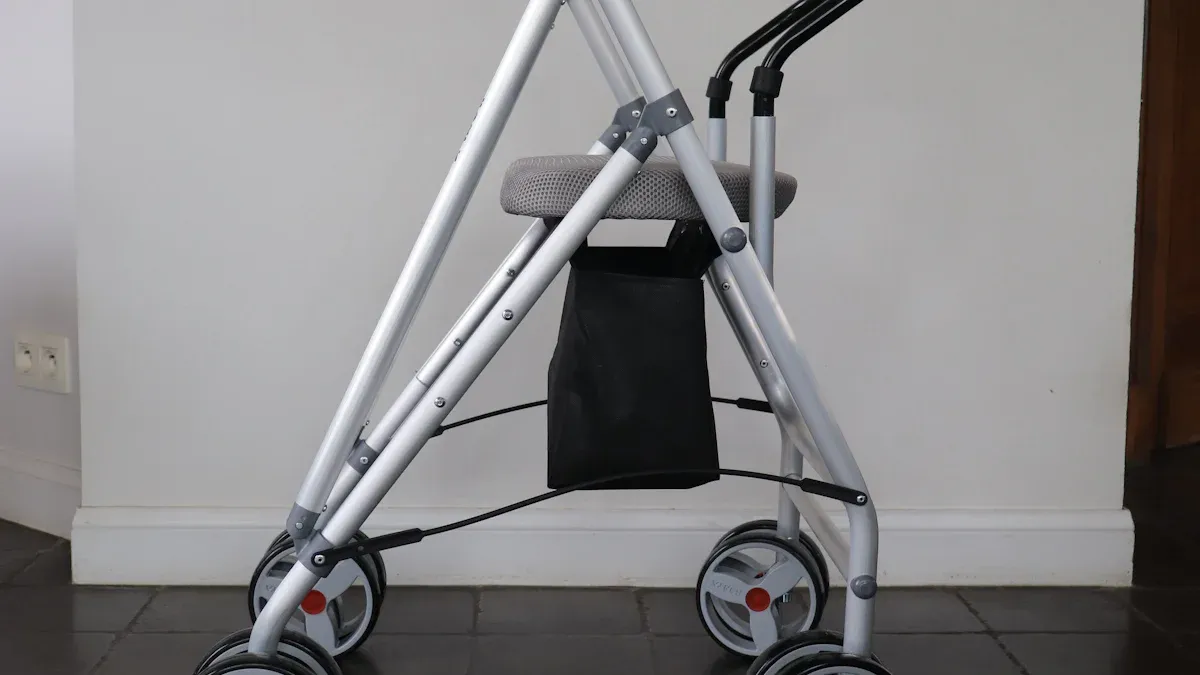
Old apartments demand equipment that fits through tight openings without sacrificing support. Several walker categories serve this need well. Each design offers distinct advantages for narrow hallways and small living spaces.
Slim Folding Walkers
A slim folding walker offers the best combination of portability and fit for most old apartments. These models collapse to a fraction of their open size. A user can store one in a closet or carry it through a tight corridor with ease.
Width and Weight
A narrow folding walker typically measures 22 to 24 inches across when open. The UPWalker Lite stands out as the narrowest option in this category. It measures 22 inches wide when unfolded and folds down to just 9 inches. At 25 pounds, it remains light enough for most users to lift and carry. The Drive Nitro measures 24 inches wide and weighs 26 pounds. This model sits at the borderline for a 24-inch hallway. Its frame may touch walls or door frames during passage. The Paiseec W3 measures 24.40 inches across and weighs 49.6 pounds. This model exceeds the 24-inch threshold and does not fit. The Paiseec R1 measures 25 inches wide when open. Its 10-inch folded width allows a user to carry it through a tight hallway while folded.
The following table compares these models side by side:
| Model | Unfolded Width | Folded Width | Weight | Turning Radius | Fits Through a 24-Inch Hallway? |
|---|---|---|---|---|---|
| UPWalker Lite | 22 in | 9 in | 25 lbs | 42 in | Yes, its 22-inch unfolded width leaves clearance in a 24-inch hallway. |
| Drive Nitro | 24 in | 12 in | 26 lbs | 40 in | Borderline; at exactly 24 inches, it may touch walls or door frames. |
| Paiseec W3 | 24.40 in | 24.40 in (compact) | 49.6 lbs | Zero-turn (PAI) | No, it is wider than 24 inches. |
| Paiseec R1 | 25 in | 10 in | 24 lbs | Tight maneuver | No when unfolded; its 10-inch folded width allows carrying it through. |

A buyer should select a model about 2 to 4 inches narrower than the tightest space. For a 24-inch hallway, this rule points to a walker roughly 20 to 22 inches wide during use. The UPWalker Lite meets this standard. Slim rollators such as the Journey Breeze and Strongback SEATA fold to about 10 inches wide. A user can carry these models through a 24-inch hallway while they remain folded.
Best Uses in Old Apartments
A narrow folding walker works best in apartments with straight hallways and standard doorways. The side-folding capability of these models allows them to collapse against a wall during storage. A user can keep one beside a bed or in a narrow entryway without blocking the path. These compact walkers for apartments suit daily trips between rooms. They also handle short outdoor excursions when the user needs to leave the building.
Three-Wheel Rollators
A three-wheel rollator provides superior maneuverability in cramped indoor spaces. The single front wheel design allows the user to pivot and turn with less effort. This feature proves valuable in old apartments with irregular layouts.
Why They Are Narrower
A three-wheel rollator typically measures 21 to 23 inches across. A four-wheel model usually measures 24 to 26 inches. The single front wheel reduces the overall footprint of the frame. This narrower profile allows the device to pass through tight openings with room to spare. A narrow rollator in this range fits hallways that measure 26 to 28 inches wide.
The table below compares the two designs:
| Rollator Type | Turning Radius / Maneuverability | Typical Width | Suitability for Hallway Corners |
|---|---|---|---|
| 3-wheel rollator | Superior (smaller) turning radius; easier to maneuver | 21–23 inches | Better for tight corners, even when a 4-wheel model technically fits through the door |
| 4-wheel rollator | Less maneuverable in tight spaces; larger turning radius | 24–26 inches | Fit is tight but usually manageable; more stable and often includes a seat |
A three-wheel rollator is often easier to maneuver and lighter than a four-wheel model. This design suits tight spaces such as narrow hallways or crowded stores. Three-wheel rollators typically have a smaller turning radius, which helps in cramped indoor areas and tight corners. A four-wheel rollator is generally more stable and almost always includes a seat. That feature benefits users who need to rest frequently. For navigating tight corners with a lighter device, a three-wheel rollator may be the better choice.
Turning and Storage Benefits
A three-wheel rollator excels at turning in confined spaces. The single front wheel allows the user to rotate the device in place. A user can navigate a 90-degree corner in a 28-inch hallway without repeated back-and-forth adjustments. The lighter frame also makes the device easier to lift over thresholds. Storage presents another advantage. A three-wheel rollator often folds flat or collapses into a compact shape. A user can tuck one behind a door or beside a piece of furniture. This design keeps pathways clear in a small apartment.
Hemi Walkers
A hemi walker serves users who need support on one side of the body. This design features a single handle and a narrow frame. It provides more stability than a cane while remaining less bulky than a full walker.
Designed for One-Handed Use
A hemi walker benefits stroke survivors, post-surgery patients, and people with neurological conditions affecting one side. These users need balance and mobility support from a single point of contact. The walker’s lightweight construction and one-handed operation make it easy to maneuver in confined areas. A hemi walker is wider than a typical cane but smaller than a full walker. This intermediate footprint makes it less bulky than a standard model for hallway use. The device targets people with limited strength or movement on one side of the body. These users need one-handed support and greater stability than a cane provides.
| Aspect | Extracted Evidence | Support for Query |
|---|---|---|
| User profile | Beneficial for stroke survivors, post-surgery patients, and people with neurological conditions affecting one side. | Defines the typical user as someone with one-sided weakness who needs balance and mobility support. |
| Narrow-hallway use | Lightweight construction and one-handed operation make it easy to maneuver in confined areas. | Directly supports use in a narrow hallway. |
| Overall width | Hemi walker is wider than a typical cane but smaller than a full walker. | Indicates an intermediate footprint, suggesting it is less bulky than a full walker for hallway use. |
Fitting Through Tight Spaces
A hemi walker fits through tight spaces with less effort than a standard model. The single handle reduces the overall width of the frame. A user can angle the device through a doorway without turning sideways. The lightweight design allows quick adjustments in a narrow corridor. A user can lift the walker over a threshold or around an obstacle with one hand. This capability makes the hemi walker a practical choice for old apartments with narrow passages. The device also stores easily because of its compact shape. A user can place it beside a chair or in a corner without blocking the path.
Narrow Rollators With Seats
A rollator with a seat gives users a place to rest during walks. This feature proves valuable in old apartments where hallways stretch long and rooms sit far apart. A narrow rollator with a seat combines mobility support with a resting option. The challenge lies in finding a model that fits tight hallways while still offering a usable seat.
Compact Frame Models
Several manufacturers build compact rollators with seats for small living spaces. These models prioritize a reduced footprint without removing the seat entirely. A buyer should compare the overall width of each model against the apartment’s tightest opening.
The Drive Medical Four Wheel Rollator with Seat measures about 25 inches wide. This model fits hallways of 30 inches or wider with comfortable clearance. The seat sits at a standard height and supports up to 300 pounds. A user can rest in a hallway alcove or beside a kitchen counter.
The Hugo Elite Rollator measures approximately 24 inches across. Its compact frame allows passage through doorways of 28 inches or more. The padded seat flips up for storage and travel. This design suits apartments with moderate hallway widths.
The Medline Empower Rollator offers a width of about 25.5 inches. Its seat includes a backrest for added support. The frame folds for transport and storage. A user with a 30-inch hallway can maneuver this model with relative ease.
A slim walker with a seat may sacrifice some padding or seat size to achieve a narrower frame. The trade-off often involves a thinner seat cushion or a smaller backrest. A buyer should weigh comfort against fit when selecting a compact model.
The side-folding capability of certain rollators helps in tight apartments. A side-folding frame collapses inward rather than front-to-back. This motion reduces the device’s width during storage. A user can slide the folded rollator into a narrow closet or behind a door.
| Model | Approximate Width | Seat Feature | Minimum Hallway Width |
|---|---|---|---|
| Drive Medical Four Wheel Rollator | 25 inches | Standard padded seat | 30 inches |
| Hugo Elite Rollator | 24 inches | Flip-up padded seat | 28 inches |
| Medline Empower Rollator | 25.5 inches | Seat with backrest | 30 inches |
A buyer should measure the apartment’s narrowest doorway before selecting a compact rollator with a seat. A model measuring 24 inches wide needs a clear opening of at least 26 inches. This margin allows the user to pass through without scraping the frame against the door jamb.
When a Seat Still Fits the Hallway
A rollator with a seat fits a narrow hallway when the user prioritizes rest over maximum clearance. The seat adds bulk to the frame in most cases. A buyer must decide whether the resting option justifies the extra width.
A hallway measuring 30 inches or wider accommodates most seated rollators. The user gains 4 to 6 inches of total clearance with a 24- to 25-inch model. This margin allows comfortable passage and room to turn. A narrow walker without a seat may fit a 26-inch hallway, but a seated model typically requires more space.
A hallway under 28 inches presents a real challenge for seated rollators. Few models measure under 24 inches across when equipped with a seat. A user in this situation faces a difficult choice. One option involves selecting a three-wheel rollator without a seat. Another option involves using a standard narrow walker and resting on chairs or benches along the route.
Some manufacturers offer travel rollators with seats that measure 22 to 23 inches wide. These models target airplane aisles and tight spaces. A user can deploy one in an old apartment hallway with careful maneuvering. The seat on these models tends to be smaller and less padded than standard versions. A user should test the seat comfort before committing to a purchase.
A rollator with a seat also requires space to open and close. The user must unfold the device in a hallway or entryway. A narrow entryway may not provide enough room for this motion. A user should practice folding and unfolding the rollator in the actual apartment space.
The seat height matters for safe use. A user must plant both feet flat on the floor when sitting down. A hallway with a raised threshold or uneven flooring may complicate this motion. A buyer should confirm the seat height matches the user’s leg length.
A narrow rollator with a seat works best in apartments with at least one wider passage. The user can rest in the wider area and fold the device for travel through tighter sections. This strategy combines the benefits of a seated rollator with the practicality of a narrow frame.
A buyer should also consider the weight of a seated rollator. These models typically weigh 15 to 25 pounds. A heavier device proves difficult to lift over thresholds or carry up stairs. A user with limited strength should select a lightweight model with a seat.
The decision to use a seated rollator in a narrow hallway depends on the user’s stamina and balance. A person who needs frequent rest benefits from the seat despite the extra width. A person with good endurance may prefer a narrower walker without a seat. The best choice balances the user’s physical needs with the apartment’s physical constraints.
Balancing Narrow Walker Width With Stability
A narrow walker solves the fit problem in tight hallways. It can create a new problem at the same time. A device that fits easily may feel less secure during use. The user must find a balance between passage and support.
The Stability Trade-Off
Why Narrower Can Feel Less Steady
A narrower frame reduces the base of support. The user’s weight shifts across a smaller area. This design makes the device more prone to tipping during turns or on uneven floors. A four-wheel rollator places a wheel at each corner of its frame. This configuration produces a broader and more stable base of support. The wider frame spreads the user’s weight more evenly and delivers greater lateral support. A steadier feel results, particularly on uneven surfaces. For users with balance issues, this broader base offers enhanced stability. Three-wheel models suit users with only moderate balance problems and reliable hand-brake control.
Weight Capacity and Frame Strength
A lightweight frame may sacrifice strength for portability. A buyer should check the weight capacity before purchasing. A walker width that fits a narrow hallway may not support a heavier user. The frame material and construction determine the maximum safe load. A sturdy model with a narrow profile exists, but it often weighs more than a standard version.
Features That Preserve Stability
Wheel Size and Brakes
Larger wheels roll over thresholds and uneven flooring with less effort. Smaller wheels reduce the overall footprint but catch on raised surfaces. A brake system that locks both wheels prevents rolling during transfers. A user should test the brakes before relying on them in a narrow hallway.
Handle Height and Grip
Handle height affects posture and balance. A handle set too low causes the user to stoop forward. A handle set too high reduces control. Adjustable handles allow the user to find the correct position. A textured grip prevents slipping during turns.
Matching the Walker to the User
Weight-Bearing Needs
A user who needs partial weight support requires a sturdy frame. A user who needs balance assistance only may prefer a lighter model. The device must match the user’s physical requirements.
Balance and Gait Considerations
A person with a steady gait manages a narrow rollator with ease. A person with balance impairment needs a wider base. The study authors specifically recommend targeting lateral stability, especially during turning, to reduce sideways falls among older adult walker users. They propose that adjusting the size of the walker-ground interface and adding degrees of freedom to the wheel system could improve lateral stability.
| Walker Type | Target Deficit | Suggested Modifications to Improve Lateral Stability |
|---|---|---|
| Two-wheeled walker | Lateral stability | Front wheels with additional rotation modes; addition of a front rotating third wheel; expandable/retractable base of support; kickstand on existing legs |
| Rollator | Wheel velocity control | Reverse braking mechanism; visual brake-state indication; adjustable wheel resistance; maximum RPM threshold; alignment guides for mediolateral body-trajectory during transfers |
A buyer should weigh these factors against the apartment’s physical constraints. The best choice supports the user’s body and fits the hallway.
Tips for Maneuvering in Tight Spaces
A narrow walker fits a tight hallway, but technique determines whether the user moves through it smoothly. Good habits reduce frustration and prevent accidents in old apartments.
Moving Through Doorways
Approaching Straight On
A user should approach every doorway straight on rather than at an angle. Angled wheels catch more easily on raised thresholds and door frames. A straight approach keeps the walker aligned with the opening. The user should clear rugs, cords, and clutter from the path before stepping over any edge. Good lighting helps the user see exactly where to step. A wet threshold becomes slippery, so drying it before crossing prevents slips. Where possible, lowering a raised threshold to 20 mm or less removes the need to lift the walker frame over an edge. Even a 2 cm rise creates resistance and can cause a destabilizing jolt.
Using the Door Frame for Guidance
A user can lightly touch the door frame with one hand for balance while guiding the walker through. This technique provides extra stability without blocking the opening. The user should avoid gripping the frame tightly, which restricts movement.
Handling Turns and Corners
Pivoting Techniques
A user should pivot the walker in small increments rather than forcing a wide turn. Lifting the front wheels slightly allows the frame to rotate in place. This method works well in hallways with 90-degree corners.
Three-Wheel Advantages
A three-wheel rollator turns more easily than a four-wheel model. The single front wheel allows a tighter turning radius. This design helps users navigate cramped corners without repeated adjustments.
Storing and Folding the Walker
Folding Flat in Small Apartments
A walker with side-folding capability collapses inward and reduces its stored width. This feature allows the device to slide into a narrow closet or behind a door. A user should practice folding and unfolding the walker in the actual apartment space.
Keeping Pathways Clear
A folded walker should rest against a wall rather than in the middle of a hallway. The user should keep the path free of shoes, bags, and other obstacles. This habit prevents trips and makes daily movement safer.
Buying Checklist for a Narrow-Hallway Walker
A systematic approach prevents costly mistakes when selecting a walker for an old apartment. A buyer should follow a clear checklist before making a purchase.
Measure Before You Shop
Accurate measurements form the foundation of a successful purchase. A buyer should gather specific dimensions from the apartment before browsing any models.
Hallway, Doorway, and Turn Measurements
A buyer should measure your doorways and hallways at every point along the intended route. The minimum hallway width determines the maximum walker size that will fit. A person should record the hallway width at its tightest point. The narrowest doorway often presents the greatest challenge. A buyer should measure each door frame’s clear opening with the door fully open. Turns and corners require diagonal measurements to capture the true available space.
Writing Down the Numbers
A written record keeps all measurements organized during shopping. A buyer should note the smallest number from each category. This number represents the absolute limit for walker dimensions. A notebook or phone note works well for this purpose.
Compare Width Specs
Width specifications vary across models and manufacturers. A buyer should examine several key measurements before making a decision.
Checking Overall and Folded Width
The overall width determines whether a walker fits through tight passages. A buyer should compare this measurement against the apartment’s minimum hallway width. The folded width matters for storage in small apartments. A trim folded profile near 10 inches stores easily in a closet. The listed width may refer to frame edges rather than grip position. A buyer should confirm the handle-to-handle measurement separately.
Confirming Clearance Margin
A walker needs 2 to 4 inches of total clearance beyond its frame width. This margin accounts for natural side-to-side movement during use. A buyer should verify that the clearance needs match the apartment’s tightest spaces.
The following specifications deserve comparison when evaluating narrow models:
- Overall width, not only seat width, because indoor-focused rollators use narrow frames for apartment hallways
- Turning radius and steering responsiveness, since a narrow footprint proves less useful if the walker cannot turn in tight corners
- Folded thickness as a storage consideration for old apartments
- Seat width of 18 to 19 inches, which fits standard door frames while the frame width remains the key clearance measurement
| Specification | Typical Measurement | Implication for Old Apartment |
|---|---|---|
| Standard 4-wheel rollator frame width | 24–26 inches | May prove too wide for narrow hallways and small bathrooms |
| Narrow 3-wheel rollator frame width | 20–22 inches | Better fits tight passages with a tighter turning radius |
| Standard doorway clear width | 30–32 inches | Usually manageable, but the actual narrowest passage requires measurement |
Test Stability and Features
A narrow walker must provide adequate support despite its compact frame. A buyer should evaluate several stability features before purchasing.
Brakes, Wheels, and Handles
A reliable brake system prevents rolling during transfers. A buyer should test the brakes and confirm they lock both wheels. Larger wheels roll over thresholds with less effort. Adjustable handles allow the user to find the correct height for proper posture.
Weight and Portability
A lightweight model proves easier to lift over thresholds and carry through tight spaces. A buyer should check the weight capacity against the user’s needs. The side-folding capability of certain models allows compact storage against a wall.
Confirm Return and Trial Options
A walker purchase involves more than width specifications and brake checks. The buyer needs a way to test the device in the actual apartment. Return policies protect the buyer when a model fails to fit or feels unstable. A careful shopper confirms both options before spending money.
Trying Before Committing
Many medical supply stores and pharmacies allow customers to test floor models. A buyer can walk a few steps with a display walker and judge the handle height, grip, and rolling effort. This trial reveals problems that specifications cannot show. A frame may measure 22 inches wide yet feel awkward during a turn. The buyer should ask a staff member for permission to walk the device through a narrow aisle. Some stores even let customers bring a walker home for a short trial period. Online retailers rarely offer this option, so local stores hold an advantage for fit-sensitive purchases.
A home trial delivers the most useful information. The buyer can push the walker through the tightest doorway and around the sharpest corner. This test confirms whether the device truly fits the apartment. A friend or family member can observe the user’s posture and balance during the trial. That feedback helps the buyer spot instability before the return window closes.
Return Policies for Mobility Aids
Return policies for mobility aids vary widely across sellers. A buyer should read the fine print before ordering. Several details deserve close attention:
- The return window, which may range from 14 to 90 days
- Restocking fees, which can reach 20 to 25 percent of the purchase price
- Condition requirements, since used walkers may not qualify for a full refund
- Shipping costs, which the buyer often pays for the return
A walker that touches outdoor pavement may count as used, and that status can void the return option entirely.
Some manufacturers sell directly to consumers and offer generous trial periods. Others route all returns through third-party retailers with stricter rules. A buyer should confirm the policy in writing before checkout. A phone call or chat message creates a record of the terms. This step prevents disputes later.
A buyer should also ask about warranty coverage. A frame defect or a broken brake may fall under a separate policy. The warranty period often extends well beyond the return window. Knowing both timelines helps the buyer act quickly when a problem appears.
The walker must measure narrower than the hallway’s narrowest point. Old apartments require a width under 24 inches as the target. How narrow the device needs to be depends entirely on the clear opening. This measurement dictates how narrow a model a buyer should select. A buyer should measure each hallway, doorway, and turn before shopping. A narrow walker must also provide stability. Users need support, not just a slim frame. Testing the walker in the actual hallway confirms the proper fit.
FAQ
What is the minimum walker width for an old apartment hallway?
A walker should measure at least 2 to 4 inches narrower than the hallway’s tightest point. For a 28-inch hallway, a walker under 24 inches wide works best. Compact rollators at 18 to 19 inches offer even more clearance.
How does a person measure a hallway for a walker?
A person measures the narrowest point from wall to wall. Baseboards, radiators, and door frames reduce usable space. Every doorway along the route requires measurement too. The smallest number determines the maximum walker width.
Do standard walkers fit old apartment hallways?
Standard walkers measure 24 to 26 inches wide. They fit hallways of 30 inches or wider with comfortable clearance. Hallways under 30 inches demand a narrow model. Doorways often present a tighter constraint than the hallway itself.
Are three-wheel rollators better for narrow hallways?
Three-wheel rollators measure 21 to 23 inches across. The single front wheel allows tighter turns and easier pivoting. They weigh less than four-wheel models. However, four-wheel rollators offer greater stability and often include a seat.
Can a rollator with a seat fit a narrow hallway?
A seated rollator typically measures 24 to 25.5 inches wide. It fits hallways of 28 to 30 inches or wider. Hallways under 28 inches rarely accommodate a seated model. A user may need a three-wheel rollator without a seat instead.
Does a narrower walker reduce stability?
A narrower frame reduces the base of support. The device becomes more prone to tipping during turns. Users with balance issues need a wider base. A sturdy narrow model exists, but it often weighs more.
How much clearance does a walker need in a hallway?
A walker needs 2 to 4 inches of total clearance beyond its frame width. This margin accounts for natural side-to-side movement. Hand and arm space adds another consideration. A practical rule adds 4 inches to the walker’s width.
What should a buyer check before purchasing a narrow walker?
A buyer should measure hallways, doorways, and turns first. Then compare overall and folded width specs. Brakes, wheels, and handle height affect stability. Return policies and trial options protect the buyer when a model fails to fit.