
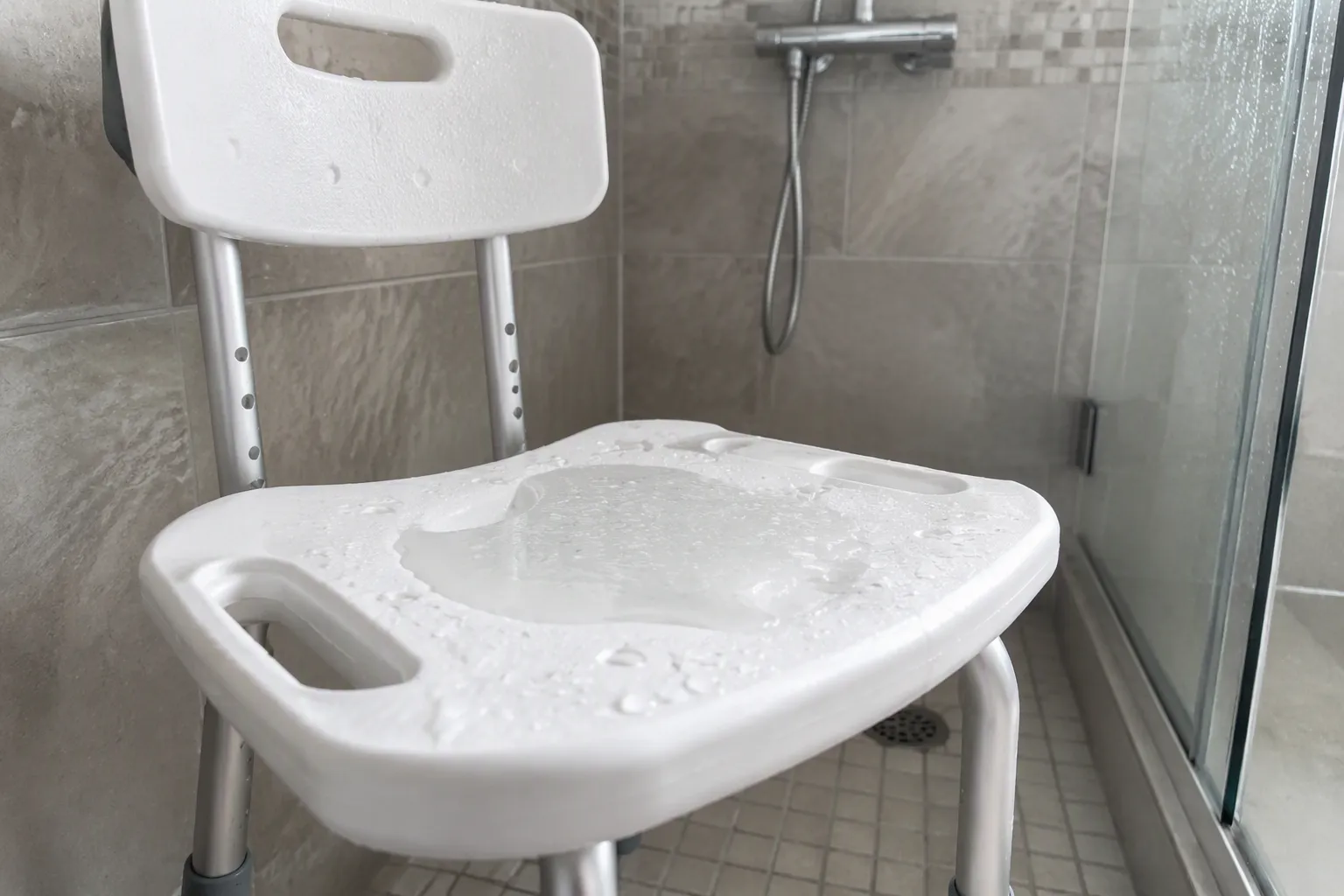
A water pool on shower chair seat occurs because water arrives faster than the seat can drain it. Three factors drive this problem: poor drainage design, the seat’s material and surface, and the natural behavior of water itself. A wet shower chair creates genuine hazards—slipping during transfers and prolonged moisture against skin. Fortunately, most pooling issues respond to simple, low-cost solutions that any user can implement without professional help.
Why Water Pools on a Shower Chair Seat
Water In, Water Out
A shower chair seat sits at the center of a simple balance. Water enters the seat area from the showerhead, from splashing, and from the bather’s body. Water leaves through drain holes, over the seat edges, and through evaporation. Pooling begins when the incoming flow outpaces the outgoing flow. This imbalance explains most wet-seat complaints, and it frames every cause discussed below.
When Water Arrives Faster Than It Drains
A typical showerhead delivers several gallons per minute. Much of that spray lands on the bather and the surrounding surfaces. A portion strikes the seat directly. Drain holes remove water at a fixed rate. That rate depends on hole size, hole count, and the height of water above each hole. A seat with small or few holes removes water slowly. The incoming flow quickly exceeds the drain capacity. Water then accumulates on the surface. The same seat may drain perfectly in a light rinse and fail completely under a full spray. Users often notice the difference between a quick wash and a long, hot shower.
Why a Flat Seat Holds Water
A flat seat offers no path for water to follow. Gravity pulls water downward, and the seat blocks that path. Water spreads across the surface until surface tension and the seat edges contain it. A level surface gives water no low point to collect and no slope to escape. The result is a shallow puddle that covers much of the seat. A slight tilt would send that puddle toward a drain hole or an edge. Without a tilt, the water stays where it lands.
The Three Main Causes
Pooling rarely has a single source. Three broad causes interact on most shower chairs. Each cause deserves separate attention, and each one offers its own fix.
Drainage Design Problems
Drainage design determines how fast water leaves the seat. Manufacturers choose hole count, hole size, and hole placement during product design. A seat with too few holes cannot keep up with a strong spray. Holes placed away from the lowest point leave a puddle behind. Raised edges turn the seat into a shallow tray. These design choices create pooling even on a brand-new chair. Design flaws also resist cleaning, and clogs make a marginal design worse.
Material and Surface Issues
Seat material shapes how water behaves on contact. Non-porous plastics repel absorption, and that same quality encourages water to spread and cling. Smooth surfaces create strong surface tension. Textured surfaces trap water in small pockets. Cracks, scratches, and warping appear with age and give water new places to collect. Padded or coated surfaces add another layer that can hold moisture. Material choice also affects drying speed between showers.
The Physics of Water on a Flat Surface
Water follows physical rules that no seat design can ignore. Surface tension makes water cling to smooth materials. Adhesion holds a thin film against the seat. Cohesion pulls water into droplets and puddles. Gravity moves water only when a slope or an opening allows it. A level, smooth, non-porous surface combines all these effects. Water spreads into a film, beads at the edges, and stays in place. These forces operate on every shower chair, and they explain why even a well-made seat can hold a puddle.
Cause 1: Poor Drainage Design
Drainage design decides how quickly water leaves a shower chair seat. Manufacturers control hole count, hole size, and hole placement. Poor choices in any of these areas create standing water, even on a brand-new chair.
Missing or Too Few Drain Holes
Seats With No Holes at All
Some seats have a solid surface with no openings. Water lands on the seat and stays there. The user sits in a puddle for the entire shower. A seat without holes depends entirely on runoff over the edges, and raised edges block that path.
Holes That Are Too Small or Too Few
Many seats include holes that look adequate on paper. In practice, small holes remove water slowly. A seat with four narrow holes cannot handle a full spray from a standard showerhead. Water arrives faster than the holes can clear it. The puddle grows during the shower and remains afterward.
Holes in the Wrong Place
Holes That Sit Above the Low Point
Placement matters as much as size. A seat often tilts slightly during use, and the low point shifts. Holes drilled for drainage at the factory may sit above that low spot. Water collects in the corner farthest from the holes. The seat drains partially and leaves a pool behind.
Clogged or Partially Blocked Holes
Hair, soap residue, and body oils block holes over time. A partially blocked hole passes some water and holds the rest. The blockage worsens with each shower. Users often blame the seat design when a simple clog causes the problem.
Seat Shape and Slope
Flat Seats With No Tilt
A flat seat gives water no direction to travel. Gravity pulls the water down, and the level surface stops it. Water spreads across the whole seat and forms a shallow pool. A slight slope would guide the water toward a hole or an edge.
Raised Edges That Trap Water
Many seats feature a raised rim or contoured border. That rim adds comfort and keeps the user centered. It also turns the seat into a tray. Water cannot flow over the edge, so it stays inside the rim until the user tips the chair or wipes the surface.
Cause 2: Seat Material and Surface
Non-Porous Materials
Plastic and Molded Seats
Plastic and molded seats dominate the shower chair market. These materials resist absorption, so water stays on top of the surface. That behavior seems helpful at first glance. In practice, a non-porous surface forces water to spread and cling rather than soak away. Old-style hard plastic parts feel cold and slippery, and they offer no absorption at all. Modern molded polyurethane padding uses closed-cell foam that absorbs no water, and soft padded cushions made from institutional-quality polyurethane foam resist moisture and disinfect easily. The material itself does not cause pooling, but it gives water no place to go except across the seat surface.
Coated or Padded Surfaces
Coatings and padding add comfort, and they add new layers that can hold moisture. A wet vinyl seat with a padded top traps a thin film between the cushion and the cover. Water seeps into seams and stays there. The padding beneath may resist absorption, yet the cover and stitching still collect droplets.
Surface Texture
Smooth Surfaces and Surface Tension
A smooth seat surface maximizes surface tension. Water clings to the plastic in a thin, continuous film. That film resists gravity and refuses to slide toward a drain hole. A glossy finish makes the problem worse.
Textured Surfaces That Trap Water
A seat surface textured with grooves and dimples breaks up the film, and it also creates thousands of tiny reservoirs. Water settles into each depression and stays there after the shower ends. Texture improves grip, and it works against drainage.
Wear and Damage
Cracks and Scratches That Hold Water
Cracks and scratches open small channels in the material. Water enters these channels and resists evaporation. A cracked seat dries more slowly than a new one, and the damage grows with each use.
Sagging or Warped Seats
A sagging or warped seat develops a new low point. Water migrates to that dip and forms a puddle far from the drain holes. Warping also lifts the edges and creates a bowl shape that traps water.
Material choice shapes water behavior across common wet-area surfaces. The table below compares several options.
| Material | Water-related behavior |
|---|---|
| Granite | Very porous; absorbs water quickly; requires sealing and resealing |
| Tile | Can pool water; exposed grout lines create collection points |
| Marble | Porous like granite; needs regular sealing to resist absorption |
| Teak | Naturally water-resistant; repels water and resists decay |
Teak wood contains natural oils and rubber that repel water and prevent decay, so it suits wet environments without extra treatments. Porous stone and jointed tile surfaces absorb or pool water by contrast. A solid-surface design avoids joints entirely, because joints collect water. Builders should slope every horizontal wet-area surface at least 1/4 inch per foot toward the inside of the shower, and they should treat any flat surface as a potential water collector that needs slope and waterproofing.
Cause 3: How Water Behaves
Surface Tension
Why Water Clings to Smooth Plastic
Water molecules pull on each other at the surface. This force creates surface tension. Smooth plastic offers an ideal surface for that tension to work against gravity. Droplets flatten and spread instead of rolling off. A glossy seat surface makes the effect stronger.
How a Film of Water Forms
Small amounts of water merge into a thin, continuous layer. That film covers the seat and resists breaking apart. Each new splash adds to the film. The layer thickens into a shallow pool. Surface tension holds the pool in place long after the spray stops.
The Limits of Gravity
Why a Level Seat Will Not Self-Drain
Gravity pulls water straight down. A level seat blocks that downward path. Water needs a slope or an opening to escape. Without either one, gravity cannot move the water toward a drain. The seat holds the pool until someone tips it or wipes it dry.
How Standing Water Stays Put
Standing water meets friction from the seat surface. Adhesion bonds the water to the plastic. Cohesion holds the water together as one body. These forces balance gravity on a flat surface. The puddle remains stable and does not flow on its own.
The Shower Environment
Spray Angle and Splash
A showerhead aims water at an angle. Spray strikes the chair seat directly and splashes off the bather. Splash adds extra water beyond the direct spray. A steep angle sends more droplets onto the seat. The incoming volume rises, and drainage falls further behind.
Humidity and Slow Evaporation
A hot shower fills the air with moisture. High humidity slows evaporation from every wet surface. Water on the seat dries slowly in this environment. Residual moisture lingers between showers. Repeated use keeps the surface wet for hours.
Why Pooling Matters
Slip and Fall Risk
Slippery Seats During Transfers
Standing water turns a shower chair seat into a slick surface. A bather shifts weight during entry or exit, and the wet plastic offers little friction. One foot slides, balance fails, and a fall follows. Transfers demand stable footing, and a pooled seat removes that stability at the worst possible moment.
Water on the Floor Around the Chair
Pooled water does not stay on the seat. It drips over the edges and lands on the shower floor. A puddle spreads around the chair legs and creates a hidden hazard. Bathers and caregivers step into this puddle without warning. The floor becomes as dangerous as the seat itself.
Skin Health Concerns
Prolonged Moisture and Skin Breakdown
Skin stays healthy when it stays dry. Constant contact with water softens the outer layer and weakens its barrier. Friction against a wet seat then damages this softened skin. Pressure points break down faster in this condition. Users with limited mobility face the greatest risk, and sores can develop within hours of repeated exposure.
Mold and Bacteria Growth
Standing water feeds microorganisms. Mold spores settle on the damp surface and multiply. Bacteria thrive in the warm, humid shower environment. A seat that never dries becomes a breeding ground. Users then face skin infections and unpleasant odors. Regular drying prevents this growth.
Wear on the Chair
Rust and Corrosion
Water attacks metal components on any shower chair. Frame tubes, bolts, and adjustment pins collect moisture in hidden crevices. Steel parts rust and weaken over time. Rust stains spread to surrounding surfaces. A corroded frame loses strength and eventually fails under a user’s weight.
Damage to Pads and Straps
Padded armrests and safety straps absorb water through seams and stitching. Trapped moisture breaks down foam and rots fabric fibers. Straps lose their grip and stretch out of shape. Pads grow stiff and cracked. Replacement parts cost money, and a damaged chair offers less support.
How to Stop Water From Pooling on Your Shower Chair Seat
Most pooling problems yield to three categories of fixes. Users can improve drainage, change the seat surface, or adjust the chair setup. Each approach works on its own. Combined, they solve nearly every standing-water complaint.
Fix the Drainage
Drainage offers the most direct solution. Water leaves the seat through holes, and more holes or larger holes move water faster. A user can modify an existing seat with basic tools. The goal is simple: outgoing flow must match or exceed incoming flow.
Add or Enlarge Drain Holes
A seat with too few holes needs more openings. A drill with a bit sized for plastic handles this job in minutes. The user marks new hole locations first. Holes belong at the lowest points of the seat and spread across the surface. A pattern of six to eight holes drains far better than two or three. Existing holes that look undersized can grow one bit size larger. The user removes the seat from the frame before drilling. A block of scrap wood behind the drilling point prevents cracking. After drilling, the user sands each hole edge smooth. Rough edges trap soap and hair. Enlarged holes must not weaken the seat structure. The user keeps holes at least one inch from any edge or support rib. A test pour from a cup of water confirms the new flow rate. Water should disappear within seconds.
Keep Holes Clear of Hair and Soap
Clean holes drain at full capacity. Blocked holes defeat every design improvement. Hair wraps around hole edges and catches soap scum. The combination forms a plug that grows with each shower. A weekly clearing routine prevents this buildup. The user removes the seat and inspects each hole against a light source. A soft brush or a pipe cleaner pushes debris through from the top. A toothpick clears stubborn soap deposits without scratching the plastic. Hot water rinses the loosened residue away. Users with long hair should check holes after every shower. A five-second visual check catches most clogs early.
Change the Surface
Surface fixes alter how water behaves on contact. A different surface can shed water faster or hold less of it. These changes require no tools and no permanent modification.
Use a Quick-Dry Seat Cover
A quick-dry cover adds a drainage layer above the seat. Mesh fabric and perforated rubber both work well. The cover lifts the bather slightly above the plastic surface. Water passes through the cover and drips away instead of pooling. The bather sits on a drier surface throughout the shower. Covers cost little and install in seconds. The user stretches the cover over the seat and secures any straps. The cover itself needs regular washing to prevent soap buildup. A spare cover allows rotation while one dries. This simple addition solves the problem for many users, and water doesn’t pool under the person during the shower.
Apply a Water-Shedding Coating
A hydrophobic coating changes the seat surface at the molecular level. These sprays and wipe-on products repel water and force droplets to bead. Beaded water rolls off with slight movement or a small tilt. The coating reduces surface tension effects described earlier. Application takes a few minutes. The user cleans and dries the seat completely first. The coating sprays on in a thin, even layer. Most products need a short cure time before use. Reapplication every few months maintains the effect. Coatings work best on smooth plastic and less well on textured surfaces. Users should choose products rated for bathroom use and safe for skin contact.
Adjust the Setup
Setup changes cost nothing and require no modification. A small adjustment in angle or position shifts the water balance immediately.
Add a Slight Tilt to the Seat
A slight tilt gives water a direction to travel. Even a small slope sends water toward a drain hole or an edge. The user can shim one side of the seat with a rubber washer. Some chairs offer adjustable legs that create a natural slope. The goal is a gentle tilt of about one-quarter inch across the seat width. A steeper tilt feels unstable and defeats the purpose. The user tests the tilt with a cup of water before use. Water should flow toward the holes and exit within seconds. A tilted seat drains itself during the shower and dries faster afterward.
Reposition the Chair in the Spray
Chair position changes how much water lands on the seat. A chair placed directly under the showerhead catches the full spray. Moving the chair slightly to one side reduces direct hits. The user angles the showerhead toward the body and away from the seat. A handheld showerhead offers the most control. The user directs spray where needed and avoids soaking the seat unnecessarily. This adjustment also keeps more warm water on the bather. Less spray on the seat means less water to drain. The combination of position and angle often solves pooling with no other changes.
Maintenance and Daily Habits
A Quick Daily Routine
Tip the Seat After Each Shower
A simple tip of the seat sends standing water toward the drain holes or over the edge. The user grasps the seat frame and tilts it slightly after every shower. Gravity moves the water off the surface within seconds. This habit prevents the shallow pool from settling into the material. A quick tip also speeds drying between uses.
Wipe and Air-Dry the Chair
A dry cloth removes the remaining film of moisture. The user wipes the seat surface and the frame after tipping. The chair then air-dries in an open, ventilated space. Leaving the bathroom door open improves airflow. A dry chair resists mold, odors, and surface damage. This two-step routine takes less than a minute each day.
Regular Cleaning
Clear Drain Holes Weekly
Hair and soap residue collect in drain holes over time. A weekly inspection keeps every hole at full capacity. The user removes the seat and checks each opening against a light. A soft brush or pipe cleaner pushes debris through from the top. Hot water rinses the loosened material away. This routine prevents the slow clogs that cause unexpected pooling.
Scrub Away Soap Film and Buildup
Soap film creates a slick layer that holds moisture against the surface. A mild bathroom cleaner and a soft sponge remove this buildup. The user scrubs the seat, the armrests, and the frame once a week. A thorough rinse follows the scrub. Regular cleaning preserves surface texture and keeps drain holes clear.
When to Repair or Replace
Signs of Wear That Cause Pooling
Cracks, deep scratches, and warped surfaces signal a failing seat. These defects create new low points and trap water. Rust on the frame weakens the structure and stains surrounding surfaces. Frayed straps and cracked pads lose their support. A user who notices these signs should plan a repair or replacement soon.
Choosing a Better-Designed Seat
A replacement seat should offer adequate drainage and a water-shedding surface. The buyer looks for six or more drain holes placed at the lowest points. A slight contour or slope helps water flow toward the openings. Quick-dry materials and removable covers add further protection. A well-designed seat reduces daily maintenance and extends the chair’s service life.
Water can pool on a shower chair seat for one core reason: the seat drains slower than water arrives. Design flaws, material choice, and surface tension drive this imbalance. Readers can fix most cases in order of effort. Clear the drain holes first. Add a quick-dry cover or a slight tilt next. Build a quick drying habit after every shower.
A dry seat is a safer, healthier, longer-lasting seat. A wet surface invites slips and skin problems. Readers should check their own chair today for blocked holes and worn surfaces.
FAQ
Why does a brand-new shower chair still collect water?
New chairs often ship with minimal drain holes. Manufacturers cut costs with small openings and flat surfaces. Water arrives faster than these holes can clear it. A new seat can hold a puddle from the first use.
Can a user drill extra drain holes without damaging the seat?
Yes, in most cases. The user removes the seat first and supports it with scrap wood. A plastic-rated bit prevents cracking. Holes stay at least one inch from edges and ribs. Sand each opening smooth afterward.
Do quick-dry seat covers really stop pooling?
Covers help significantly. Mesh or perforated covers lift the bather above the wet plastic. Water passes through and drips away. The bather sits drier during the shower. Covers need regular washing to prevent soap buildup.
Why does the seat still pool after cleaning the holes?
Cleaning restores flow, yet design limits remain. A flat seat with few holes drains slowly by nature. Surface tension holds a film on smooth plastic. A slight tilt or a water-shedding coating addresses these remaining causes.
Is standing water on the seat actually dangerous?
Yes. A wet seat becomes slippery during transfers, and drips create floor puddles. Prolonged moisture softens skin and invites mold growth. These risks justify a few minutes of prevention each day.
How can a user test whether the seat drains properly?
The user pours a cup of water across the seat. Water should disappear within seconds. Slow drainage signals too few holes, clogs, or a flat surface. The test takes seconds and reveals the cause quickly.
When should a user replace the shower chair seat?
Cracks, deep scratches, and warped surfaces trap water permanently. Rust on the frame weakens the structure. Frayed straps and cracked pads lose support. These signs justify a replacement seat with better drainage.
Does chair position affect how much water pool on shower chair seat?
Yes. A chair directly under the showerhead catches the full spray. Moving it slightly aside reduces direct hits. A handheld showerhead offers the best control. Less spray means less water to drain.