

No. A rollator as wheelchair substitute is unsafe. A person should never use a rollator as a wheelchair, even for a short distance. Rollators support walking individuals. Wheelchairs transport non-ambulatory individuals. A rollator should not be used as a wheelchair. Sitting or pushing someone in one can cause tipping, falls, and injury. Rollator brakes cannot hold passenger weight. Safe alternatives exist and are easy to find.
What Is a Rollator?
A rollator is a wheeled mobility aid. It helps people who can walk but need extra stability. The device has a frame, wheels, hand brakes, and a seat. Understanding its purpose and design helps clarify why it cannot replace a wheelchair.
The Basic Design
Frame, Wheels, and Handlebars
The frame is typically made of lightweight aluminum. It folds for storage and transport. Most rollators have three or four wheels, also called castors. These wheels allow smooth movement across indoor and outdoor surfaces. The handlebars adjust in height to fit the user. Hand grips provide a comfortable place for the hands to rest. Hand-operated brakes slow or stop the device during walking.
Seat and Storage Pouch
Most four-wheel rollators include a built-in seat. This seat allows the user to rest when tired. It is not built for sitting long-term or for being pushed while seated. A storage pouch or shopping bag hangs beneath the seat. This pouch carries personal items during errands.
Who a Rollator Is Made For
People Who Can Still Walk
A rollator walker suits individuals who can walk independently. These users may have arthritis, chronic fatigue, or age-related mobility decline. They need help with balance, endurance, or confidence. The device is made for walking, not for transporting a seated person.
People Who Need Balance Support
The rollator provides stability support during movement. Users with mild to moderate balance problems benefit from this aid. They must have enough upper body strength to maneuver the device. They also need sufficient cognitive ability to operate the brakes and adjust settings. A person who cannot reliably control a wheeled walker may need a different mobility aid.
What a Rollator Is Not
Not a Transport Device
A rollator walker is not a wheelchair. It does not carry a person from place to place. The intended mobility use is for users who can walk on their own. It helps them move smoothly without lifting the device. Medicare denies claims for rollators intended solely for outdoor activities or recreational use.
Not Built to Carry a Seated Person
The seat on a rollator serves as a resting spot only. It cannot support the full weight of a seated passenger during movement. The frame and wheels lack the structural reinforcement for transport. The brakes cannot hold a passenger’s weight on a slope or during a push. These limitations make seated transport dangerous.
| Feature | Walker | Rollator |
|---|---|---|
| Wheels | 0 to 2 | 3 to 4 |
| Weight Support | Can support body weight | Supports balance, not full weight |
| Portability | Lightweight, compact | Larger but often foldable |
| Seat Included? | No | Yes (on most 4-wheel rollators) |
| Brakes | No | Yes, hand-operated |
International standards confirm these design limits. EN 11199-2 covers rollators as walking aids with wheels. ISO 7176 ensures safety for walking aids manipulated by both arms. These standards test static stability, braking capabilities, and static strength. They do not certify rollators for seated passenger transport.
What Is a Wheelchair?
A wheelchair is a mobility device that transports a person who cannot walk. It differs from a rollator in purpose, structure, and function. A rollator supports walking. A wheelchair replaces walking entirely. This distinction matters for safety and for choosing the right equipment.
The Basic Design
Frame, Seat, and Backrest
A wheelchair frame carries the full weight of a seated person. Manufacturers build it from steel, aluminum, or titanium. The seat and backrest provide continuous postural support. They keep the user stable during transportation while sitting. Armrests and seat belts add security. These features do not exist on a rollator.
Large Wheels and Footrests
Manual wheelchairs have two large rear wheels and two smaller front casters. The large wheels allow the user or an attendant to propel the chair. Footrests support the feet and prevent them from dragging. Good brakes and footrests are essential components. They lock the chair in place during transfers and stops.
Who a Wheelchair Is Made For
People Who Cannot Walk
Manual wheelchairs serve individuals with neurological, orthopedic, or cardiopulmonary conditions. These people cannot achieve independent or assisted movement with canes or walkers. Many rely on wheelchairs for everyday tasks like bathing, cooking, or moving around the house. Doctors prescribe manual wheelchairs only after other walking aids prove unsafe or insufficient.
People Who Must Avoid Bearing Weight
Some individuals have severe balance problems or lack sufficient lower limb strength for ambulation. Others cannot bear full weight on their legs. They need complete off-loading of both lower limbs. A wheelchair meets these needs. A rollator does not.
Why Wheelchairs Are Built Differently
Weight Distribution and Stability
A wheelchair distributes weight across a wide base. The frame, seat, and wheels work together to prevent tipping. A rollator seat sits high on a narrow frame. It cannot support a seated passenger during movement.
Braking and Steering Under Load
Wheelchair brakes lock the wheels under a passenger’s full weight. The steering system handles the load of a seated person. Rollator brakes only slow a walking user. They cannot hold a passenger on a slope.
| Source | Definition of Manual Wheelchair | Intended Use |
|---|---|---|
| U.S. DOT (49 CFR §37.3) | A mobility aid belonging to any class of three- or more-wheeled devices, usable indoors, designed or modified for and used by individuals with mobility impairments, whether operated manually or powered. | Mobility aid for individuals with mobility impairments; usable indoors. |
| U.S. DOJ (28 CFR §35.104) | A manually-operated or power-driven device designed primarily for use by an individual with a mobility disability. | Main purpose of indoor, or of both indoor and outdoor locomotion. |
Clinical criteria further separate these devices. A rollator suits higher-functioning individuals with mildly impaired balance. A wheelchair serves those with severe balance issues, insufficient endurance, or end-stage disease. Manual wheelchair use requires sufficient upper body strength and coordination. Power chairs suit those who cannot operate a manual chair.
Why You Should Not Use a Rollator as a Wheelchair
Many people wonder whether a rollator can substitute for a wheelchair on a short trip. The rollator as wheelchair approach fails before the user leaves the ground. A rollator supports walking. A wheelchair carries a person. The two devices have different frames, wheels, and safety systems. The safety risks include tipping, brake failure, and serious injury. Safe alternatives exist for every mobility level.
Rollator Limitations You Can See
Some limitations appear at a glance. A standard rollator has a narrow frame, a small seat, and no foot supports. These design choices serve walking, not transport. The following table outlines the visible design limitations and the reasons they block seated transport.
| Visible design limitation | Safety guidance | Why it blocks seated transport |
|---|---|---|
| Missing footrest | Standard rollator instructions prohibit improvised footrests and occupied movement. | The user’s legs and feet cannot be secure during movement. |
| Inadequate seat height | Seat-to-floor height must match the user’s lower-leg length. | A high seat leaves feet unsupported; a low seat makes sitting and rising unstable. |
| Inadequate seat width or depth | Seat dimensions must match the user’s body. | A narrow seat cannot hold the user securely. |
| Non-transport design | Only labeled hybrid products permit occupied movement. | Standard rollators lack footrests, push handles, and occupant securement. |
No Footrests or Leg Support
The rollator lacks footrests. The rider’s feet hang against the casters. The legs swing during any turn. This position creates instability. A passenger cannot brace against a footrest that does not exist. Even short distances place the ankles and knees at risk.
A Seat Meant Only for Resting
The narrow seat on a rollator exists for one purpose: rest during a walk. The user sits down, breathes, and stands back up. This seat was never meant to be used as a wheelchair. The Mayo Clinic warns that pushing someone seated on a rollator can cause tipping or brake failure. Manufacturers echo this warning in every user manual.
Safety Concerns You Cannot Ignore
These concerns come from real-world injury data. They are not theoretical warnings. Walkers and rollators accounted for more than three-quarters of all major mobility-aid injuries in one review. They produced seven times as many injuries as canes. The highest-risk group includes women aged 85 and older.
Tipping and Falling
Tipping happens because the rollator’s center of gravity shifts when a person sits. The rear wheels sit behind the upright frame. Any push from behind moves that center further back. A small curb, threshold, or rug seam can catch a wheel. The device can tip sideways or backward in a second. A Dutch study of 1,869 rollator falls in older adults reported significant injuries.
Brakes That Cannot Hold a Passenger
The stopping system locks the wheels during a rest stop. It does not hold a moving load. When a user walks, this system slows a rolling frame and a walking person’s weight. A seated passenger adds too much mass. The stopping system slips on a slope. It can fail completely when a seated user pulls the levers.
Injury to the Person Pushing
A passenger being pushed in a rollator forces the attendant to lean forward and strain the back. The attendant cannot see the front casters clearly. The pusher must also fight the same weak stopping power. This position causes shoulder and spinal injuries. No rollator manufacturer trains attendants to push people. The frame simply lacks the handles needed for controlled transport.
Missing Features That Matter
No Seat Belt or Armrests
A rollator seat has no belt. It also has no side armrests to hold a person upright. The user can slide forward or sideways during movement. A sudden stop throws the body off the seat. Rollator safety instructions state that no one should push the rollator while someone sits in the seat. New walkers carry a manufacturer sticker warning against using the device as a wheelchair. These warnings exist because misuse can lead to serious injury or death.
No Weight Rating for Transport
Every rollator has a weight rating printed in its manual. That rating applies to a stationary seat. It does not apply to movement or transport. The frame’s joints and wheels are engineered for vertical loads, not for the shear forces of pushing. A standard rollator cannot transport a seated passenger. The rollator as wheelchair notion ends here. Only a transport chair or hybrid device meets the standards for seated movement.
When a Rollator Is the Right Choice
A rollator walker suits people who can still walk with reasonable stability. The device exists to help you walk and take breaks during daily routines. It offers the support you need while still letting you move around independently. Selecting one requires honest reflection on walking ability and endurance.
Short Rests During a Walk
Using the Seat to Catch Your Breath
Physical therapy guidance emphasizes sitting before fatigue takes over. Users should plan rests before legs feel shaky or steps become harder. This strategy works well for short trips and breaks. A rest after several grocery aisles, before crossing a parking lot, or midway through a park walk allows recovery before walking control deteriorates.
Locking the brakes before sitting remains essential. Users should follow manufacturer instructions for their specific model. A physical or occupational therapist can confirm whether a rollator seat is appropriate and teach correct usage.
Standing Up Again Safely
Rising from the seat requires careful preparation. The user places the rollator on a firm, level surface. Both hand brakes lock fully so the device cannot roll. Seat height must match the user’s popliteal height, the distance from the knee crease to the floor. This alignment makes standing up simple and prevents strain. The user turns carefully and sits down slowly. The seat serves only for resting, not for climbing or reaching.
“If the walker wasn’t designed to be sat on, don’t assume an attachment makes it safe to use like a chair.”
Walking With Support
Balance and Confidence
A rollator provides structural support to compensate for muscle weakness. Studies consistently show that walking aids improve stability and confidence. A 2025 randomized clinical trial found that providing walking aids with proper instruction reduced fear of falling and increased independence. These benefits lasted over time. Improved balance confidence produces smoother and more efficient movements.
Everyday Trips and Errands
Walking aids help people remain physically active and socially involved. Both factors relate to better health outcomes and higher quality of life. A rollator allows users to complete errands, visit friends, and navigate community spaces with a greater sense of safety. This independence results in higher physical activity levels and sustained mobility.
Signs a Rollator Is No Longer Enough
Growing Weakness or Fatigue
A rollator serves individuals who retain meaningful walking capacity. Growing weakness marks a critical turning point. When legs tremble during normal walking, or fatigue arrives within minutes, the device no longer provides adequate protection. This stage signals the need for a professional assessment to switch from a rollator to a wheelchair.
Falls or Near Falls
An estimated 41,000 U.S. emergency-room visits per year associate with walker use. One fall study reported 79.4% of incidents involved rollators, and backward falls occurred 16% more often in rollator users. A single fall or repeated near falls demands immediate reevaluation. These events indicate the current walking aid no longer guarantees safety.
Hybrid Devices That Blur the Line
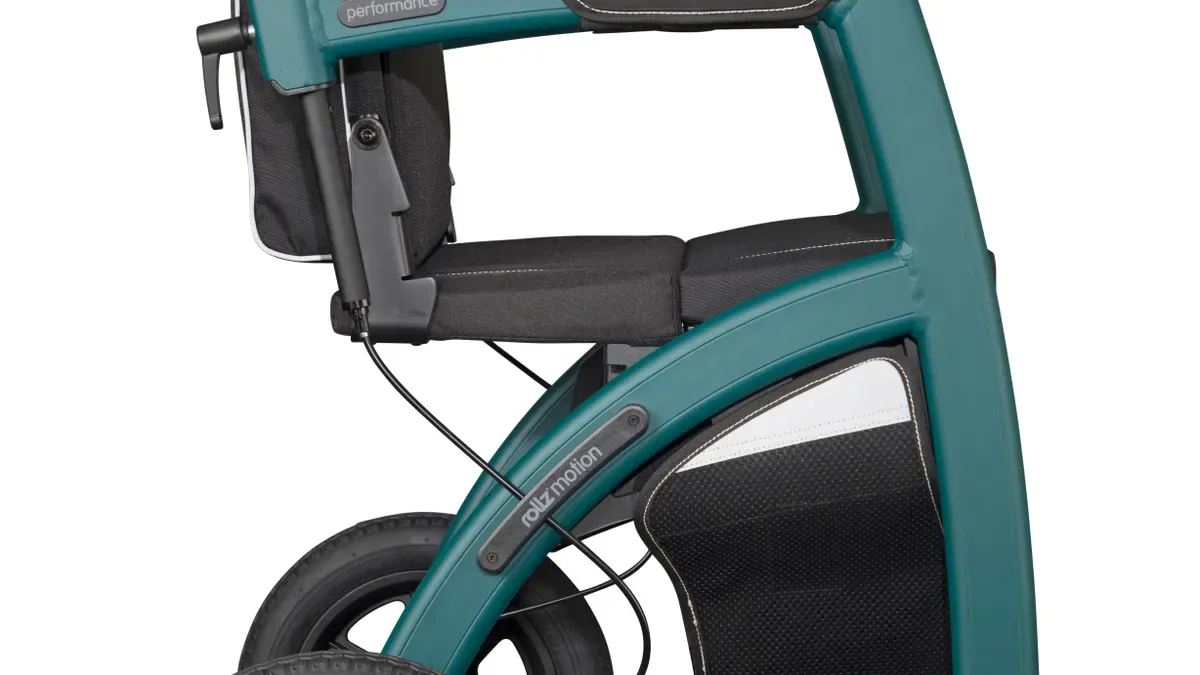
Some manufacturers now sell products that combine features of both rollators and wheelchairs. These hybrid transportation chairs aim to serve users who need walking support and occasional seated transport. Understanding their limits prevents dangerous misuse.
Rollators With Transport Seats
What They Can and Cannot Do
A rollator walker and transport chair combo allows a caregiver to push a seated user for short distances. These devices include footrests and push handles. They support seated movement on level surfaces. However, they are transport chairs, not supportive seating systems. They do not suit long-duration sitting or users needing postural support.
| Category | Details |
|---|---|
| Weight Capacity | Most combo rollator transport chairs support 250–300 lbs. Limited options exist for higher weight capacities. |
| Device Weight | Combo devices are generally heavier than standard rollators. The Paiseec 2-in-1 weighs 42 lbs; the Rollz Motion Electric weighs 62 lbs. |
| Safety: Seated Use | These are transport chairs, not supportive seating systems. They are not intended for long-duration sitting. |
| Safety: Brakes | Always lock brakes before sitting. The seat is for stationary rest breaks. |
| Safety: Propulsion | Most are not designed for independent wheelchair propulsion. |
Why They Are Not True Wheelchairs
A 2 in 1 rollator walker does not replace a wheelchair. The seat lacks the padding and support of a wheelchair cushion. The frame does not provide full transport capabilities for all-day use. Users cannot propel themselves independently. These devices serve a narrow purpose.
Rollator and Wheelchair Combos
How These Hybrids Work
A rollator walker and transport chair combo converts between two modes. In walker mode, the user walks with support. In transport mode, a caregiver pushes the seated user. The device remains stable even when you’re sitting in it only if the brakes are locked and the frame is fully open.
Who They Suit Best
These hybrids suit users who walk short distances but fatigue quickly. They help during appointments or errands where walking endurance varies. They do not suit users who cannot walk at all.
Talking to a Doctor or Therapist
Getting a Proper Assessment
A physical or occupational therapist can assess walking ability and endurance. This evaluation determines whether a rollator as wheelchair substitution is ever appropriate. Professionals measure strength, balance, and cognitive function.
Choosing the Safest Option
Always engage both parking brakes before lowering onto the seat. Never sit on a rollator that is in motion.
For seated use longer than 15 minutes, prioritize a wide seat and padded backrest. A therapist can recommend the safest device for each situation.
How to Choose the Right Device
Selecting between a rollator and a wheelchair requires honest self-assessment and professional guidance. The right device matches the user’s actual abilities and daily routines. A physical or occupational therapist can identify the safest option through a formal evaluation.
Questions to Ask Yourself
Can I Walk at All?
A person with reasonably good balance but limited endurance may benefit from a rollator walker. This device rolls away when leaned on heavily, so significant balance impairment makes it unsafe. Handgrip strength matters for brake control. Arthritis may require loop-style brakes or larger grips. Dementia raises fall risk because correct device use demands cognitive attention.
Do I Need to Sit and Be Moved?
A wheelchair suits individuals who cannot walk safely for required distances. Those with severe balance problems, insufficient endurance, or weight-bearing restrictions need seated transport. Uncertainty itself signals the need for a professional evaluation.
Matching the Device to the Task
The best equipment supports the person’s actual routine and the specific tasks they struggle with. The following table outlines common settings and matching factors.
| Task / Setting | Suggested Equipment | Key Matching Factors |
|---|---|---|
| Moving around the house | Rollator with seat and storage | Balance, strength, home layout |
| Short outings and errands | Rollator | Seat for resting, storage, maneuverability |
| Medical appointments | Rollator or wheelchair | Endurance, distance, transportation |
| Longer distances and travel | Mobility scooter or powerchair | Distance, endurance, vehicle storage |
| Outdoor use | Rollator or wheelchair | Wheel size, braking, folding ability |
Around the House
A rollator walker helps with short trips and tight spaces indoors. Users with difficulty walking short distances benefit from a seat for rest breaks. Home layout affects maneuverability.
Outdoors and Appointments
Outdoor surfaces like sidewalks and parking lots demand larger wheels and reliable brakes. A person with limited mobility may need a wheelchair for appointments when endurance falls short.
Where to Get Help
Medical Supply Stores
A physician can perform a physical exam and discuss daily-living difficulties. A referral to an occupational or physical therapist provides a mobility assessment of gait, balance, and strength. A certified Assistive Technology Professional from a medical equipment supplier handles device selection, proper fit, and training.
Insurance and Coverage
Medicare and Medicaid can help finance mobility aids under specific conditions. CMS requires a face-to-face mobility examination by a physician before prescribing power mobility devices. A healthcare provider or case manager can help maximize these benefits.
Staying Safe With the Device You Choose
Proper use keeps a rollator or wheelchair safe. Safety depends on routine inspections, correct technique, and honest observation of changing abilities. Users and caregivers share this responsibility. An unsafe device becomes a hazard.
Rollator Safety Basics
Brake Checks and Wheel Care
A rollator requires weekly inspections. Experts advise checking brake pads for thinning. Worn pads cannot stop the rolling frame. Wheel condition matters equally. Users should look for wobble, uneven wear, and axle debris. Alignment problems cause poor traction. Air-filled tires need correct pressure. Bald tread reduces grip. Screws and hinges demand attention. Loose bolts create instability. A cracked seat or rusted frame signals the end of its safe life.
Manufacturers integrate essential safety features such as non-slip wheels, sturdy frames, and secure braking systems. A user must match the device to their body weight. Standard rollators support 250 to 400 pounds. Brake cables stretch over time. Loose brakes fail on slopes. Users should test brake engagement before each walk. Users must lock the brakes fully before sitting. On inclines, the brakes control speed.
| Component | What to Check |
|---|---|
| Brakes | Lock firmly and do not slip when pushed |
| Wheels | Turn freely with no wobble or axle debris |
| Knobs and hinges | Tighten after each adjustment |
| Seat | Look for cracks or sagging |
| Frame | Inspect for rust or stress fractures |
Keeping the Path Clear
A clear path prevents trips. Users should remove rugs, cords, and thresholds. Outdoor paths need inspection for cracks and gravel. Wet leaves and puddles reduce traction. Users should avoid steep slopes. A rollator’s width must fit through doorways and hallways.
Wheelchair Safety Basics
Proper Fit and Positioning
A wheelchair demands professional fitting. A seating and mobility evaluation addresses postural support, pressure distribution, and independent function. Foam cushions offer stability. Air cushions distribute pressure. Hybrid models combine both benefits. A user with impaired sensation needs extra attention to prevent pressure injuries. Combined power tilt and recline provides pressure relief. Tilt alone does not relieve the buttocks sufficiently.
Safe Transfers In and Out
Transfers require a locked wheelchair. Users should park beside the transfer surface. Footrests swing away or flip up before movement. A caregiver must steady the frame. A sliding board helps those with limited balance. Power seat elevation enables safer lateral transfers. Users should practice transferring with an occupational therapist. Repeated practice reduces injury risk.
When to Ask for Help
Sudden Changes in Mobility
A mobility device fails when needs change. Frequent stumbles, heavy furniture reliance, and new fatigue demand attention. A fall marks a critical warning. Experts recommend contacting a physician after any fall. Sudden weakness after a stroke or hospital stay requires immediate evaluation. Ongoing back or neck pain also signals the need for therapy.
Reaching Out to a Professional
Physical and occupational therapists assess strength, balance, and safety awareness. They can adjust a device, teach proper technique, or recommend a new mobility aid. A physician can open the door to these services. Users should never wait for an injury. Early intervention preserves independence and confidence.
A rollator as wheelchair replacement does not work, not even for a short trip. The right device depends on one key question: can the person still walk? A rollator supports walking, and a wheelchair carries a seated user. Anyone who cannot walk safely needs a wheelchair. A doctor or therapist can assess mobility and recommend the safest option. With proper guidance, safe and comfortable mobility is within reach for everyone.
FAQ
Can someone push a person sitting on a rollator for a short distance?
No. A rollator seat serves only as a resting spot during walks. The frame lacks footrests, seat belts, and transport-grade brakes. Pushing a seated person causes tipping, brake failure, and serious injury. Manufacturers explicitly prohibit this use in their manuals.
What happens if a person sits on a rollator while someone pushes it?
The rollator can tip backward or sideways. The brakes cannot hold the passenger’s weight on any slope. The pusher risks back and shoulder strain. Falls from rollators cause thousands of emergency room visits each year.
How does a rollator differ from a wheelchair?
A rollator supports walking for people with balance issues. A wheelchair transports people who cannot walk. Wheelchairs have large wheels, footrests, seat belts, and brakes rated for passenger weight. Rollators have none of these transport features.
When should someone switch from a rollator to a wheelchair?
A person needs a wheelchair when walking becomes unsafe or impossible. Warning signs include frequent falls, near falls, growing weakness, and fatigue within minutes. A doctor or physical therapist can assess mobility and recommend the right device.
What is a rollator transport chair combo?
A rollator transport chair combo converts between walking support and seated transport. A caregiver pushes the seated user for short distances on level surfaces. These hybrids work for occasional use. They do not replace a true wheelchair for daily mobility needs.
Can a rollator seat hold a person’s full weight?
A rollator seat holds a person’s weight only when stationary. The weight rating applies to rest breaks, not movement. Pushing a seated person creates shear forces the frame cannot handle. The seat may crack or collapse under transport stress.
Who should evaluate mobility device needs?
A physical or occupational therapist performs mobility assessments. They measure strength, balance, endurance, and cognitive function. A certified Assistive Technology Professional handles device fitting and training. Medicare requires a face-to-face physician exam before covering power mobility devices.
Are rollators covered by insurance?
Medicare Part B may cover rollators as durable medical equipment. Coverage requires a physician’s prescription and documentation of medical need. Medicaid and private insurers offer varying coverage. A healthcare provider or case manager can help navigate benefits.