
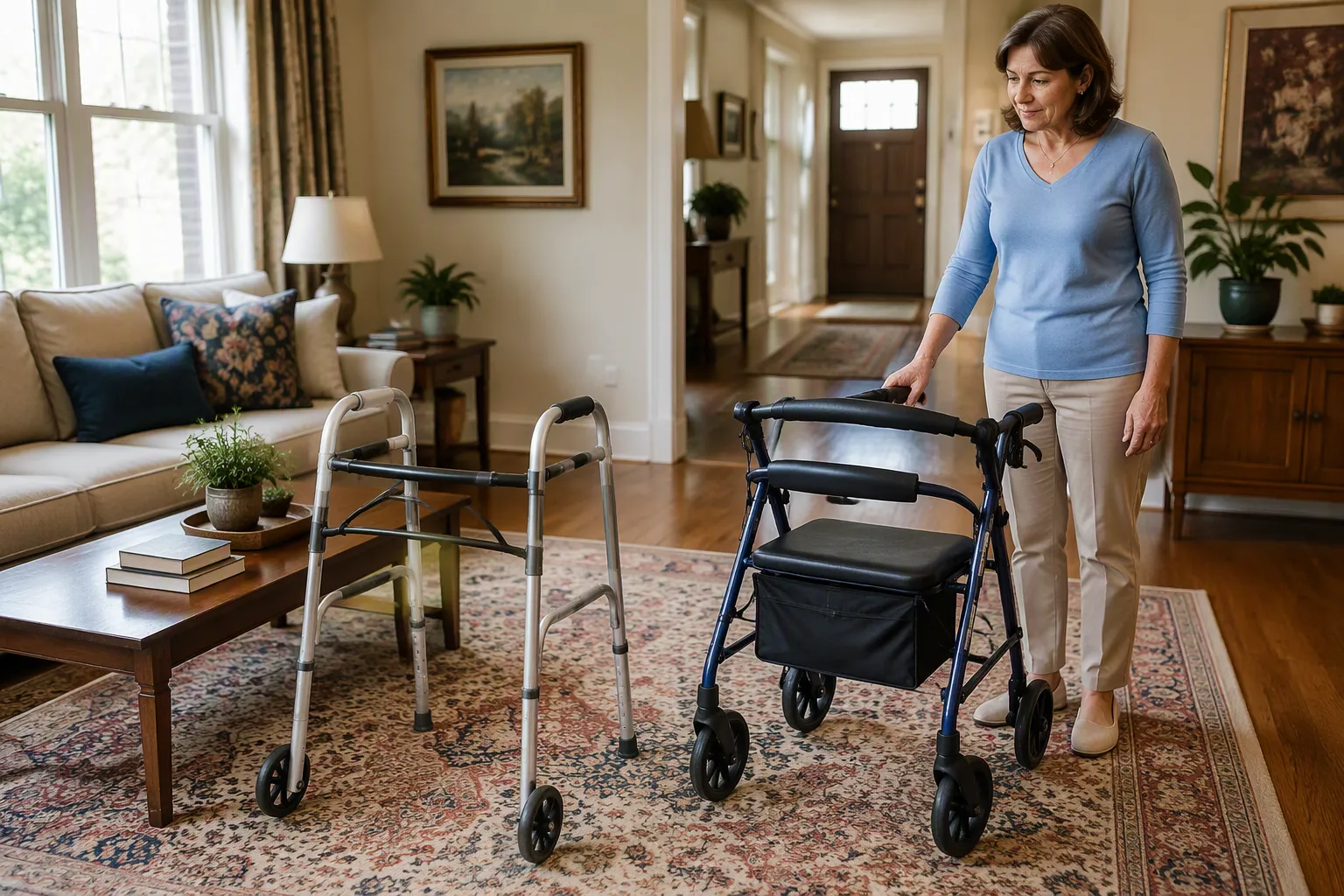
For a home with rugs, a two-wheel walker usually provides the safer option. It gives a stable base while the front wheels glide over carpet. A four-wheel rollator can still work well when rugs are low-pile, flat, and firmly secured to the floor. The best choice between a two-wheel walker or four-wheel rollator depends on rug type, personal balance, and daily movement around the house.
The Short Answer: Two-Wheel Walker or Four-Wheel Rollator?
The choice between a two-wheel walker or four-wheel rollator for a home with rugs comes down to one core question: how much control do you need over the device at every step? A two-wheel walker gives the user direct control because it requires lifting and placing with each step. A four-wheel rollator rolls continuously and demands less effort on smooth surfaces. Rugs change that equation. They add resistance, uneven edges, and soft surfaces that can undermine the benefits of continuous rolling. For most rug-heavy homes, the two-wheel walker offers a safer, more predictable experience.
Why a Two-Wheel Walker Often Wins on Rugs
A two-wheel walker outperforms a rollator on rugs for three practical reasons. Each reason relates to how the device interacts with carpet fibers and rug edges.
Stable Base With Gliding Front Wheels
The two-wheel walker features two front wheels and two rear glide tips. The rear tips do not roll. They slide or lift with each step. This design creates a stable base because the device never moves unless the user moves it. The front wheels glide over low-pile carpet with minimal resistance. The rear tips provide braking resistance and preserve stability. Clinical guidance from Performance Health states that for older adults who are deconditioned or have balance impairments but no weight-bearing restrictions, a front-wheel walker is generally the more functional prescription. The front wheels reduce the energy cost of walking by allowing the user to push the device forward instead of lifting it. This makes the two-wheel walker preferable to a four-wheel rollator for this population.
Less Chance of Rolling Away From You
A four-wheel rollator rolls freely on its four wheels. On a smooth floor, that free rolling is an advantage. On a rug, it becomes a hazard. The rollator can roll away from the user when he or she leans on it for support. The device may also roll forward when the user stops to rest. A two-wheel walker cannot roll away because the rear tips grip the carpet. The user controls every inch of movement. This control reduces the risk of falls and gives the user confidence on uneven surfaces.
Easier to Control on Thick or Uneven Carpet
Thick carpet creates rolling resistance. A rollator with small wheels struggles against that resistance. The user must push harder to keep the device moving. That extra effort can tire the arms and shoulders. A two-wheel walker avoids this problem because the user lifts the device with each step. Lifting clears the carpet pile entirely. The user sets the walker down on a stable spot, then steps forward. This motion works well on thick or uneven carpet. The user never fights the rug for control.
When a Four-Wheel Rollator Can Still Be Safe
A four-wheel rollator is not automatically unsafe on rugs. Several conditions make it a workable option. The key is matching the rollator to the rug type and the home layout.
Low-Pile Rugs That Lie Flat
Low-pile rugs, such as flat-weave or Berber styles, offer little resistance to rollator wheels. The wheels roll across the surface without sinking into the pile. The user can move smoothly from room to room. The rug must lie flat with no curled edges or wrinkles. A flat rug eliminates the snagging risk that plagues thicker carpets.
Rugs Secured With Tape or Non-Slip Pads
A rollator works best on rugs that cannot move. Double-sided tape along the edges keeps the rug flat and prevents curling. Non-slip pads underneath hold the rug in place. A secured rug gives the rollator wheels a consistent surface. The user does not need to worry about the rug bunching up under the wheels. This setup reduces the risk of sudden stops and tipping.
Open Floor Plans With Few Transitions
An open floor plan with few transitions between rooms suits a rollator well. The user can roll from the living room to the kitchen without crossing multiple rug edges or thresholds. Fewer transitions mean fewer opportunities for wheels to catch. A rollator shines in this environment because it allows continuous, efficient movement. The user can cover more ground with less effort.
The One-Sentence Rule to Remember
One simple rule captures the entire decision. The rule applies to any walker or rollator user who lives with rugs.
Thick or Loose Rugs Favor a Two-Wheel Walker
Thick or loose rugs favor a two-wheel walker. The lifting motion clears the pile and the edges. The rear tips grip the carpet and prevent rolling. The user maintains full control at every step.
Flat, Secured Rugs Allow a Rollator
Flat, secured rugs allow a rollator. The wheels roll smoothly across the surface. The user can move efficiently without fighting the carpet. The device works well when the rug stays in place and the pile stays low.
Clinical guidance supports this rule. Narrow hallways favor a two-wheel walker. Small bathrooms favor a two-wheel walker. Tight kitchen turns favor a two-wheel walker. Thick rugs favor a two-wheel walker over a rollator. Rollators are instead suggested for apartment hallways, community rooms, doctor visits, and sidewalks when the user can safely handle the brakes. This guidance helps any walker or rollator user match the device to the environment.
Walker vs. Rollator: Key Differences
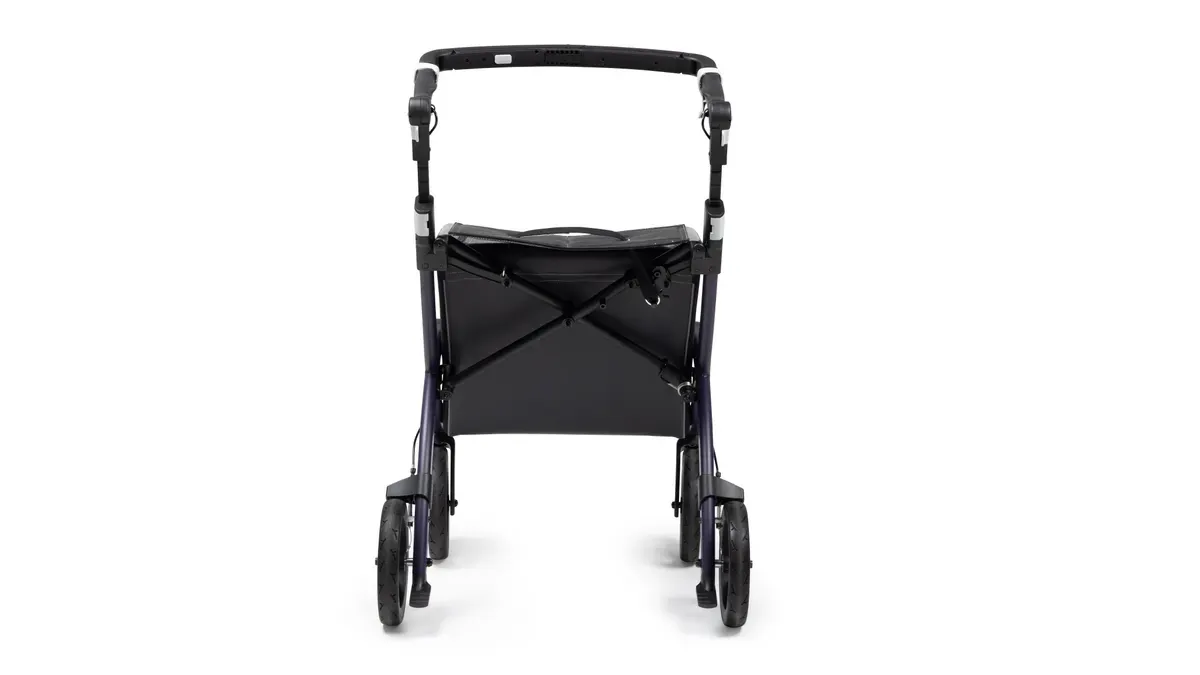
Understanding the difference between a walker vs. rollator begins with how each device moves. A two-wheel walker requires active placement with every step. A four-wheel rollator rolls continuously. This difference matters most on rugs. The right walker or rollator must match the user’s balance and daily path. For a rug-heavy home, the choice between walker or rollator often determines safety.
How a Two-Wheel Walker Works
Two Front Wheels and Two Rear Glide Tips
A two-wheel walker uses a simple frame. The frame includes two front wheels and two rear glide tips. The rear tips are rubber glide caps that remain planted on the floor. The front wheels roll forward only when the user moves the frame. This design produces less friction than a standard walker, but the rear tips still add drag. That drag moderates forward movement and creates a secure stopping point.
You Lift and Place It With Each Step
Movement follows a steady rhythm. The user pushes the walker forward on its front wheels, then lifts the rear tips. The lifting motion clears carpet pile and rug edges. The user then steps into the frame and transfers weight onto the rear tips. This cycle repeats with each step. The user maintains full control because the device never rolls on its own.
Built for Balance and Weight Support
A two-wheel walker provides balance and stability support for people who need a dependable base. The wide frame and planted rear tips reduce sway. The rear tips supply support and stability whenever the user pauses. Users who cannot bear weight on the device in the same way as a rollator may still lean on the walker. This design supports balance without requiring continuous wheel contact. As a result, the user can rest safely without the device rolling away.
How a Four-Wheel Rollator Works
Four Wheels That Roll Continuously
A four-wheel rollator moves on four wheels that stay in contact with the floor. The front wheels swivel to steer, and the rear wheels follow. This rolling design allows smooth, continuous movement on hard surfaces. A rollator works well indoors on smooth floors because the user can push it forward without lifting. Those same wheels create hazards on rugs. The wheels can catch on a rug edge or sink into thick pile. A rollator with larger wheels handles carpet better, and wheel sizes generally range from 6 to 10 inches.
Hand Brakes and a Seat on Most Models
Most rollators include hand brakes and a padded seat. The hand brakes function much like bicycle brakes. Squeezing the levers slows the rear wheels. The user must apply the brakes actively whenever the device stops. The seat offers a place to rest mid-walk, but the brakes must lock before sitting. Without locked brakes, the rollator can roll away. This coordination requirement makes the rollator less forgiving on soft carpet, where braking grip weakens. The user must also manage the device while bearing weight through the frame.
Built for Smooth, Continuous Movement
The rollator’s purpose is efficient movement over smooth surfaces. It performs best in open areas with few obstacles. Standard rollators include hand brakes, a seat, and storage. All-terrain models add larger, rugged wheels for uneven surfaces. Even with those wheels, a rollator does not offer the same control as a two-wheel walker. It is the least stable walker type because it can slide forward unless the user manages the brakes. For older adults who need mobility support but not full weight-bearing support, a rollator can be an excellent indoor option when the floor is clear and the rugs lie flat.
Side-by-Side Comparison for Rug Use
Wheel Size and Rolling Resistance
Wheel size changes how each device behaves on carpet. A two-wheel walker uses small front wheels because the user lifts the rear tips. A rollator relies on its wheels for every inch of movement. Rollator wheels range from 6 to 10 inches. Larger wheels reduce rolling resistance on low-pile rugs. Smaller wheels catch on rug edges and sink into thick pile. A two-wheel walker avoids rolling resistance entirely because the user lifts the frame with each step.
Brake Type and Stopping Control
A two-wheel walker does not have hand brakes. The rear glide tips create friction with the floor. That friction slows the device when the user transfers weight. A rollator relies on hand brakes for stopping. The brakes demand grip strength and coordination. On soft carpet, the brake pads cannot press firmly enough to stop quickly. For many users, the walker’s natural friction offers safer stopping control.
Turning Radius in Tight Spaces
Turning radius describes the amount of room a device needs to change direction. A two-wheel walker has a narrow frame. The user turns by lifting the rear tips and pivoting the front wheels. This motion works well in small bathrooms and narrow hallways. A rollator has a wider frame. The front casters swivel, but the rear wheels need space to follow. On a rug, the rollator’s turning radius increases because the wheels resist movement. The maneuverability of a two-wheel walker gives it a clear advantage in tight indoor spaces.
Weight and Portability Around the House
A two-wheel walker is generally lighter than a rollator. The user can lift it over thresholds and doorways. A rollator weighs more because the frame includes a seat, backrest, and brakes. The extra weight increases rolling resistance on carpet. Portability also affects daily use. A user who must lift the device often will prefer a lighter walker. A user who wants to carry items or rest during a walk may accept the heavier rollator.
How 4 Wheel Rollators and Walkers Handle Rugs
Rugs change how every mobility device performs. A walker or rollator must manage carpet pile, rug edges, and transitions between flooring types. Each device handles these challenges differently.
Two-Wheel Walker on Rugs
Front Wheels Glide Over Low Pile
The front wheels of a two-wheel walker roll across low-pile carpet with little effort. The wheels handle direction while the rear glide tips ensure a smooth pass. This combination works well in flat spaces like kitchens, hallways, and bedrooms. It also fixes the awkward feeling where the front wheels move but the back legs keep dragging.
| Floor Type | Suitability for Walker Skis | Key Considerations |
|---|---|---|
| Low-pile carpet | Usually suitable | Observe if the skis snag on the carpet edges |
| Thick carpet | Not always suitable | May still drag; requires a hands-on test |
Rear Tips Can Catch on Thick Carpet
Thick carpets create problems for the rear glide tips. The skis may face high resistance on plush surfaces. A user should test the carpet height and edges in person. Homes with thick carpets, loose rugs, high door thresholds, or uneven floors may need more than walker skis alone. Walker skis work best on flat, hard floors and low-pile carpets. Using them blindly on thick rugs is not recommended.
Lifting Motion Clears Rug Edges
The lifting motion of a two-wheel walker clears rug edges effectively. The user lifts the rear tips with each step. This action prevents the walker from snagging on the carpet. The user maintains control throughout the movement.
Four-Wheel Rollator on Rugs
Small Front Wheels Catch on Rug Edges
Small wheels on 4 wheel rollators tend to catch on lips between flooring materials. Six-inch wheels are lightweight and maneuverable on smooth indoor surfaces. They provide a bumpier ride on uneven terrain. Larger wheels absorb small obstacles and keep the rollator moving smoothly. This matters when the user’s balance is already being tested.
Added Weight Increases Rolling Resistance
Most rollators roll on low-pile carpet without difficulty. Thicker or plush carpet creates more rolling resistance. The rollator becomes harder to push. Eight-inch wheels with a smooth tread generally handle carpet better than six-inch wheels. The larger contact surface distributes resistance more evenly. A home with a mix of flooring types and area rugs with edges should factor wheel size into the decision.
Brakes Help but Need Firm Grip
The brakes on a rollator help control speed on carpet. The user needs a firm grip to engage them properly. Soft carpet reduces braking effectiveness. The user must apply steady pressure to stop the device.
Doorways, Thresholds, and Tight Corners
Narrow Hallways With Runners
Narrow hallways with runners challenge both devices. A two-wheel walker maneuvers better in tight hallways because the user lifts and pivots it. A rollator needs more space to turn its rear wheels.
Metal Thresholds Between Rooms
Metal thresholds between rooms create a bump for small wheels. A rollator with six-inch wheels may catch on the raised edge. Larger wheels roll over thresholds more easily. A two-wheel walker clears thresholds when the user lifts the frame.
Turning Around in Small Bathrooms
Turning around in small bathrooms favors a two-wheel walker. The narrow frame allows the user to pivot with minimal space. A rollator requires a wider turning radius. The user may struggle to turn a rollator in a small bathroom, especially on a rug.
Rug-Specific Rollator and Walker Challenges
Rugs create surface irregularities that challenge every walker or rollator user. Carpet pile, rug edges, and transitions between flooring types affect each device differently. Understanding specific failure points helps users anticipate problems before they occur.
Front Wheels Catching on Rug Edges
Why Rollator Wheels Catch More Often
A 4 wheel rollators design relies on continuous contact with the floor. Its front wheels must cross every rug edge without assistance. A raised edge stops those wheels abruptly. The device’s momentum shifts forward. This sudden stop can destabilize balance. Curled corners and thick binding increase the hazard. Even a flat rug develops wrinkles through daily foot traffic, creating snag points that worsen over time.
How Walker Wheels Avoid the Same Snag
A two-wheel walker uses a lifting motion instead. The user raises the frame with each step. Lifting clears the front wheels over the rug edge. The walker never gains speed to crash into the obstruction. Controlled placement prevents the sudden-stop problem entirely. This technique works equally well on low-pile and plush carpet.
Increased Rolling Resistance on Carpet
Thick Pile Slows Rollator Wheels
Carpet pile height governs rolling resistance. Thick pile grabs small wheels. The user pushes harder to maintain speed. That effort cancels the energy-saving benefit of smooth rolling.
Especially on high-pile or shaggy carpet, you might feel a little more resistance. It’s not dangerous, just a bit more work.
| Mobility aid | Motion on thick/high-pile carpet | Effect on effort |
|---|---|---|
| Four-wheel rollator | Rolls continuously; wheels must overcome the carpet pile | High-pile carpet creates significantly more rolling resistance and requires more effort to push, reducing the energy-saving benefit |
| Two-wheel walker | Must be lifted and placed forward with each step | Requires a lifting motion instead of continuous rolling; no rolling resistance because it is not rolled across the carpet |
Walker Glides Require Lifting, Not Rolling
The walker bypasses rolling resistance completely. Each step involves lifting and placing the frame. The device glides over the pile rather than pushing through it. Arm strain from carpet friction disappears. This lifting motion suits homes where thick carpet covers multiple rooms.
Tipping Risk on Uneven Surfaces
Rollators Tip When Wheels Stop Suddenly
Uneven surfaces create a genuine tipping hazard for rolling aids. A single wheel catches on a threshold or rug edge. The device halts, but the user’s body continues forward. This mismatch can tip the frame. Users should note these reported patterns:
- Four-wheel rollators need clear, unobstructed floors; area rugs, rough or uneven ground, or abrupt thresholds can raise the chance of a fall or tip.
- Two-wheel walkers glide over small carpet or rug transitions more easily because of their front wheels, making them less likely to snag on those surface changes.
The risk increases when the user leans forward on the handlebars, shifting weight beyond the stable base.
Walkers Tip Less Because You Control Each Step
A walker tips less because the user controls every placement. The frame never builds momentum. The user sets it down on stable ground and steps forward. No sudden stop occurs because the user lifts the frame before it can catch. This step-by-step rhythm provides reaction time on uneven surfaces. The walker stays planted while the user transfers weight.
Brake Control on Soft Surfaces
Braking performance changes dramatically when a mobility device moves from a hard floor onto carpet. A rollator relies on hand brakes that squeeze the rear wheels. Those brakes need firm contact between the wheel and the floor to stop effectively. Soft carpet breaks that contact. The wheel sinks into the pile. The brake pads then press against a wheel that cannot grip the surface beneath it. The result is a slower, less predictable stop.
Rollator Brakes Need Firm Wheel Contact
Hand brakes on a rollator work through friction. The user squeezes a lever. A cable pulls a brake pad against the rear wheel. The wheel stops turning. The device stops moving. This sequence only works when the wheel maintains solid contact with the floor. Hard surfaces like tile, wood, and linoleum provide that contact. The wheel meets resistance immediately. The rollator stops within a short distance. The user maintains control.
Soft surfaces change this equation. The wheel presses into the carpet pile instead of resting on top of it. The brake pad still stops the wheel from rotating. The wheel itself still moves because the carpet fibers shift under pressure. The device slides forward even with locked brakes. This sliding motion surprises users who expect an immediate stop.
Soft Carpet Reduces Braking Grip
Carpet pile acts like a cushion under the wheels. A thick pile compresses under the weight of the device. The wheel sits in a depression rather than on a firm surface. Braking force transfers poorly through this soft layer. The user must squeeze the brake lever harder to achieve the same stopping power. That extra grip strength may exceed what the user can comfortably provide.
Plush or high-pile carpets create the greatest risk. The wheel sinks deeper. The braking distance increases. A user who stops suddenly on a hard floor may travel several extra inches on carpet before the device halts. Those extra inches matter near stairs, doorways, or furniture.
A walker avoids this problem entirely. The rear glide tips create friction through direct contact with the carpet. The user controls speed by lifting and placing the frame. No brake cable or pad depends on wheel-to-floor grip. The stopping mechanism works the same way on tile, wood, or thick carpet. This consistency gives the walker a clear advantage in rug-heavy homes.
Users who choose a rollator for low-pile rugs should test the brakes on each rug surface. They should squeeze the levers firmly and note the stopping distance. If the device slides, they should consider a different mobility aid or remove the rug.
Practical Tips for Two-Wheel Walkers and Rollators on Rugs
Rugs add comfort and warmth to a home. They also create obstacles for anyone using a mobility device. A few practical changes make rugs safer for both a walker or rollator user.
Make Your Rugs Safer First
The home environment determines how safely a mobility device performs. A few simple modifications reduce fall risk and improve movement.
Secure Edges With Double-Sided Tape
Curled rug edges catch wheels and glide tips. Double-sided tape along the border holds edges flat against the floor. This step prevents the rug from bunching up under the device. Secure all four sides for the best result.
Add Non-Slip Rug Pads Underneath
A non-slip rug pad keeps the rug from sliding. Place the pad directly under the rug before laying it down. This addition prevents slips and ensures smoother movement across the surface. Remove loose throw rugs in high-traffic pathways when possible.
Remove or Replace High-Pile Rugs
High-pile rugs create the greatest challenge. The thick surface grabs wheels and increases rolling resistance. Replace these rugs with low-pile options. A low-pile, firmly secured carpet works best for any mobility device.
Tips for Using a Two-Wheel Walker on Rugs
Lift the Front Wheels Slightly Over Edges
The user should lift the front wheels when crossing a rug edge. This motion clears the binding and prevents snagging. The rear glide tips follow with a gentle lift.
Keep a Steady, Slow Pace
A slow, steady pace gives the user time to react. Rushing increases the chance of catching an edge. Consistent rhythm keeps the device under control.
Check Rear Tips for Wear
Rear glide tips wear down over time. Worn tips reduce stability and create drag. The user should inspect them regularly and replace them when needed. Ski glides reduce friction and make movement easier on carpets.
Tips for Using a Rollator on Rugs
Choose Larger Wheels for Better Roll
Larger wheels roll over carpet more easily. Many 4 wheel rollators offer wheel sizes from 6 to 10 inches. Eight-inch wheels handle low-pile carpet well.
Lift the Front Wheels Slightly When Crossing Edges
The user should lift the front wheels when crossing a rug edge. This technique prevents the wheels from catching on the binding.
Use Brakes Whenever You Stop
The user must engage the brakes every time the rollator stops. Soft carpet reduces braking grip. Firm pressure on the levers helps the device stop.
Practice Turns on Carpet Before Rushing
Turning on carpet requires more effort. The user should practice slow turns before navigating tight spaces. Wider pathways make turning easier.
Set Up Your Home for Success
Create Smooth Paths Between Rooms
Rearrange furniture to create wider, clearer pathways. Tuck cords against walls or use cord covers. Repair or mark uneven surfaces.
Keep Frequently Used Items Within Reach
Place daily items at waist height. This step reduces the need to carry objects while walking.
Ask for a Home Safety Check
A physical therapist can assess the home for hazards. This professional identifies problem areas and suggests solutions.
Set Up Your Home for Success
Preparing a residence for a mobility device requires more than choosing the correct aid. The layout of each room decides whether a two-wheel walker or four-wheel rollator can function safely. Loose rugs, exposed cords, and crowded furniture create risks. A person can eliminate many hazards with simple adjustments. These changes protect balance and increase confidence during daily movement.
Create Smooth Paths Between Rooms
A clear route allows a person to move from one room to another without hesitation. Residents can create a safe path by completing these steps:
- Keep the walking path clear
- Remove throw rugs
- Remove cords
- Remove clutter that may cause trips
Remove loose rugs from the home to prevent tripping while walking.
The path should offer enough width for the selected device. Narrow passages force awkward turns. Doorways need clearance so wheels and glide tips do not catch on frames. A person should inspect each room from floor level. Small objects hide in plain sight. A dropped pencil can stop a rollator wheel. A curled rug edge can snag a walker’s front wheel. Removing these items prevents sudden stops and keeps the rhythm of walking steady.
Keep Frequently Used Items Within Reach
Balance problems often begin when a person bends or stretches. Place everyday objects at waist height. Remote controls, drinking glasses, and medications belong in one accessible location. This arrangement removes the need to lean across furniture. A rollator’s storage bag can hold lightweight items. A two-wheel walker user must keep both hands on the frame. That person should carry nothing while walking. A small table next to a favorite chair provides a resting spot. The user can then sit, reach for an item, and stand without awkward movement.
Ask for a Home Safety Check
Professional guidance adds another layer of security. A physical therapist or occupational therapist can examine the entire living space. The therapist identifies trip hazards and recommends specific changes. That professional may suggest removing a high-pile rug or installing a threshold ramp. They can measure turning space in small bathrooms. This assessment offers clear answers based on the user’s strength and balance. A family member can request a safety visit from a local rehabilitation center. The visit helps the user select the right device. The residence then supports smooth, confident movement.
Final Choice: Two-Wheel Walker or Four-Wheel Rollator?
A rug-heavy home demands a close match between the user and the mobility device. Physical therapists often recommend a compact two-wheel walker or a narrow indoor rollator for carpeted interiors. These models fit through doorways and tight halls. The final decision depends on the user’s balance, grip strength, and daily walking path.
| Decision Factor | How It Affects a Rug-Heavy Home |
|---|---|
| Balance and fall risk | A two-wheel walker keeps rear legs grounded, which provides steadier control on soft rug surfaces. |
| Grip strength and coordination | A four-wheel rollator requires hand-brake control and a firm grip, both difficult to manage on thick carpet. |
| Home layout | Physical therapists assess common walking surfaces and floor transitions; compact models suit carpeted rooms and narrow doorways. |
| Need for a seat | A built-in seat supports users with low endurance who need to sit down during a walk. |
This walker vs. rollator comparison leads to one conclusion: the safer device depends on conditions, not preference.
When to Choose a Two-Wheel Walker
You Have Thick or Loose Rugs
Thick or loose rugs require the lifting motion of a two-wheel walker. The walker clears carpet pile because the user lifts it with each step. A rollator wheels through the pile and often snags on rolled edges. Anyone with significant stability or strength issues should choose a walker instead.
You Need Maximum Stability
A person recovering from surgery or a recent fall needs maximum stability. The two-wheel walker’s rear glide tips stay planted on the rug. The frame never rolls away on its own. This design supplies support and stability while the user transfers weight.
You Prefer Slow, Controlled Steps
Some users walk better at a slower rhythm. The two-wheel walker encourages a step-to pattern and forces the user to pause before advancing. Slow, controlled steps give the user time to recover balance after each shift in weight.
When to Choose a Four-Wheel Rollator
Your Rugs Are Low-Pile and Secured
A rollator becomes practical when rugs lie flat and tape secures every edge. Low-pile carpet offers little resistance to the wheels. Six-inch or eight-inch wheels roll smoothly across this surface. The decision hinges on proof that the rug cannot move or curl.
You Want a Seat for Resting
The built-in seat is the strongest reason to pick a rollator. Users with low endurance, heart conditions, or joint pain benefit from safe, supported sitting. The seat reduces the risk of leaning on unstable furniture while walking.
You Move Along Smooth, Open Paths
Open floor plans with few transitions suit a rollator well. The user rolls from room to room without crossing multiple rug edges. A narrow indoor rollator with a tight turning radius works in hallways, but the path must stay clear of obstacles.
Try Before You Decide
Test Both Devices on Your Own Rugs
A showroom floor does not predict real carpet. The user must push each device across every rug in the home. Watch how front wheels handle edges and how brakes respond on soft carpet. Testing each walker or rollator at home reveals problems no brochure can show.
Ask a Physical Therapist for a Fit Check
A physical therapist measures balance, grip strength, home layout, and recovery goals before making a recommendation. The therapist also checks seat height, brake reach, and frame width. A therapist matches the device to the user’s stability needs and walking routine. This professional guidance prevents a costly mistake.
For most rug-heavy homes, a two-wheel walker is the safer, more stable choice. It glides over carpet without rolling away or catching on edges. A four-wheel rollator can work well if rugs are low-pile, flat, and firmly secured, and if the user applies the brakes carefully. The right choice comes down to rug type, balance, and daily routine. Physical therapy guidance supports this approach:
- Selection among walker types should be based on mobility needs, stability requirements, maneuverability preferences, and physical abilities.
- A physical therapist notes that although patients frequently ask for rollators, this type of walker is not suitable for every patient population.
Always talk with a physical therapist or doctor before making a final decision about a two-wheel walker or four-wheel rollator, so the device fits both body and home.
FAQ
Is a two-wheel walker safer than a rollator on rugs?
For most homes with loose or thick rugs, a two-wheel walker provides greater control. The user lifts it with each step. A rollator can roll away or catch on edges. The choice between a two-wheel walker or four-wheel rollator depends on the rug’s condition and the user’s balance.
Can a four-wheel rollator work on low-pile carpet?
Yes. Low-pile carpet offers little resistance. The user should secure rug edges with tape and choose larger wheels. Brakes require firm pressure. The user should test the rollator on each rug to confirm safe stopping.
How does a user prevent a rollator from catching on rug edges?
The user lifts the front wheels slightly when crossing an edge. Larger wheels reduce snagging. Securing rug edges with double-sided tape also helps. Practice slow turns on carpet to maintain control.
Why do rollator brakes work less effectively on soft carpet?
Soft carpet cushions the wheels. The wheels sink into the pile, so brake pads cannot grip a firm surface. The device may slide forward. A user should squeeze the brake levers harder and test stopping distances on every rug.
What is the best way to secure rugs for a walker or rollator?
A user places non-slip pads underneath each rug. Double-sided tape holds edges flat. The user should remove high-pile rugs. Secured rugs reduce tripping and keep wheels rolling smoothly.
Does a two-wheel walker require more arm strength than a rollator?
Yes. A two-wheel walker requires lifting with each step. A rollator rolls continuously on smooth floors. On thick carpet, however, a rollator demands more pushing effort. Users with limited arm strength should test both devices at home.