
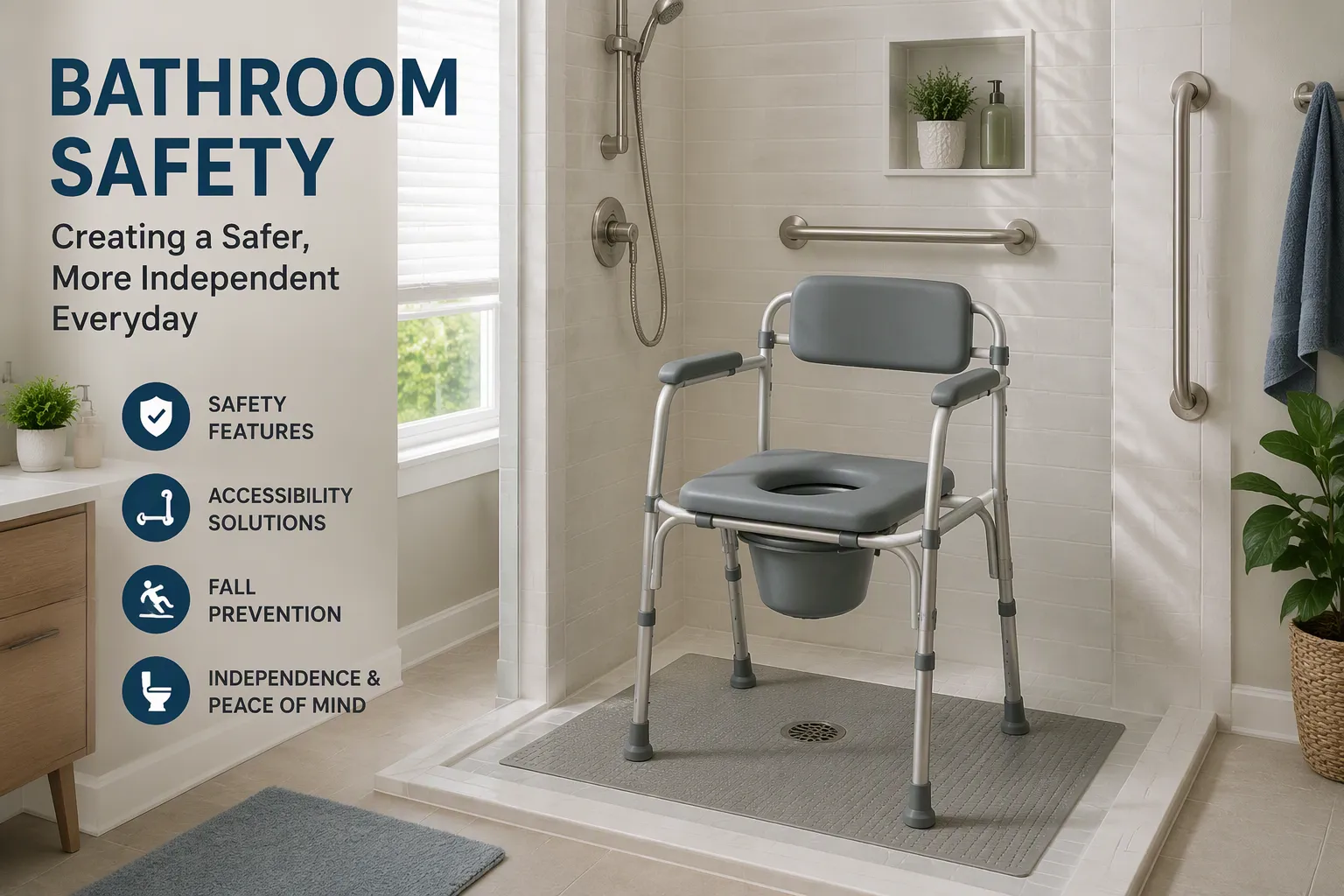
Most 3-in-1 commodes are not recommended for shower use, though a few are designed for it. Steel frame rust and wet-floor stability are the two main concerns. Showering is not one of the three intended functions of a standard 3-in-1 commode. Do not assume commodes can be used in the shower. For safety, choose an aluminum shower chair. Check the manufacturer’s instructions before using a 3 in 1 commode in the shower. Never use a bedside commode in the shower or use a bedside commode to shower without approval. A 3 in 1 commode fits bedside and toilet use.
What Is a 3-in-1 Commode?
A 3-in-1 commode is a single versatile device that serves three purposes. Manufacturers design these units for flexible home bathroom support. A caregiver or user selects the setup based on the patient’s needs.
The Three Functions Explained
Manufacturer specifications list three intended functions for a standard 3-in-1 commode:
- Bedside toilet (bedside commode)
- Raised toilet seat
- Toilet safety frame
Function 1: Bedside Commode
A person uses the 3-in-1 bedside commode when they cannot travel to the bathroom. The unit includes a removable bucket and lid. The height is adjustable to suit the user. This setup works well next to the bed for toileting support at night.
Function 2: Toilet Safety Frame
The fixed arms of the commode serve as support rails. These rails help a person sit down and stand up safely. A family can buy bolt-on toilet safety rails separately. The 3 in 1 commode provides the same feature when placed over the toilet.
Function 3: Raised Toilet Seat
The user positions the same frame over the bathroom toilet to increase seat height. The unit comes with a splash guard. This bottomless tube directs waste into the toilet. Its sides prevent mess caused by the elevated seat height.
The Vive 3-in-1 Commode works as a standalone bedside commode, a raised toilet seat, or a toilet safety frame. Its versatile design adapts to a variety of bathroom needs for seniors, post-surgery recovery, or those with limited mobility.
What Is Not on the List
Shower Use Is Not an Intended Function
Showering does not appear among the three intended functions. A standard 3 in 1 commode lacks the design features for wet environments. Users should not use a bedside commode to shower without explicit manufacturer approval. Placing a bedside commode in the shower creates rust and stability risks.
Why the Confusion Happens
The term commode carries ambiguous meaning. Historically, it meant a low cabinet hiding a chamber pot. In modern mobility contexts, it denotes a chair with an opening in the seat. A shower commode chair merges toileting with the ability to roll into a wet area. Most mid-to-high-range shower chairs are also commode chairs. People therefore conflate the two categories and assume any commode is shower-safe.
Some products marketed as 3-in-1 combine commode, shower seat, and transfer functions in one chair. The HOMCOM 3-in-1 Shower Chair, for example, allows use as a shower chair once the potty is removed. This explicit labeling leads people to assume every commode chair is intended for shower use. Readers should always check the instructions before they use a bedside commode to shower.
Why Rust Makes a Commode Unsafe in the Shower
Moisture is the enemy of steel. A standard 3-in-1 commode typically uses a steel frame. Steel offers strength and a low price point. Steel also reacts with water and oxygen. A shower exposes the frame to both elements every day. This combination creates a serious problem for any commode in the shower.
Steel Frames and Moisture
How Rust Forms on Steel Tubing
Rust forms through a chemical process called oxidation. Iron in the steel reacts with oxygen and moisture. The reaction produces hydrated iron oxide, which people know as rust. Electrolytes speed up this process by helping electrons move more freely. Soap residue and body salts in shower water act as electrolytes. They accelerate the oxidation reaction on the steel tubing.
The timeline for rust formation varies widely. Rust can appear anywhere from a few hours to several years, depending on the environment. Highly corrosive settings, such as coastal areas with salty air, may produce visible rust within 24 to 48 hours. Dry, controlled environments allow steel to resist rusting for years. Humidity and temperature fluctuations significantly influence the speed of rust formation. Exposure to corrosive substances accelerates the oxidation process. A shower combines high humidity, warm temperatures, and electrolyte-rich water. These conditions create a highly corrosive environment for any steel frame.
| Factor / Condition | Effect on Rust Formation Timeline |
|---|---|
| General timeline range | Rust can appear anywhere from a few hours to several years depending on environment |
| Highly corrosive environments (e.g., coastal, salty air) | Visible rust may appear within 24–48 hours |
| Dry, controlled environments | Steel may resist rusting for years |
| Humidity & temperature fluctuations | Significantly influence the speed of rust formation |
| Exposure to corrosive substances (e.g., salt/electrolytes) | Accelerates the oxidation process |
| Core mechanism | Iron in steel reacts with oxygen and moisture (oxidation), forming hydrated iron oxide (rust); electrolytes speed electron movement |
Steel structures in humid or coastal areas face elevated rust risk. Higher moisture levels and salt exposure in the surrounding environment drive this risk. A bathroom shares many traits with a coastal environment. Steam from hot showers raises humidity. Soap and shampoo add electrolytes to the water. A steel commode frame faces constant exposure to these conditions.
Where Rust Usually Starts
Rust rarely begins on the smooth, open surfaces of a steel tube. It starts at the weak points. Welded joints are a common starting point. The welding process disrupts the protective coating on the steel. These joints also trap moisture in small crevices. Screw holes and rivet points create similar vulnerabilities. The protective coating often thins or cracks at these stress points.
Rubber tips and leg inserts hide another common rust zone. Water seeps under the rubber cap and sits against the bare steel. The enclosed space stays wet for hours after a shower. Rust develops quietly inside this hidden area. Adjustable height mechanisms also trap water. The inner tube slides inside the outer tube. Water enters the gap and cannot escape. Rust forms on the inner tube surface. The user cannot see this damage until the frame fails or the height adjustment seizes.
The Safety Risks of Rust
Weakened Frame Strength
Rust removes material from the steel frame. Each patch of rust represents lost metal. The cross-section of the tubing thins as rust progresses. A thinner tube carries less weight. The frame may rust and lose its rated weight capacity without any visible warning. A commode rated for 300 pounds might support far less after months of rust damage. The frame can bend or collapse under a user’s weight. A fall in a wet shower creates a high risk of serious injury.
Sharp Edges and Skin Injuries
Rusted metal becomes brittle and flaky. The surface layer peels away in sharp, jagged flakes. These flakes can cut skin during handling or use. A user who grips the armrest may contact a rough, rusted surface. The sharp edges can cause cuts and scratches. An open wound in a shower environment creates an infection risk. Rust particles can also lodge in the skin and cause irritation.
Rust Stains and Hygiene Concerns
Rust leaves orange-brown stains on shower floors, tiles, and grout. These stains are difficult to remove and look unsightly. Rust stains also signal a hygiene problem. The rough, pitted surface of rusted metal traps dirt, bacteria, and mold. A smooth surface wipes clean easily. A rusted surface harbors contaminants in its pits and crevices. The commode becomes a breeding ground for bacteria in a warm, wet bathroom. This situation undermines the purpose of showering.
Aluminum vs. Steel
How Aluminum Resists Rust
Aluminum does not contain iron, so it cannot form iron oxide rust. Aluminum reacts with oxygen differently. It forms a thin oxide layer on its surface within seconds of exposure to air. This oxide layer bonds tightly to the metal. It seals the surface against further reaction. The layer is self-healing. When a scratch exposes bare aluminum, a new oxide layer forms immediately. This protection does not depend on any applied coating. There is no coating to chip, peel, or fail.
Steel depends on an applied coating for protection. Electroplated steel carries a thin layer of zinc or chrome. Micro-cracks in this layer let water molecules reach the bare steel underneath. Electrochemical corrosion begins beneath the plating. Rust spreads laterally while the surface still appears intact. This process is invisible and irreversible. Rust eventually breaks through the surface. The plating blisters and peels. The steel cross-section thins, and weight capacity drops.
- Coating Breach (Steel): Micro-cracks in the electroplated layer let water molecules reach the bare steel underneath.
- Under-Film Creep (Steel): Electrochemical corrosion begins beneath the plating; rust spreads laterally while the surface still appears intact — invisible and irreversible.
- Surface Rust & Structural Loss (Steel): Rust breaks through, plating blisters and peels, cross-section thins, and weight capacity drops.
- Self-Healing Oxide Film (Aluminum): When scratched, exposed aluminum reacts with oxygen within seconds to reform a continuous oxide layer — protection that does not depend on any applied coating, so there is no under-film creep pathway.
| Property | Aluminum Alloy (6061-T6) | Carbon Steel (Electroplated) |
|---|---|---|
| Corrosion Resistance | Natural self-healing oxide film; no applied coating to fail | Depends on electroplated coating; breaches allow rust to spread |
| Lifespan in Wet Environment | 3–5 years | 1.5–3 years (only if coating stays intact) |
| Failure Mode | Dents under impact but does not crack | Coating chips on impact, creating rust entry points |
| Under-Film Creep | Not applicable — no separate coating to creep beneath | Rust spreads laterally beneath intact-looking plating |
Which Materials Fit Which Settings
Material choice should match the setting. Steel fits dry environments well. A bedside commode in a bedroom sees little moisture. A toilet safety frame in a dry bathroom faces occasional splashes. These settings allow steel to perform its intended role. Steel offers high strength at a low purchase price. These traits suit dry-use applications.
Aluminum fits wet environments. A shower chair or a shower-safe commode needs rust-proof construction. Aluminum provides that protection without relying on a coating. The higher purchase price of aluminum reflects its longer service life in wet settings. A cost comparison over five years shows the difference clearly.
| Cost Item (5-Year Cycle) | Aluminum | Carbon Steel (Electroplated) |
|---|---|---|
| Unit Purchase Price | $85–130 | $55–90 |
| Replacement Frequency | 1× | 2–3× |
| Total Purchase Cost | $85–130 | $110–270 |
| Rust Maintenance | $0 | $75–150 |
| 5-Year TCO per Unit | $85–130 | $185–420 |
A steel frame may rust and become hazardous in a wet shower within months. An aluminum frame remains structurally sound for years. The material choice directly affects both safety and long-term cost.
Manufacturers specify which materials suit wet settings. Look for these features in any product intended for shower use:
- Corrosion-resistant frames
- Water-resistant upholstery
- Easy-clean surfaces
- Shower-compatible components
- Rust-resistant hardware
Always follow the manufacturer’s cleaning and maintenance instructions. Bathroom wheelchairs are generally designed for wet environments. Users should not assume every component is waterproof, though. Check the manufacturer’s specifications for the specific model.
A commode should be used in a shower only when the manufacturer specifically approves it for wet environments. Standard steel frames, padded components, electrical parts, and non-water-resistant hardware may be damaged or become unsafe when exposed to water.
A 3 in 1 commode with a steel frame is susceptible to rust in a shower setting. The frame may rust at joints, screw holes, and hidden leg inserts. Rusted steel loses strength and can fail under load. Aluminum shower chairs avoid this problem entirely. A 3 in 1 commode works well for its intended dry-use functions. Users should reserve it for bedside and toilet use. A purpose-built aluminum shower chair provides the right protection for wet environments.
Stability Concerns on a Wet Shower Floor

Water changes the physics of any surface. A dry tile floor offers predictable friction. A wet tile floor offers very little. This shift creates a serious problem for any seating device placed in a shower. A standard 3-in-1 commode carries a design optimized for dry rooms. Its legs, tips, and seat geometry do not account for standing water. Users who place a commode in the shower face a real risk of sliding or tipping.
Why Wet Floors Change Everything
Slippery Surfaces and Rubber Tips
Shower floors combine water, soap residue, and smooth tile or fiberglass. This mixture produces a low-friction surface. Rubber tips on a commode leg rely on friction to stay planted. Standard rubber compounds lose grip on wet tile. The tip can hydroplane across a thin film of water. Soap scum makes the problem worse. It coats the rubber and reduces its tackiness.
The statistics on bathroom falls confirm this danger. The bathroom ranks among the most hazardous rooms in the home for older adults.
| Source | Statistic |
|---|---|
| CDC | Over 66% of bathroom falls happen in the tub or shower due to slipping |
| National Institute on Aging | Up to 80% of falls among seniors occur in the bathroom |
These figures show that wet, tiled shower areas carry a far higher fall risk than dry floors. A device not built for wet surfaces amplifies that risk.
The Risk of Tip-Overs
A tip over happens when the center of gravity shifts beyond the base of support. Wet floors make this shift easier. A user who leans forward to wash a foot transfers weight to the front legs. On a dry floor, friction holds the rear legs in place. On a wet floor, the rear legs slide outward. The chair rotates and the user falls.
A tip over can also occur during a transfer. A person reaches for a grab bar and pushes sideways against the armrest. The commode shifts on the slick surface. The narrow base cannot resist the lateral force. The unit tips and the user lands on the shower floor. A fall in a confined, wet space often produces serious injuries. Hip fractures and head trauma are common outcomes.
Design Differences Between Commodes and Shower Chairs
The difference between a 3-in-1 commode and a shower chair comes down to intended environment. Each product solves a different problem. Understanding the difference between a commode and a shower chair helps buyers avoid a dangerous mismatch.
Leg Shape and Footprint
A standard 3 in commode uses four straight legs with a relatively narrow stance. The frame prioritizes fitting over a toilet bowl. This narrow footprint saves space in a bedroom. It offers less resistance to lateral forces in a shower.
A shower chair uses a wider, splayed leg design. The legs angle outward to create a broader base. This wider footprint resists sliding and tipping. Many shower chairs also use larger, suction-style tips. These tips grip wet tile far better than standard rubber caps.
Drainage and Seat Design
Water must escape from any seat placed in a shower. A standard 3 in 1 commode seat holds water. The seat opening collects splashes. The bucket opening and splash guard trap moisture against the frame. Padded seats absorb water and stay wet for hours.
A shower chair builds drainage into its design. The seat carries perforations or slots that let water pass through. The frame uses open channels instead of closed tubes. Materials are fully waterproof rather than water-resistant. These features keep the seat dry and the frame free of standing water.
A 3-in-1 commode lacks these drainage features. Water pools on the seat and inside the frame. The user sits on a wet, slippery surface. The frame holds moisture against the metal. Both conditions increase the risk of a slip or a tip over.
The Safer Alternative: Aluminum Shower Chairs
An aluminum shower chair solves both problems at once. The frame cannot rust, and the design accounts for wet floors. This option gives users a purpose-built solution for daily bathing.
What Makes a Shower Chair Different
Rust-Proof Materials
Aluminum forms a natural oxide layer that seals the surface against moisture. This layer regenerates after a scratch. The frame needs no applied coating, so there is nothing to chip or peel. A waterproof commode built from aluminum keeps its strength through years of daily showers.
Built for Drainage and Wet Surfaces
A shower chair drains water instead of trapping it. Perforated seats let water pass through. Open frame channels prevent pooling inside the tubing. These features keep the seating surface drier and safer.
Key Features to Look For
Non-Slip Tips and Sturdy Legs
The legs deserve close attention. Buyers should check these points before purchase:
- Rubber tips or non-slip bases hold the chair in position on wet surfaces.
- Height-adjustable legs with a secure locking pin let the user set a level stance with feet flat and knees at about 90 degrees.
- Large, non-slip rubber tips provide critical grip on slippery tile.
- All four legs must make even contact with the floor. A chair that rocks with one hand is not ready to use.
Backrest and Armrest Support
A backrest steadies the user during washing. Armrests give a firm grip for sitting and standing. Both features reduce strain during a shower.
Proper Weight Capacity
The rated capacity must exceed the user’s weight with a margin to spare. Manufacturers list this figure on the label. Buyers should confirm the rating before use.
When a 3-in-1 Commode Still Fits Best
Bedside and Toilet Use
The 3 in 1 commode remains an excellent tool for its intended roles. It serves as a bedside toilet, a raised seat, and a safety frame. A 3 in 1 commode shines in these dry settings. A versatile and waterproof commode is not the goal here; dry-room function is.
Temporary Recovery Situations
Short-term recovery often calls for flexible equipment. A sturdy and waterproof commode may suit a user who needs one device for several tasks. Some models, such as shower chairs with toilet openings or a shower seat with a commode cutout, do support wet use when the maker approves it. Still, a standard commode is not the ideal substitute for a shower chair. Users should match the device to the setting.
How to Choose the Right Option for Your Bathroom
Buyers face a clear decision between two product categories. The right choice depends on how often the device gets wet and how much room the bathroom offers. A few practical questions simplify the decision.
Questions to Ask Before You Buy
Will It Get Wet Every Day?
Daily wet exposure changes the material requirements. A device used in the shower or tub must withstand constant water contact. Rust-resistant materials matter for either option in wet conditions. Plastic seats paired with aluminum legs offer the sturdiest combination. A waterproof commode frame protects against corrosion over years of use. A standard steel commode cannot match that durability in a wet setting.
How Much Space Do You Have?
Bathroom space shapes the buying decision. A wheeled commode chair needs enough room for safe movement. A small bathroom calls for a smaller chair. A compact shower chair allows freer movement and a more relaxed bath. Buyers should measure the floor area before purchase.
The table below summarizes the key considerations.
| Consideration | Guidance |
|---|---|
| Bathroom space | A wheeled commode chair needs maneuvering room; a compact shower chair suits tight spaces |
| Material for wet exposure | Plastic seats with aluminum or steel legs resist water best; rust-resistant materials are recommended |
| Feet and stability | Slip-resistant rubber feet are standard; padded tips and suction-cup feet add grip for users with balance issues |
| Cleanliness | Keep the bathroom clean and dry; rust-free, easy-to-clean components support hygiene |
Simple Safety Checks for Any Shower Seat
Test Stability Before Use
A quick stability check protects the user before every shower. Follow these steps in order:
- Inspect the floor area first. Confirm the floor is clear and dry where the user will step.
- Touch and feel the chair. It should feel planted and level, not tilted.
- Press down and gently rock the chair. Verify all adjustment points are fully engaged and the seat does not wobble.
- Check the rubber feet. Tips should sit evenly with no splitting, flattening, or peeling.
- Confirm height settings. Adjustment pins or clips must be fully engaged on each leg.
- Ensure surfaces are clean and dry. Remove soap residue that makes the seat slick.
Inspect for Wear and Rust
Regular inspection extends the life of any shower seat. Users should check the frame for cracks, loose fittings, and corrosion. Rust-free components that are easy to clean support long-term hygiene. A damaged seat should come out of service immediately. This simple safety habit prevents accidents.
Tips for Safe Showering With Limited Mobility
A safe routine protects the user and reduces fall risk. Good preparation matters as much as the right equipment. These habits support independence during every shower.
Setting Up a Safe Shower Routine
A consistent routine builds confidence. The caregiver or user should prepare the space before anyone enters the shower. Follow these steps for a safer experience:
- Equip the bathroom with non-slip mats, grab bars at key points, a sturdy shower chair, and a handheld showerhead with a long hose.
- Gather soap, washcloths, towels, and clean clothing within easy reach before starting.
- Confirm the person’s comfort and preferred water temperature.
- Assist the person onto the shower chair with back and shoulder support.
- Test the water temperature on the wrist or elbow before rinsing.
- Wet gently, apply soap with small smooth strokes, and rinse with the handheld showerhead at low pressure.
- Dry skin softly and apply moisturizer to dryness-prone areas.
- Keep an emergency call device within reach throughout the process.
Grab Bars and Non-Slip Mats
Grab bars belong inside and outside the shower. They give the user a steady handhold during entry and exit. Non-slip mats cover the shower floor and the area just outside the door. A dry rug outside the shower prevents slips on wet tile. Adequate lighting and a nightlight further reduce missteps.
Keeping the Floor Clear
Clutter creates tripping hazards. The floor should stay free of bottles, towels, and loose items. Wall-mounted dispensers keep toiletries within reach without stretching or bending. A clear floor also gives the caregiver room to move safely.
When to Ask for Help
Some users manage alone with the right setup. Others need extra support. Recognizing the signs early prevents accidents.
Signs You Need Extra Support
Watch for these warning signs:
- Hesitating before stepping into or out of the shower
- Needing more time to complete bathroom routines
- Using walls, sinks, or counters for balance
- Avoiding showers because of fear of slipping
- Difficulty standing up from the toilet
These signals point to lower-body mobility limits. A user who shows them should consider a shower chair, a commode, or professional guidance.
Working With a Caregiver
A caregiver makes shower safety easier. Proper positioning protects both people during transfers. The caregiver should stand between the resident and the destination, face them, spread the feet for a stable base, and bend the knees slightly. This stance prevents a fall toward or away from the caregiver. The caregiver should also go slow, explain each step, and use tools like a shower chair or commode to reduce strain. Caregivers should protect their own bodies with good posture and ask for help when needed.
Most 3-in-1 commodes are not designed for shower use, but a few models are specifically built for it. Steel frames rust, and wet floors undermine stability. An aluminum shower chair is the purpose-built, safer choice for showering. A 3 in 1 commode remains a great tool for bedside, toilet-frame, and raised-seat use. Never use a bedside commode to shower without manufacturer approval. Do not place a bedside commode in the shower unless the label permits it. Readers should not use a bedside commode to shower on assumption alone. A 3 in 1 commode serves its three functions well. Choose the right device for each setting, and shower with confidence and safety.
FAQ
Can a person use a standard 3-in-1 commode in the shower?
Most manufacturers do not approve standard 3-in-1 commodes for shower use. Steel frames rust, and wet floors reduce stability. A user should check the product label first. An aluminum shower chair offers a safer choice for daily bathing.
How fast does rust form on a steel commode frame?
Rust speed depends on the environment. A humid, warm shower with soap residue speeds up oxidation. Visible rust can appear within days in harsh conditions. Hidden rust often starts inside leg inserts and welded joints.
Why does a wet shower floor make a commode tip over?
Water and soap reduce friction under the rubber tips. The narrow commode base cannot resist lateral forces. A user who leans or transfers weight can shift the center of gravity. The unit slides and tips.
What makes an aluminum shower chair safer?
Aluminum forms a self-healing oxide layer. This layer seals the surface against moisture. The frame needs no applied coating. A perforated seat and splayed legs add drainage and stability on wet tile.
Does a higher price for aluminum pay off over time?
Yes. An aluminum chair typically lasts three to five years in wet settings. A steel commode may need replacement every one to three years. Rust repairs add cost. The five-year total cost favors aluminum.
Which features should a buyer check on a shower chair?
Buyers should confirm non-slip tips, a secure height-locking pin, and a weight rating above the user’s weight. A backrest and armrests add support. All four legs must sit level on the floor.
When does a 3-in-1 commode still make sense?
A 3-in-1 commode fits bedside toileting, raised toilet seat use, and toilet safety frame support. These dry-room roles suit steel frames well. A user should reserve the commode for these three functions.
Should a caregiver test a shower seat before every use?
Yes. A caregiver should rock the chair gently and check all adjustment pins. Rubber tips must sit flat with no cracks. Loose fittings or rust spots mean the seat comes out of service immediately.