
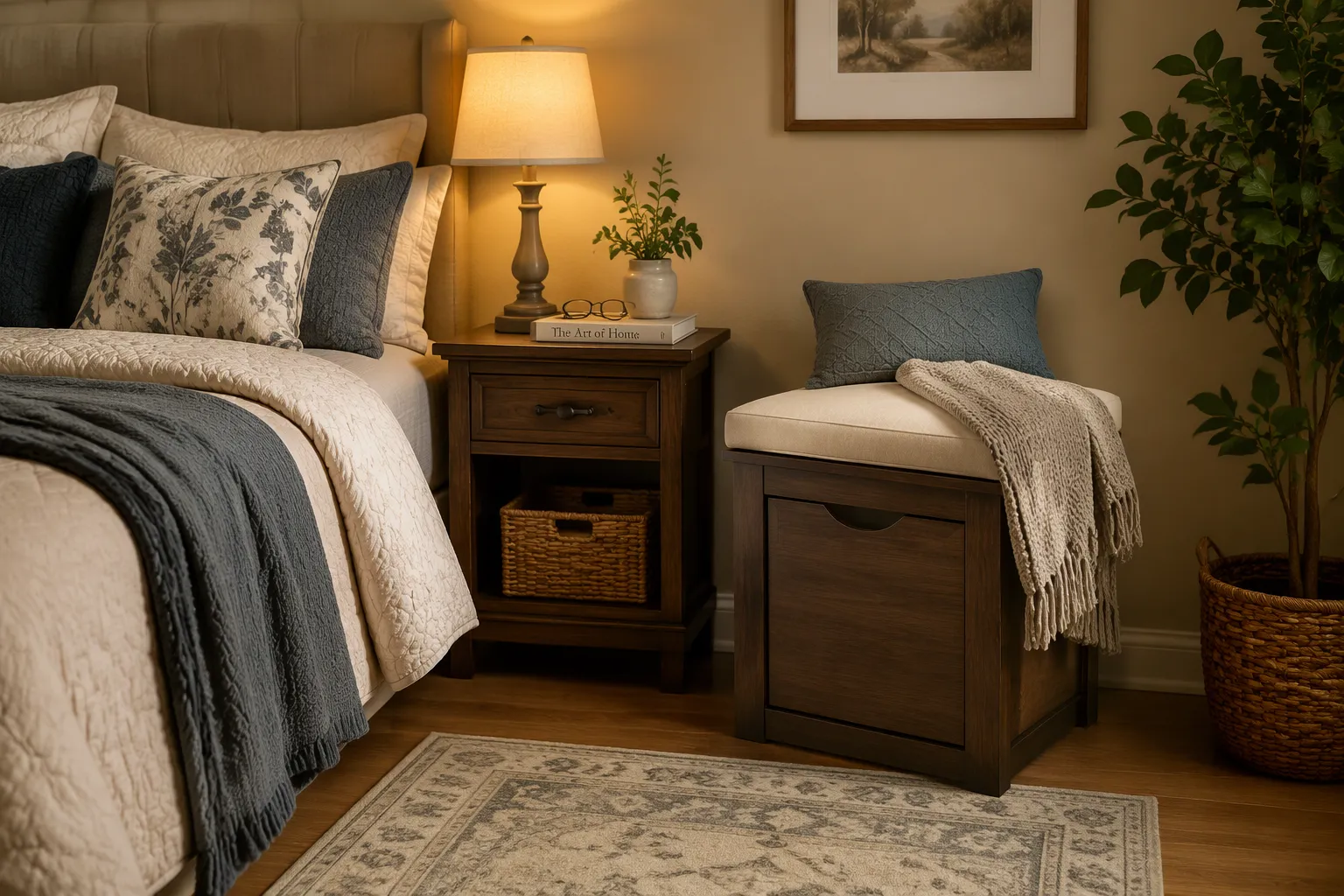
Yes, a bedside commode can be made less clinical. The right fit, a few comfort accessories, and a thoughtful room setup deliver that result. Small, practical changes improve comfort and dignity while keeping safety and function fully intact. The goal is a commode that blends into a bedroom rather than announcing itself as medical equipment. For a bedroom without nearby plumbing, bedside toileting works well as a toileting option near a bed. No major renovation or special skill is required—most changes take minutes.
Yes—You Can Make a Bedside Commode Less Clinical
What “Less Clinical” Really Means
Softening Looks Without Losing Function
A less clinical look does not require hiding the commode or sacrificing its purpose. The goal is a bedside commode that reads as ordinary furniture rather than hospital equipment. Soft finishes, coordinated colors, and a natural placement all reduce the cold, clinical feel of a bedroom. The commode still performs its job fully. It simply looks and feels more like part of the room.
The Three Levers: Fit, Accessories, Environment
Three practical levers make a bedside commode less clinical. The first lever is fit: correct height, stable armrests, and sensible placement. The second lever is accessories: padded seats, discreet liners, and non-slip mats. The third lever is environment: warm lighting, easy clothing access, and thoughtful positioning. Each lever works on its own. Together, they transform the room.
Why Small Changes Work
Comfort and Dignity at Home
Small changes protect comfort and dignity at home. A padded seat and backrest improve physical comfort and visual softness at the same time. A folding commode stores away when guests visit, so no medical chair sits out in plain view. Presenting the commode as a safer alternative to nighttime walks also reframes it as an ordinary chair. These choices help the user feel less clinical and more at home.
Safety Stays Intact
Safety does not suffer when the look softens. Soft, dimmable lighting during nighttime use reduces fall risk and helps the room feel less clinical. A folding screen or tall plant creates privacy without turning the area into an obstacle course. Stable flooring and clear paths remain essential. The commode stays secure, and the bedroom stays safe.
Key factors that reduce the clinical feel include:
- A design that does not resemble medical equipment
- A cushioned seat and backrest that read as normal furniture
- Placement where a small chair or nightstand would logically go
- A folding model that stores away for visits
- Softer, less shiny finishes and minimal surroundings
Getting the Fit Right
Fit is the first lever, and it delivers the largest return. A bedside commode that matches the user’s body and the room’s layout feels natural to use. A poorly fitted unit feels awkward, unstable, and medical. Height, armrests, and placement each shape that experience.
Adjusting Height for Comfort
Finding the Right Seat Height
Correct seat height starts with the user seated and relaxed. Both feet should rest flat on the floor. The knees should sit level with the hips, or slightly below them. A seat that is too low forces the user to drop down and push hard to rise. A seat that is too high leaves the feet dangling and removes the stable base a person needs.
Most adjustable commodes offer a range of leg settings. The caregiver or user loosens the leg pins, extends or shortens each leg, and locks the pins back into place. All four legs must sit at the same setting. A unit with one short leg will rock, and rocking undermines confidence.
Test the height before daily use begins. The user sits down, plants both feet, and stands back up. The motion should feel controlled and steady. If the user needs to grab nearby furniture for support, the seat is likely too low or too high. Adjust and repeat until the movement feels easy.
Why Height Affects the Institutional Feel
Height changes how the commode reads in the room. A unit set at the wrong height looks like borrowed hospital equipment. It sits too tall or too squat next to the bed. A unit set at the right height looks like a chair sized for its user. The proportions feel correct, and the eye accepts it as furniture.
Height also shapes how the user relates to the device. A commode that fits the body invites normal posture. The user sits upright, reaches for supplies with ease, and stands without strain. That normal posture removes much of the clinical feel from the experience. The device stops feeling like a medical fixture and starts feeling like a practical chair.
Using Armrests Well
Armrests for Stability and Ease
Armrests do more than frame the seat. They give the user a handhold during the sit-down motion and a push-off point during standing. That support matters most for users with limited leg strength or balance concerns.
A bedside commode shortens the trip from bed to a few steps or a short pivot, and offers a stable seat with armrests that help the person lower and raise themselves.
Armrests serve a dual purpose: they provide a handhold while a user lowers themselves onto the commode, and they act as a push-off point for standing back up. Armrests should be positioned at a comfortable height for the user, and drop-arm functionality can further assist with transfers. Padded armrests improve comfort for users who sit for extended periods or have sensitive forearm skin. Drop-arm commodes let armrests fold down or swing away, enabling lateral transfers (e.g., from a wheelchair or bed) while still offering armrest support when needed; physical therapists often recommend this style for users who cannot easily push to standing. Stable frames, non-slip feet, and correctly positioned armrests allow most users, including seniors living alone, to manage independently and safely.
Padded or Removable Armrest Options
Padded armrests soften the look and the feel at the same time. The padding adds visual warmth and removes the hard, institutional edge of bare plastic or metal. Users who rest their forearms on the arms for long periods notice the difference quickly.
Removable and drop-arm designs add flexibility. A drop-arm model lets the user swing one armrest out of the way for a lateral transfer from the bed. The armrest returns to position for seated support. This feature suits users who cannot easily push to standing. It also helps in tight rooms where a fixed armrest would crowd the transfer path.
Positioning for Privacy and Dignity
Placement for Privacy and Easy Access
Placement decides how the commode feels in daily use. The right spot protects privacy and dignity while keeping access simple. The user should have reasonable privacy during use. A caregiver should still reach the commode when help is needed.
To maximize privacy and dignity, the commode should be placed where the user has reasonable privacy while still allowing caregiver access. A folding screen, a partially closed door, or carefully positioned furniture can help shield the commode, but these must not block the transfer path or emergency access. The source also stresses that using a commode in the bedroom can preserve dignity and privacy by letting the person toilet whenever needed without assistance.
Using a commode in the bedroom can allow seniors the dignity and privacy of being able to use the bathroom whenever they need to and without assistance.
A few placement rules keep the setup practical:
- Place the commode on a level, firm surface near the bed.
- Keep it close enough to reduce walking but far enough away to allow a full turn.
- Leave room for the feet, mobility aid, and caregiver.
- Keep the bed-to-commode path free of cords, rugs, clothing, and furniture.
- Avoid placing it where a door, drawer, or walker will collide with it.
- Confirm that it does not block the primary exit route.
- Keep toilet paper, wipes, clothing supports, and a call device within reach.
- Check the commode before use for rocking, loose parts, or damaged feet.
A spot beside the bed works better than a spot in front of it. The user can sit up and pivot directly onto the seat. That pivot is easier and safer than standing fully first. The placement also keeps the commode out of the main sightline from the doorway, which supports discretion in a shared bedroom.
Keeping Clear Paths and Stable Flooring
Clear paths and stable flooring protect nighttime safety. The route from bed to commode should stay open and predictable, even in the dark. The commode itself must sit solidly on the floor with no rocking.
Clear the path so there is an unobstructed route from the bed — no rugs to trip on and no furniture edges to navigate around, so the commode can be reached in the dark without thinking about obstacles. Check that the commode is level: all four feet should sit firmly on the floor with no rocking; if the floor is uneven, adjust individual legs until stable. Set the height correctly first so the user can sit with feet flat on the floor and knees level with the hips. Place the commode beside the bed rather than in front of it, allowing a pivot from sitting-up in bed directly onto the commode — easier and safer than standing fully first.
The table below summarizes the key flooring and clearance considerations:
| Consideration | Requirement | Safety Rationale |
|---|---|---|
| Flooring surface | Flat, level, dry surface; inspect for warping, uneven spots, soft/sagging areas | Prevents commode from rocking or tipping during transfers |
| Flooring material | Hard floors (tile/wood) need non-slip pads or rubber feet; carpet offers grip but may compress unevenly | Reduces sliding risk on smooth surfaces; avoids instability on soft surfaces |
| Non-slip anchoring | Non-slip pads under all four legs; adhesive non-slip tape on smooth floors; optional safety straps to bed/furniture | Keeps commode from shifting when sitting down or standing up |
| Clearance around commode | At least 2 feet of clear space on all sides | Allows safe maneuvering, pivoting, and caregiver assistance |
| Pathway width | Minimum 24-inch-wide clear corridor from bed to commode | Enables walker/wheelchair access and safe nighttime navigation |
| Obstacle removal | Remove/secure throw rugs, tape down cords, reposition furniture edges | Eliminates tripping hazards along the route |
| Sightlines & lighting | Clear line of sight from bed; motion-sensor nightlights, glow tape | Prevents disorientation and falls in low light |
Accessories That Make a Bedside Commode More Comfortable
Accessories form the second lever in the effort to soften a clinical look. The right commode accessories add physical comfort, simplify cleanup, and reduce visual harshness. They also help make a bedside commode more comfortable for daily use without changing its core function. A few well-chosen additions turn a bare plastic frame into a chair that feels supportive and familiar.
Padded Seats and Cushions
Softer Seating Options
Standard commode seats are hard plastic. They become uncomfortable during extended sitting, particularly for users with reduced padding. A padded seat cover or cushioned toilet seat designed for commode frames adds softness without altering commode function. For comfort with regular use, the commode seat should be padded and ergonomically designed. This single change often delivers the largest comfort gain and helps make a bedside commode more comfortable from the first use.
Several padded seat options suit different needs. The table below compares three popular models.
| Product | Padded Seat Features | Height Adjustment | Weight Capacity | Transfer / Other Features |
|---|---|---|---|---|
| Medline Drop Arm Commode | Thick resilient foam padded seat and removable backrest; clip-on seat removes for cleaning | Push-button, 18–22 in | 350 lb | Drop-down padded arms ease side transfers; converts to raised toilet seat; includes 7.5 qt bucket, lid, splash guard |
| Ultimate Raised Toilet Seat with Handles | Soft, warm padded seat | Adjustable without tools | N/A | Padded armrests; fits standard and elongated toilets |
| HOMLAND 3-in-1 Bedside Commode Chair | Padded commode seat (3-in-1 use) | Tool-free adjustable legs with locking | 350 lb | Dual-crossbar for side-to-side stability; 7.5 qt bucket; converts to raised seat and safety frame |
Each model fits a different situation. The Medline unit suits users who need side transfers and a removable seat for cleaning. The Ultimate Raised Toilet Seat works well for users who mainly need a softer surface over an existing toilet. The HOMLAND chair offers flexibility for households that want one device to serve several roles.
Choosing Easy-to-Clean Materials
A padded seat only helps when it stays clean. Choose a cushion with a waterproof or easy-to-wipe cover for simple cleaning. Check that it attaches with ties or clips to stay secure during transfers. A loose cushion can slide and undermine confidence.
Material choice shapes the cleaning routine. The table below outlines recommended options.
| Recommended Material | Why It Is Easy to Clean & Maintain |
|---|---|
| Performance fabrics (tightly woven) | Resist stains, moisture, and wear via tight construction/protective finishes; spills stay near surface for quick blotting; hold color well |
| Faux leather / PU leather | Wipe-down cleaning with a damp cloth; mild soap for messes; ideal for dining, kids’ rooms, high-traffic areas |
| Coated fabrics | Wipe clean in seconds; simplest routine care |
| Tightly woven synthetics | Resist deep absorption; tolerate gentle spot cleaning |
| Removable, washable covers | Turn emergency messes into routine laundry; prevent odor buildup and oil soaking into cushions; best with well-fitted covers, durable zippers, stable seams |
A note on care: avoid alcohol-based cleaners on coated or faux leather. These products can dry out or damage the coating. Textured piles like boucle or sherpa hold dust and crumbs and require more vacuuming. A smooth, wipeable surface serves a bedside commode more comfortable and more practical for daily use.
Liners and Odor Control
Discreet Liner Systems
Liners simplify cleanup and reduce contact with waste. Some commode liners feature a deodorizing agent that helps prevent and reduce waste odors, making disposal and clean-up easier and more sanitary. Commode liners with built-in odor control technology can effectively contain waste and neutralize unwanted odors. This technology keeps the commode experience more dignified, and the non-abrasive materials remain gentle on sensitive skin.
Consider commode liners for warmth and easier cleaning when the user sits for longer periods. A liner adds a soft barrier and speeds up emptying. An automatic-wrapping bedside commode takes this concept further. These units seal waste in film after each use, which supports contained waste handling and reduces odor exposure. Concealed waste components keep the bucket and its contents out of sight, which matters in a shared bedroom. Disposable liners reduce direct contact with waste, but they do not replace regular cleaning and disinfection.
Managing Odor Gently
Odor control protects dignity and keeps the room fresh. Gentle methods work best and avoid harsh chemical smells. The list below covers practical steps.
- Use vinegar and baking soda: vinegar neutralizes odors while baking soda acts as a gentle scrubbing agent, cleaning thoroughly without leaving harsh chemical odors.
- Place activated charcoal filters near the commode or inside the lid to absorb odors, replacing them periodically; charcoal neutralizes odors without adding artificial scents.
- Empty the commode quickly after each use, especially overnight, to prevent odors from lingering.
- Place the commode in a well-ventilated area or use a fan to circulate air and disperse odors.
- Use disposable liners to reduce direct contact with waste, but do not rely on them as a substitute for regular cleaning and disinfection.
These steps cost little and take only minutes. They also support nighttime safety by keeping the area clean and free of strong smells that might discourage use.
Non-Slip Mats and Stability Aids
Mats That Blend In
A non-slip mat protects the floor and steadies the commode. Choose a mat that matches the room’s colors and texture. A low-profile rubber mat in a neutral tone reads as an ordinary bath or area rug. Avoid bright medical-style mats with warning stripes or institutional logos. A mat that blends in supports discretion and keeps the floor dry.
Place the mat under all four legs. Check that the mat lies flat with no curled edges. A curled edge creates a trip hazard. Trim the mat if it crowds the transfer path.
Extra Stability Without the Clinical Look
Stability aids keep the commode from shifting during transfers. Non-slip pads under each leg add grip on smooth floors. Adhesive non-slip tape works on tile and wood. Optional safety straps anchor the frame to the bed or a sturdy piece of furniture. These additions stay out of sight and do not announce themselves as medical equipment.
A stable commode supports nighttime safety during dark hours. The user can reach the commode without fear of sliding or tipping. Pair the stability aids with motion-sensor nightlights and glow tape along the path. The setup stays secure, and the room stays calm.
Creating a Comfortable Environment

The room itself shapes how a bedside commode feels. Warm light, easy clothing access, and thoughtful placement all help the commode feel less clinical. These changes cost little and take only minutes to set up.
Lighting That Softens the Space
Warm, Low Lighting for Night Use
Warm, low lighting supports nighttime safety and softens the room. A small lamp with a warm bulb beside the bed casts a gentle glow. Motion-sensor nightlights along the path light the way without a harsh glare. The user can reach the bedside commode in the dark with confidence. Soft light also calms the space and reduces the institutional feel of a bright, bare room.
Avoiding Harsh Overhead Light
Overhead light flattens a room and highlights medical equipment. A bright ceiling fixture draws the eye straight to the commode. Swap harsh bulbs for warm ones, or add a dimmer switch. A floor lamp in a corner spreads light more evenly. These small swaps build a comfortable environment around the commode without any wiring work.
Clothing Access and Easy Reach
Keeping Clothing Within Reach
Clothing should sit within arm’s reach of the seat. A small basket or hook beside the commode holds fresh clothes and wipes. The user avoids twisting or stretching during use. This simple setup protects privacy and dignity during a vulnerable moment.
Simple Setup for Independent Use
A few setup adjustments promote independent use. The table below summarizes the key steps.
| Setup Adjustment | How It Promotes Independent Use |
|---|---|
| Position the commode within easy reach of the bed | Reduces travel distance and effort, letting the user access it without assistance |
| Regularly verify stability: tighten legs, keep them at equal height, confirm the seat is secure | A stable, safe commode gives the user confidence to use it alone without fear of tipping |
| Establish a cleaning routine: dispose of the liner after each use, wipe the frame with a mild disinfectant, replace liners as needed | Keeps maintenance simple so the user can handle hygiene tasks independently |
| Securely place liners in the bucket before use and replace them regularly | Simplifies cleanup and disposal, enabling self-management |
Appearance and Discretion in a Shared Bedroom
Covers and Fabric Choices
A fabric cover softens the frame and adds furniture-like styling. Choose a neutral tone that matches the bedding or curtains. A fitted cover hides the bucket and the plastic frame. Washable fabrics make upkeep easy. This single change improves appearance and discretion in a shared room.
Placement That Feels Natural
Place the bedside commode where a small chair or nightstand would logically sit. A corner beside the bed works well. A folding screen or tall plant adds discretion without blocking the path. The unit then reads as furniture-like rather than medical. Good placement supports privacy and keeps the room calm.
Fit, Accessories, and Environment at a Glance
What Each Change Does
Matching Changes to Needs
Each lever addresses a different problem. Fit solves stability and posture. A correctly sized bedside commode lets the user sit with feet flat and knees level. Accessories solve comfort and cleanup. Padded seats, liners, and non-slip mats soften the surface and simplify daily care. Environment solves the visual problem. Warm lighting, easy clothing access, and natural placement help the unit read as furniture.
Readers should match changes to the user’s situation. A user with balance concerns needs armrests and stable flooring first. A shared bedroom calls for covers and discreet placement. A user who manages cleanup alone benefits most from liner systems. The right order depends on the person, not on a fixed checklist.
Starting With the Easiest Wins
Some changes take minutes and cost little. These wins build momentum before larger adjustments begin. A liner system tops the list. Commode liners, or large kitchen garbage bags as a substitute, make cleanup easier and reduce smell. A scoop of cat litter in the bottom of the bag absorbs moisture and controls odor. Scented or super-absorbent litter works well, and a sprinkle of deodorizer during setup and removal adds another layer of control. Powdered liners that absorb and solidify urine offer a similar benefit. A quick wipe with disinfecting wipes handles any lingering smell.
The list below covers the fastest starting points:
- Add a liner or bag to the bucket before first use.
- Place absorbent litter in the bag to control odor.
- Keep disinfecting wipes beside the commode for quick cleanups.
- Set the leg height correctly on all four legs.
- Place a non-slip pad under each foot.
These steps improve a bedside commode less clinical in appearance within an afternoon. They also support a comfortable environment without any renovation. A user who wants sealed waste handling can move up to an automatic-wrapping bedside commode later. That upgrade suits shared rooms and users who want minimal contact with waste.
Key Takeaways for a More Comfortable Bedside Commode
Small Changes, Big Difference
Start With Fit
Fit comes first. A correctly sized bedside commode lets the user sit with feet flat and knees level. All four legs must sit at the same height. A stable frame gives the user comfort and confidence during every transfer. These commode comfort tips cost nothing and take only minutes to apply.
Add Comfort, Then Adjust the Room
Comfort accessories come next. A padded seat, discreet liners, and non-slip mats soften the surface and simplify cleanup. Room adjustments follow. Warm lighting, easy clothing access, and natural placement complete the setup. This order helps make a bedside commode more comfortable without overwhelming the user. Each step builds on the last, and the room slowly reads as home rather than hospital.
Keeping It Practical Day to Day
Simple Cleaning and Maintenance Routines
A steady cleaning routine keeps the bedside commode hygienic and fresh. The steps below cover daily and weekly care.
- After every use, put on disposable gloves, empty the pail slowly into the toilet, rinse with warm water, wash with mild detergent, and disinfect with an EPA-registered spray or wipe. Wipe the seat, lid, armrests, and frame, then let everything air dry.
- Between uses, keep the lid closed and leave about an inch of water with a splash of diluted disinfectant in the empty pail to reduce odor.
- Weekly, or more often with frequent use, deep clean the entire frame, including hinges, seat seams, and padded areas.
- Choose an EPA-registered disinfectant over a general household cleaner, and follow the label contact time.
- Keep gloves, wipes, mild detergent, and a spray bottle in a small bin beside the commode for easy access at night.
A commode with a removable pail and a tight-sealing lid simplifies this routine. Commode liners for warmth and easier cleaning add another layer of convenience.
Involving the User in Choices
The user should help choose accessories and setup. Place the commode within minimal steps of the bed, with the seat at mattress height or slightly higher. Orient it so the stronger side faces the bed. Keep the floor clear of rugs and cords. On carpet, place a non-slip mat under the legs. An occupational therapist can offer personalized advice on type, placement, and height.
| Accessory | Purpose / User Benefit |
|---|---|
| Commode liners (bags) | Fit inside the bucket; pull out, seal, and discard for easier, more sanitary cleanup |
| Replacement commode buckets | Maintain hygiene; a spare bucket helps during disinfection |
| Toilet paper aid | Gives extended reach for users with limited arm or hand function |
| Splash guard | Attaches to the seat opening to prevent splashing |
These choices protect privacy and build a comfortable environment around the commode. A user who helps shape the setup gains ownership of the routine. That ownership supports a bedside commode less clinical in daily life.
A bedside commode can absolutely be made less clinical in a bedroom. Proper fit, comfort accessories, and a thoughtful room environment each play a clear role. Together, these practical steps turn the commode into a homelike fixture. Safety and function stay fully intact throughout the process. Readers should start small with one adjustment at a time. A padded seat or a non-slip mat makes an easy first step. Each improvement builds on the last, and the bedside commode soon blends into the room.
FAQ
Does a bedside commode need to look like medical equipment?
No. A padded seat, a neutral fabric cover, and natural placement help the unit read as furniture. Warm lighting and a discreet spot beside the bed complete the look. The commode keeps its full function while the room stays calm and homelike.
How long does it take to make a commode less clinical?
Most changes take minutes. Height adjustment, a liner, and a non-slip mat are quick wins. A padded seat and a fabric cover follow easily. No renovation or special skill is required, and the user can start with one adjustment at a time.
Can a shared bedroom still feel private with a commode?
Yes. A folding screen, a tall plant, or a partially closed door shields the unit without blocking the path. A fitted cover hides the bucket and frame. Placement beside the bed keeps the commode out of the main sightline from the doorway.
What is the first change to make for comfort?
Start with fit. Set all four legs to the same height so the user sits with feet flat and knees level. A stable frame builds confidence during transfers. A padded seat and a non-slip mat come next for added comfort and safety.
Do liners and odor control really help dignity?
Yes. Discreet liners speed cleanup and reduce contact with waste. Activated charcoal filters and quick emptying keep the room fresh. These steps cost little, take minutes, and protect the user’s dignity during daily use.
How does lighting affect the clinical feel of a room?
Harsh overhead light highlights medical equipment. Warm bulbs, a dimmer switch, and motion-sensor nightlights soften the space. Gentle light also supports nighttime safety. The user reaches the bedside commode with confidence and without glare.
Can the user help choose accessories and setup?
Yes. The user should help pick the seat, cover, and liner system. Placement within minimal steps of the bed matters too. An occupational therapist can offer personalized advice on type, height, and position. Ownership of the routine supports daily comfort.
Does softening the look compromise safety?
No. Stable flooring, clear paths, and correctly set legs keep the commode secure. Non-slip pads and optional safety straps add grip. Soft lighting reduces fall risk at night. The room looks calmer while safety and function stay fully intact.