
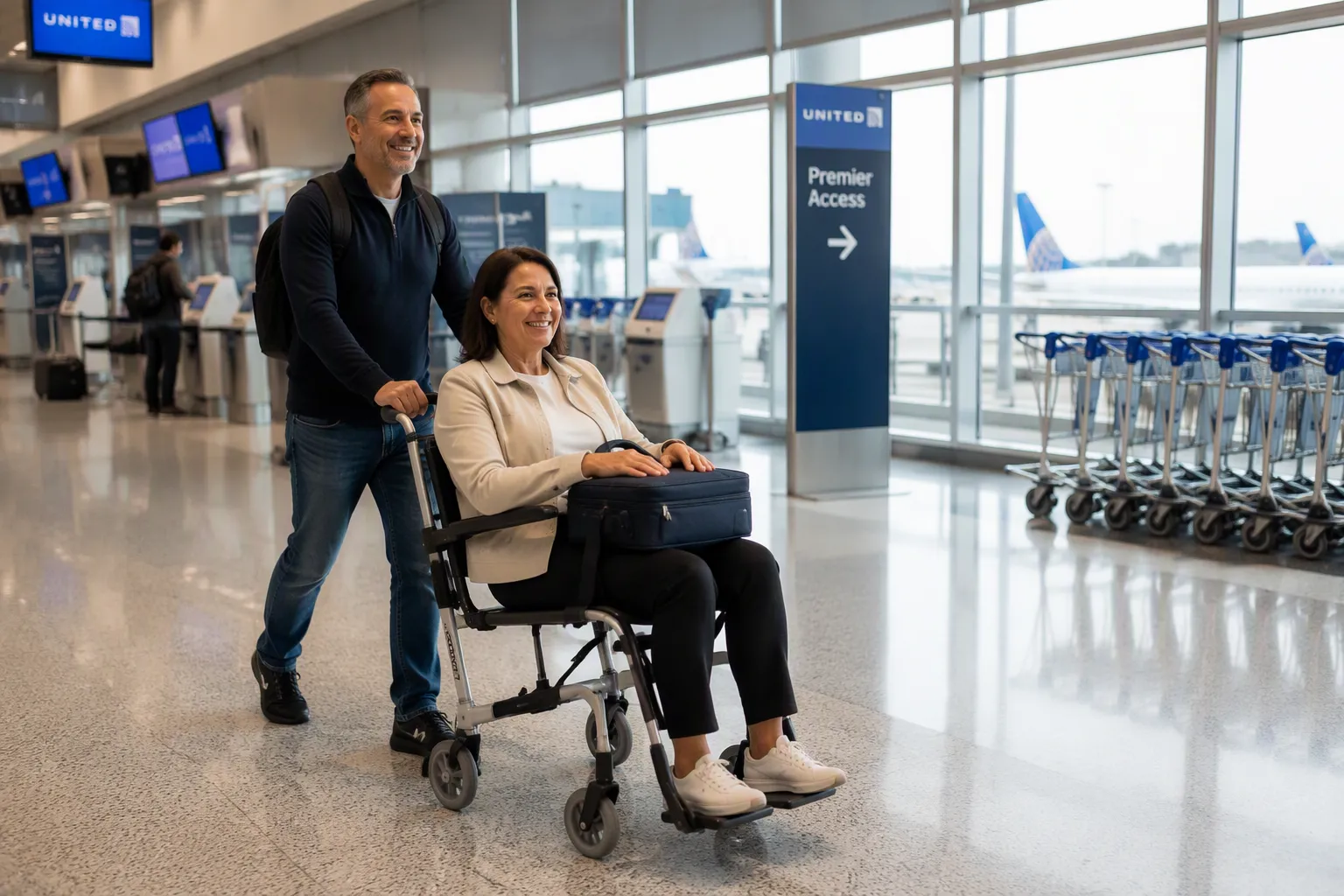
Can a transport wheelchair replace manual wheelchair for a whole trip? No. It cannot replace manual wheelchair when the journey demands hours of independent mobility. The chair excels at short, caregiver-assisted transfers, not all-day use. A regular wheelchair provides large rear wheels with push rims, enabling self-propulsion. A true manual wheelchair prioritizes comfort over portability. Whole trips require endurance across varied terrain, so the decision rests on self-propulsion, comfort, portability, and cost.
Transport Chair vs Wheelchair: The Short Answer
A transport chair vs wheelchair comparison reveals one clear conclusion. A transport wheelchair cannot replace a manual wheelchair for a whole trip. Each chair serves a different purpose. Understanding these differences helps travelers choose the right mobility device.
Why a Transport Wheelchair Cannot Replace a Manual Wheelchair
A transport wheelchair lacks the core features that support independent travel. It requires a helper to push the user at all times. This design limits where and how someone can move.
No Self-Propulsion Means No Independence
A transport chair has no self-propulsion mechanism. The user cannot push the wheels to move forward. Transport wheelchairs are built to be operated by a caregiver pushing from behind. This design reduces the chance of falls or collisions that can happen when a user tries to propel the chair themselves. These chairs serve situations such as hospital visits, shopping trips, or social gatherings where self-propelling is not practical. Using a transport wheelchair in a self-propelled manner increases the risk of falling, particularly on uneven ground. The result is no self-propulsion and no independence.
Built for Short Trips, Not Full Days
Manufacturers design transport chairs for brief, temporary use. Clinical research confirms this limitation.
| Source | Excerpt | Point Supported |
|---|---|---|
| Dependent Mobility Intervention (physicaltherapy.com) | Transport chairs “are not designed for prolonged sitting nor are they designed for someone to be transported within this.” | Transport wheelchairs are not intended for extended use. |
| Dependent Mobility Intervention (physicaltherapy.com) | Advantages include being suitable “for short trips” and being lightweight and easy to fold. | Transport wheelchairs are designed for short, temporary trips. |
| Dependent Mobility Intervention (physicaltherapy.com) | “Reclining manual wheelchairs, like transport chairs, are designed for temporary use only.” | Transport chairs are explicitly temporary-use devices. |
“The most prevalent PTC in clinical settings currently is the depot-style wheelchair. Depot-style wheelchairs are appealing for hospitals primarily due to their low price point. While affordable, these chairs offer little to no adjustability for patients or caregivers, making them inappropriate for long-term use.” — Kulich, Bass, & Koontz, Caregiver Perceptions Of Three Different Patient Transport Wheelchairs, RESNA Annual Conference 2018.
What a Regular Manual Wheelchair Offers Instead
A manual wheelchair provides features that a transport chair cannot match. These features support hours of independent movement.
Self-Propulsion and Control
Large rear wheels with push rims allow the user to move without help. The user controls speed, direction, and stopping. This control builds confidence during travel.
Durability for Extended Use
A manual wheelchair vs transport wheelchair comparison shows a clear gap in durability. Manual wheelchairs feature reinforced frames and adjustable seating. They handle repeated daily use across many environments.
The One Situation Where a Transport Wheelchair Works
A transport chair fits specific short-term scenarios. These situations involve brief distances and available assistance.
Short, Caregiver-Assisted Errands
A quick trip to a clinic or store works well. The caregiver pushes the chair for a few minutes. The lightweight frame folds easily for car storage.
Airport Transfers With Airline Staff
Airlines provide staff to push passengers through terminals. A transport chair works for this short segment. The passenger transfers to a manual wheelchair at the gate.
Key Differences: Transport Chair vs. Wheelchair

The transport chair vs. wheelchair debate comes down to design choices that affect every part of a journey. A person’s ability to move, lift, sit, and roll depends on how the manufacturer builds each chair. Manual wheelchairs and transport chairs differ in small but critical ways. These differences determine whether a chair works for a full day or only for a quick errand.
Self-Propulsion: Can You Move Yourself?
The most significant difference between these chairs appears the moment a user tries to move. A manual wheelchair places control in the rider’s hands. A transport wheelchair places that control with an attendant. This single distinction changes how a person travels, plans, and experiences a trip.
Why Large Rear Wheels Matter
Large rear wheels, typically 22 to 24 inches in diameter, enable efficient self-propulsion. The size allows the user’s arms to reach the push rims at a natural angle. Research from the Paralyzed Veterans Administration highlights the importance of proper axle placement. The rear-wheel axle should align with the user’s shoulder and the tip of the middle finger when the arm hangs down. This position lets the hand contact the handrim at an efficient point.
- A rear wheel placed too far behind the user forces a backward reach. This produces a shorter stroke and increases shoulder strain.
- A rear wheel placed too far forward makes the chair tippy. The optimal position balances stability and maneuverability.
- Users can perform controlled wheelies with proper axle placement, which helps navigate ramps and curbs.
- The user should touch the wheel hub with fingertips when arms dangle, ensuring the handrim is easy to reach.
- Efficient motion uses a long, single-loop stroke with minimal impact on the hand. This lowers the risk of repetitive stress injuries.
Lighter wheels and proper posture also improve propulsion efficiency. A rider who sits upright can push the large wheels with full force. This design supports independence.
How Transport Chairs Limit Independence
A transport wheelchair has four small wheels. The rear wheels are too small for a rider to grasp and push. This makes self-propulsion impossible by design. The occupant cannot drive the chair, even across a short distance. The chair requires a caregiver to push from behind. The table below outlines the consequences of this design:
| Feature | Evidence | Effect on independence |
|---|---|---|
| Self-propulsion | Chair lacks push rims; occupant cannot drive it | User cannot move independently, even over a short distance |
| Caregiver requirement | An attendant must push the chair at all times | User’s mobility depends completely on someone else |
| Intended use | Designed only for short-term transport | No functional option for self-directed travel |
| Clinical warning | Guidance warns against prolonged daily seating due to pressure injury risk | Extended independent use is unsafe, further restricting autonomy |
The limitations go beyond convenience. A transport wheelchair cannot be moved by the occupant in an emergency. The user has no independent way to escape danger. Poor performance on uneven terrain means outdoor mobility requires caregiver assistance. The attendant must remain present at all times. This dependence affects every decision during a trip.
Weight and Portability: Is Lighter Always Better?
Manufacturers design transport chairs for easy lifting and folding. They are significantly lighter than standard manual wheelchairs. This weight difference attracts travelers who must load a chair into a car trunk. However, lighter weight comes with trade-offs in durability, stability, and comfort.
| Manufacturer | Manual Wheelchair Model | Manual Weight | Transport Chair Model | Transport Weight | Difference |
|---|---|---|---|---|---|
| Drive Medical | Silver Sport 1 | 37.6 lbs | Aluminum Transport Chair | 19 lbs | 18.6 lbs lighter (49.4%) |
| Invacare | Tracer EX2 | 36 lbs | Lightweight Aluminum Transport | 19 lbs | 17 lbs lighter (47.2%) |
Overall, transport chairs are reported to be 47–49% lighter than standard manual wheelchairs. Transport chairs typically weigh 15 to 25 pounds. Standard manual wheelchairs typically weigh 30 to 40 pounds. Some heavy-duty manual models exceed 50 pounds. This gap explains why caregivers and frequent car travelers often prefer transport chairs.
Lightweight Design Trade-offs
The lightweight design of a transport chair improves portability but introduces concerns. Users must examine several factors before choosing a chair:
- Weight capacity: Ensure the chair supports the user’s weight with a margin of safety.
- Frame material: Aluminum offers a good balance of weight, durability, and cost; titanium and carbon fiber are lighter but cost more.
- Folding mechanism: Choose an easy-to-use folding system for storage and transport.
- Wheel size and type: Match the wheels to the expected terrain.
- Seat comfort: Provide adequate cushioning and support for extended sitting.
- Footrests: Prefer adjustable or swing-away footrests.
- Armrests: Padded, removable armrests aid comfort and transfers.
- Brakes: Ensure reliable brakes for safety during transfers and when stationary.
Foldability is a significant advantage, but it should not come at the expense of comfort or functionality. Models should maintain proper support and stability when unfolded to ensure a safe and comfortable experience. The ideal transport chair strikes a balance between portability and comfort—a lighter chair should not sacrifice user comfort or stability.
A manual wheelchair vs transport wheelchair comparison on weight shows a clear pattern. The transport chair wins at lifting. The manual wheelchair wins at long-term use. Users who prioritize portability above all else must accept the chair’s limitations.
Airline and Car Travel Considerations
Airline and car travel favor lighter chairs. A 19-pound transport chair lifts easily into a trunk. A 37-pound manual wheelchair requires more effort. Travelers with limited upper-body strength may find the manual chair difficult to handle. However, airlines can transport manual wheelchairs at no charge. Passengers can use their manual chair until boarding. This option eliminates the need for a separate transport chair during air travel.
For car trips, the lighter chair seems ideal. Yet the rider must transfer to a manual wheelchair at the destination to gain independence. This arrangement works for short medical visits or airport transfers. It fails for vacation days spent exploring. The weight savings quickly lose value when the rider cannot move independently.
Comfort and Seating: Can You Sit in It All Day?
Comfort determines whether a person can tolerate hours in a chair. Standard manual wheelchairs feature adjustable seating and supportive frames. Transport chairs sacrifice these features for portability. The result is a chair that suits short periods but causes discomfort over extended use.
All-Day Sitting Pressure and Posture
Clinical research warns against prolonged seating in transport chairs. These chairs lack the postural support needed for hours of sitting. The seat depth, backrest angle, and cushion quality often fall short. Users develop pressure sores and back pain when seated for long periods. Standard manual wheelchairs offer adjustable seat width, depth, and backrest height. This customization allows a proper fit for the user’s body. A manual wheelchair also supports cushions designed to distribute pressure evenly. This reduces the risk of skin breakdown.
Posture affects more than comfort. A rider with proper pelvic alignment can push the wheels more efficiently. A transport chair with a sling seat and minimal contouring promotes a slouched posture. This position reduces reach and power for any attempted movement. Over hours, poor posture causes fatigue and pain.
Ride Stability on Uneven Terrain
The stability of a chair depends on wheel size, frame weight, and tire type. Manual wheelchairs handle varied terrain with greater ease. Transport chairs struggle on anything beyond flat, smooth floors.
| Stability factor | Manual Wheelchair | Transport Wheelchair |
|---|---|---|
| Wheel size | Large rear wheels | Smaller wheels |
| Frame and tires | Sturdy frame, often with pneumatic tires | Lightweight frame with solid wheels |
| Ride on uneven terrain | Handles uneven sidewalks, small bumps, and rough surfaces with more ease | Can catch in cracks, struggle over bumps, and give a less stable and comfortable ride outside flat ground |
The design differences explain this gap:
| Design element | Effect on stability |
|---|---|
| Two large rear wheels (about 22–24 inches) | Roll more smoothly over thresholds and carpets |
| Wider wheelbase and heavier frame | Provide a much more stable ride |
Transport chairs have a narrow wheelbase and solid tires. These tires transmit vibrations directly from the ground. Every crack and pebble shakes the rider. A manual wheelchair with pneumatic tires absorbs shock better. The larger wheels roll over obstacles without stopping. This stability matters on sidewalks, gravel paths, and hotel carpets.
The evidence points to one conclusion. Larger wheels and heavier frames provide a stable, comfortable ride. Transport chairs offer portability at the cost of comfort and control. For any trip lasting more than an hour, the manual wheelchair remains the safer and more practical choice. Understanding these differences allows travelers to select the right chair for the journey ahead.
Cost and Value: Is a Cheaper Chair a Good Deal?
The purchase price of a mobility chair tells only part of the story. Transport chairs typically carry lower price tags than manual wheelchairs. That lower price attracts budget-conscious travelers. Yet the true cost of a chair includes its limitations. A transport wheelchair may save money at checkout, but it can add expenses later through rentals, caregiver support, and medical issues.
Upfront Savings vs. Hidden Costs
Manufacturers build transport chairs with fewer components, smaller wheels, and lighter frames. These choices reduce the retail price. Manual wheelchairs include large rear wheels, push rims, and adjustable seating. Those features increase the cost. A traveler who needs a short ride from a car to a clinic might save money with a lighter model. That same traveler faces hidden costs during a full-day trip.
Hidden costs appear quickly. The occupant cannot self-propel a transport model. A caregiver must push the chair, which means arranging for paid help, missing work, or relying on family members. The chair’s poor ride quality on rough surfaces can cause back pain and pressure injuries. Treating those conditions costs far more than the price difference between a transport wheelchair and a manual wheelchair.
Renting a manual wheelchair at the destination adds another expense. Several equipment suppliers offer manual wheelchair rentals for $12 to $30 per day. A weeklong trip costs $84 to $210 on top of the purchase price. For someone who travels regularly, buying a manual wheelchair makes better financial sense. The table below summarizes the rental market:
| Topic | Finding |
|---|---|
| Manual wheelchair rental | Yes |
| Typical rental cost | $12–$30 per day |
| Purchase guidance | Buying is usually better for regular daily use |
Insurance and Rental Options
Insurance rules differ by chair type. Medicare and many private insurers consider manual wheelchairs eligible for coverage on an individual basis when a physician documents medical necessity. A patient must obtain a prescription before renting or purchasing. For power wheelchairs, a rental period is not required before purchase. Manual wheelchair coverage follows similar documentation requirements.
Transport wheelchairs generally do not qualify for insurance coverage. Insurers classify them as convenience devices rather than medically necessary mobility equipment. People who need a chair for daily independence should pursue a manual wheelchair instead. A manual wheelchair may be eligible with qualifying documentation and filing assistance. Select models are available for rent at equipment suppliers. The table below outlines the differences:
| Wheelchair type | Insurance | Rental |
|---|---|---|
| Manual | May be eligible with qualifying documentation and filing assistance | Available for select models |
| Transport | Generally not covered by insurance | Not stated; described as low-cost and compact |
Value ultimately depends on the intended use. A transport chair works for short, assisted transfers. A manual wheelchair supports full days and independent travel. Travelers who plan extensive outings should choose the manual model. Those who need a chair for one medical appointment can rent one at their destination. The cheapest option at checkout rarely delivers the best value for a whole trip.
Wheelchair vs Transport Chair: Why Independence Changes Everything
The choice between a wheelchair vs transport chair affects every hour of a trip. The difference becomes visible in airports, hotels, and restaurants. A transport wheelchair keeps control in another person’s hands. A manual wheelchair gives the rider full control. This distinction shapes the entire travel experience.
Airports and Long Distances
Air travel demands the most endurance of any travel activity. Passengers walk from check-in counters to security checkpoints to departure gates. Flight delays stretch those distances. Gate changes send travelers across the terminal quickly. Each segment requires moving through crowds, around luggage, and past moving walkways.
Terminal Walks and Gate Changes
A check-in counter may sit one mile from the departure gate. International terminals add more distance. Passengers in a transport wheelchair depend on airline staff or companions for every meter of that journey. They wait for assistance, sometimes for extended periods. Airlines require time to arrange wheelchair escorts. Delays become part of the travel experience.
A self-propelled chair permits immediate movement. The rider pushes toward security, then toward the gate, without any waiting. Independence makes the difference between catching a flight and missing it when a connection is tight. The rider steers around obstacles, adjusts speed, and changes direction at will. The large rear wheels allow the rider to be propelled independently from one end of the terminal to the other. The traveler needs no assistance from staff.
Controlling Your Own Pace
Pace matters in an airport. Some travelers want to move quickly through the terminal. Others prefer a slower rhythm to rest and observe surroundings. A transport chair without push rims puts the pace in the hands of someone else. The caregiver decides when to start, when to stop, and how fast to walk. The rider cannot request a quicker route or pause at a shop without disrupting the arrangement.
Self-propulsion changes that dynamic. The rider sets the rhythm of the journey. A break at a coffee stand becomes a spontaneous choice. A sprint to the gate follows a sudden announcement. Travelers with regular independent mobility report greater confidence when navigating unfamiliar places.
Hotels and Daily Living
Hotel stays involve countless small movements. Getting from the bed to the bathroom, opening the door for room service, reaching the elevator, and moving around furniture all require navigation. These tasks happen throughout the day and night. The type of mobility chair determines whether these moments require assistance or happen independently.
Moving Around a Room Independently
A chair with small wheels gives the occupant no way to move it. Every movement inside a hotel room requires someone to push it. The rider stays in place until a caregiver returns. Even reaching the bathroom at night demands waking a companion. A chair with push rims allows the rider to move freely around the room. The user can turn from the desk to the window, reach the nightstand, or approach the door without assistance.
Hotel rooms often have narrow pathways between furniture. Experienced riders develop skill in navigating these tight spaces. The rider positions the chair, turns the wheels, and moves forward smoothly. A transport chair requires a caregiver to maneuver the chair while judging angles and clearance. This process creates frustration for both people. The rider explains directions while the caregiver guesses at the best approach.
Bathroom and Elevator Access
Bathrooms pose the greatest challenge in hotel rooms. Doorways measure narrow in older buildings. Sinks make turning difficult. Occupants of compact transport models require full assistance in these spaces. The caregiver must push the chair, position it, and manage the transfer. This lack of independent mobility turns a private moment into a shared effort.
Elevators add another layer. Waiting for an elevator in a crowded hotel involves patience. Pushing a lightweight folding chair into the elevator requires backing in, turning, or adjusting. The user has no way to position the chair once inside. A rider who can move the chair independently enters the cabin, presses a button, and rotates the chair. This control proves essential when other guests wait impatiently.
Restaurants and Tight Spaces
Dining out represents one of the most common travel activities. Restaurant layouts present substantial obstacles. Entrances, waiting areas, and dining rooms create challenges that reveal the practical gaps between the two chair types in daily situations.
Navigating Tables and Doorways
Restaurant entrances often begin with steps that deter wheelchair users. Doors without automatic buttons require strength to open. Ramps may require going around the building or using a separate entrance. These obstacles demand maneuverability, not just strength.
Inside, hostess stands are usually too high for comfortable conversation. Waiting areas with bulky benches leave no place to wheel into. A wheelchair user often finds themself in the way, tripped over, or grabbed by the chair without consent. Staff may lack training and stand by while a companion moves chairs or obstacles to create space. Restaurants pack tables and chairs tightly, leaving minimal clearance to maneuver. The host or hostess may abandon the wheelchair user to weave through diners alone.
A chair with large rear wheels and push rims navigates these layouts with relative ease. The rider positions the chair precisely, moves backward to create space, and turns within a small radius. The skill of controlling the chair comes from experience. An attendant-driven chair leaves navigation to the caregiver. The attendant must judge distances while pushing a chair that lacks responsive steering. The effort increases at every table and doorway.
Adjusting Your Position on Your Own
Once seated at a table, the wheelchair remains part of the dining experience. Some restaurants use lifts that staff treat as coat racks or block with equipment. These obstacles force an awkward scramble and create resentment. Some lifts only work in one direction. Hi-top seating can leave the wheelchair user staring at the side of the bar while others tower above. Some restaurants have no low-top seats available.
Even accessible restrooms may have stalls where the door cannot close behind a wheelchair. Staff may frame accessibility with caveats, mentioning a small step at the entrance or directing the user to the back door. They may seat the wheelchair user apart from everyone else because the room lacks space.
A person in a push-rim chair can reposition under the table. They can shift backward, adjust armrests, or move closer to the tabletop. They can leave the table independently to use the restroom or approach the bar. A person in a transport chair waits for someone to push them. They cannot adjust their own position or move away from the table when needed.
The value of independence becomes apparent in these everyday moments. The ability to move at will, adjust position, and navigate tight spaces transforms the travel experience. These moments explain why an attendant-driven chair fails as a full-day travel solution.
Outdoor Terrain and Curbs
Outdoor environments test every wheelchair design. Sidewalks crack and shift over time. Curbs rise without warning at street corners. Gravel paths and dirt trails challenge small wheels. A chair that performs well indoors may fail completely outside. The wheelchair vs transport chair comparison becomes most dramatic on uneven ground.
Gravel, Cracks, and Small Curbs
Manual wheelchairs handle outdoor obstacles through deliberate engineering. Large rear wheels and properly sized casters allow riders to roll over imperfections. The component specifications reveal why these chairs succeed where others struggle.
| Component | Specification | Outdoor Terrain Performance (gravel, curbs, uneven surfaces) |
|---|---|---|
| Caster size | Large casters (5–8 in) | Roll over obstacles more easily; provide smoother, safer ride on uneven terrain such as sidewalks, lawns, and gravel paths. |
| Caster size | Small casters (3–4 in) | Easily stopped by small obstacles like cracks, stones, or thick carpet; best for indoor use. |
| Caster material | Soft casters | Act as mini-shock absorbers; smoother, quieter ride on slightly uneven surfaces. |
| Rear wheel size | Larger wheels (25″ or 26″) | Better angle of attack; roll over small obstacles like pavement cracks and thresholds more easily; more energy-efficient over distance. |
| Rear wheel size | Smaller wheels (22″ or 24″) | More agile in tight spaces but more susceptible to getting caught by small obstacles. |
| Tire type | Pneumatic (air-filled) | Best shock absorption and lowest rolling resistance on smooth surfaces; recommended for active users prioritizing performance and comfort on varied terrain. |
| Tire type | Solid | Least shock absorption; harsh, bumpy ride on uneven surfaces. |
| Tire type | Foam-filled insert | Compromise between pneumatic and solid; better shock absorption than solid but harsher than pneumatic. |
A transport wheelchair uses small casters on all four corners. These wheels measure three to four inches in diameter. A single crack in the sidewalk stops the chair. A pebble jams the caster and forces the caregiver to stop and clear the obstruction. Gravel paths become impassable. The rider feels every bump through the solid tires and lightweight frame.
Manual wheelchairs overcome these obstacles through physics. Large rear wheels approach a curb at a better angle. The rider pops a small wheelie and rolls over the obstacle. Pneumatic tires absorb shock and maintain contact with uneven ground. The rider maintains momentum across gravel and dirt. Research confirms these performance differences.
Koontz, A. M., Cooper, R. A., Boninger, M. L., Souza, A. L., & Fay, B. T. (2005). A kinetic analysis of manual wheelchair propulsion during start-up on select indoor and outdoor surfaces. Journal of Rehabilitation Research and Development, 42(4), 447–458.
This study analyzed how manual wheelchair users propel themselves on different surfaces. The findings show that surface type significantly affects propulsion mechanics. Outdoor surfaces demand more force and different techniques than indoor floors. Riders adapt their stroke patterns to maintain control and efficiency.
Balance and Control on Uneven Ground
Balance on uneven ground requires constant micro-adjustments. A rider in a manual wheelchair feels the terrain through the frame. They shift weight forward on inclines and backward on declines. They lean into turns and brace against unexpected drops. This physical connection provides feedback that helps prevent tipping.
A transport wheelchair removes this control. The occupant sits passively while a caregiver pushes. The caregiver cannot feel the terrain through the rider’s body. They cannot anticipate how a bump will affect the rider’s balance. The lightweight frame amplifies every vibration. The narrow wheelbase tips easily on sloped surfaces.
Self-propulsion impossible on rough terrain means the rider depends entirely on the caregiver’s strength and attention. A moment of distraction can send the chair into a pothole. The caregiver must watch the ground constantly while pushing. This divided attention increases the risk of accidents.
Manual wheelchair users develop skills over time. They learn to pop curbs safely. They recognize dangerous surfaces before reaching them. They control their speed on slopes. This experience builds confidence and independence. A transport wheelchair offers none of these advantages. The rider remains passive and vulnerable throughout the journey.
Caregiver Fatigue
Caregivers play an essential role in transport wheelchair use. They push the chair, navigate obstacles, and manage transfers. This physical work takes a toll over hours and days. Understanding caregiver fatigue helps travelers plan realistic trips.
The Physical Toll of Pushing All Day
Pushing a wheelchair requires sustained physical effort. The caregiver leans forward and grips the handles. They push with their arms and shoulders while walking backward or forward. They steer around obstacles and adjust speed constantly. This work engages the entire body.
Research quantifies this burden. A study by Kadomatsu and colleagues measured caregiver physical burden during wheelchair pushing.
- Source: Kadomatsu et al. (2019), Physical Burden on Caregivers Pushing Wheelchairs, IEEE/SICE International Symposium on System Integration.
- Type of evidence: Quantitative evaluation of caregiver physical burden while pushing wheelchairs.
- Finding: The study quantitatively measured caregiver burden in terms of the pushing posture and proposed a method to reduce that burden.
- Relevance to query: Although the term ‘fatigue’ is not explicitly used, the quantified physical burden during wheelchair pushing is the evidence most directly related to caregiver fatigue when transporting wheelchair users.
The study examined pushing posture and its effects on the caregiver’s body. Poor posture increases strain on the back, shoulders, and arms. The researchers proposed methods to reduce this burden. Their work confirms what caregivers experience daily. Pushing a wheelchair for extended periods causes real physical harm.
A transport wheelchair weighs less than a manual wheelchair. This weight difference helps at the start of a trip. The caregiver lifts the chair into a car with less effort. They push the empty chair through a doorway more easily. These advantages fade as the day progresses.
The caregiver pushes the combined weight of the chair and the rider. A 19-pound chair carrying a 150-pound person weighs 169 pounds. The caregiver moves this weight across airports, hotels, and restaurants. They push up ramps and over carpet. They navigate tight spaces and crowded areas. The physical demand accumulates hour after hour.
Manual wheelchair users eliminate this burden. They propel themselves using their own strength. The caregiver walks alongside as a companion, not a motor. This arrangement preserves the caregiver’s energy for other activities. It also preserves the relationship by removing the physical dependency.
Why Even Willing Caregivers Have Limits
Willing caregivers often underestimate the physical demands of a full travel day. They imagine pushing a chair for a few minutes at a time. They do not anticipate the cumulative effect of hours of pushing. The reality becomes clear by the second or third day of a trip.
Muscle fatigue develops gradually. The caregiver feels fine in the morning. By afternoon, their shoulders ache and their lower back tightens. They need more frequent breaks. Their pushing speed slows. Their attention to obstacles decreases. These changes affect the rider’s safety and comfort.
Injuries can occur when caregivers push beyond their limits. Back strains, shoulder injuries, and wrist pain are common. These injuries may require medical treatment and time away from work. The cost of treating a caregiver injury far exceeds any savings from using a transport wheelchair.
Even the most dedicated caregiver needs rest. They cannot push a chair for twelve hours without stopping. They need meals, bathroom breaks, and time to sit. During these breaks, the rider remains stationary. The rider cannot move independently to explore or adjust their position. They wait for the caregiver to return.
A transport wheelchair pushed by a helper creates a chain of dependency. The rider depends on the caregiver for every movement. The caregiver depends on their own physical stamina. When that stamina runs out, both people face limited options. They must cut the day short, find alternative transportation, or risk injury by continuing.
The wheelchair vs transport chair decision ultimately affects both the rider and the caregiver. A manual wheelchair preserves the caregiver’s body and the rider’s independence. A transport wheelchair trades both for short-term convenience. For any trip lasting more than a few hours, the manual wheelchair protects everyone involved.
Where a Transport Wheelchair Works Well

A transport wheelchair serves specific short-term needs effectively. These situations involve brief distances, available assistance, and limited duration. Travelers who understand these use cases can deploy a transport chair strategically.
Short Medical Visits
Medical appointments often involve a short trip from a vehicle to a clinic entrance. A transport wheelchair handles this distance well. The caregiver pushes the chair from the car to the waiting room in minutes.
Car-to-Clinic Convenience
A transport chair simplifies the car-to-clinic transfer. The caregiver positions the chair beside the vehicle door. The patient transfers into the seat with minimal effort. The caregiver pushes the chair through parking lots and into the building. This arrangement works for routine checkups and therapy sessions.
Easy Folding and Trunk Storage
Transport chairs fold compactly for trunk storage. The lightweight frame collapses with a simple mechanism. A caregiver lifts the folded chair into the trunk without strain. This feature makes the transport wheelchair practical for frequent short trips.
Airport Transfers With Help
Airports present unique mobility challenges. Long terminals and security checkpoints require assistance. Airlines provide support for passengers with mobility needs.
- Standard wheelchair assistance includes a manual wheelchair and staff help navigating the airport, security, and boarding.
- Aisle chair assistance is available for boarding larger planes, with staff transferring the passenger from a regular wheelchair to the smaller aisle chair.
- For long distances between gates or terminals, electric wheelchairs or scooters may be used.
- Passengers should request assistance early, communicate specific needs, allow extra time, and remain flexible because staffing can cause delays.
Check-In and Security Assistance
Airline staff push passengers through check-in and security. A transport chair works for this segment when staff provide the pushing. The passenger transfers to an aisle chair for boarding.
Gate-Checking the Chair
Travelers can gate-check a transport chair at the boarding door. Staff return the chair at the destination gate. This option suits passengers who need a transit wheelchair for airport navigation only.
Backup or Emergency Mobility
A transport chair serves as a practical backup device. It occupies minimal space and requires no maintenance.
Keeping a Spare in the Car
Families keep a transport chair in the vehicle for unexpected situations. A sudden injury or fatigue episode makes the chair valuable. The device is designed for a caregiver to push, so a companion must be present.
Use During Wheelchair Repairs
When a primary manual wheelchair undergoes repairs, a transport chair provides temporary mobility. The user relies on caregiver assistance during this period. This short-term solution bridges the gap until the main chair returns.
When a Caregiver Is Available for Short Trips
A transport chair fits a narrow set of travel situations. The presence of a caregiver for the entire trip defines these scenarios. The chair works when a helper can push the user for brief periods. This arrangement suits quick errands and short appointments. It fails when the trip stretches into hours of activity.
Quick Errands and Appointments
A caregiver pushes the chair from a car to a building entrance in minutes. The user sits comfortably for this short distance. The caregiver manages doorways, elevators, and waiting rooms. This routine works well for a pharmacy visit or a dental checkup. The transport chair folds flat for trunk storage between stops. The caregiver lifts the lightweight frame without strain. The user transfers into the chair at each destination. This pattern repeats for a handful of stops on a single afternoon.
A transport chair also helps during a medical appointment. The caregiver moves the chair from the parking lot to the clinic. The user avoids a long walk from the car. The caregiver waits in the lobby and pushes the chair to the exam room. This support reduces fatigue for the user. It also keeps the appointment on schedule. The chair stays out of the way once the user transfers to an exam table.
Distances Measured in Minutes, Not Hours
The transport chair excels when distances stay short. A trip from a car to a clinic door takes two to five minutes. A ride from a hotel lobby to a restaurant table takes a similar time. These short bursts of pushing do not exhaust the caregiver. The user reaches the destination without walking. The chair then folds away until the next short leg.
This pattern breaks down over longer distances. A caregiver cannot push a transport chair through an airport terminal for an hour without rest. The physical demand grows with every minute. The user cannot help with propulsion. The chair lacks the large wheels for self-movement. A trip measured in hours requires a manual wheelchair instead. The transport chair serves only the short segments between a vehicle and a building. A user pushed by a caregiver for a full day faces fatigue, discomfort, and lost independence. The right chair for a whole trip offers self-propulsion and all-day support.
Where a Regular Manual Wheelchair Is the Better Choice
A manual wheelchair excels in situations that demand independence, endurance, and adaptability. The design places control firmly with the rider.
Independent Travel
Independent travel requires a chair that responds instantly to the user’s movements. Large rear wheels and push rims deliver this responsiveness.
Moving Without Waiting for Help
A self-propelled wheelchair allows the rider to move at a moment’s notice. No caregiver needs to arrive. Research suggests rigid-frame models may be preferred over folding models. They have fewer moving parts and lighter weight construction, both contributing to more efficient propulsion. A rigid frame chair is designed for the individual in the chair to self-navigate: the backrest folds down and the wheels release for transport. This design allows the individual to bring the wheelchair across their body into a vehicle in fewer steps.
Stopping, Turning, and Changing Direction
Control extends beyond forward motion. The rider stops precisely, pivots in tight spaces, and reverses direction smoothly. Self-propulsion provides complete authority over the chair’s path. Research from Lin & Sprigle shows mass distribution matters more than overall wheelchair mass. This insight supports optimizing independent mobility.
Full-Day Outings
Full days of activity demand seating that supports the body hour after hour.
Seating Support for Long Hours
Adjustable seat width, depth, and backrest angle support proper positioning. This customization distributes pressure evenly and maintains posture. Seat height also matters. Research by Van Velzen et al. shows an optimal elbow angle of 100°–130° improves mechanical efficiency. Proper alignment reduces fatigue.
Built for Repeated Daily Use
These wheelchairs feature reinforced frames and durable components. They withstand the wear of daily, long-term use.
Active model wheelchairs are destined for users which are mostly active and independent persons.
The full wheelchair provides consistent performance across months and years.
Mixed Terrain and Navigation
Travel rarely stays on smooth floors. Sidewalks, hotel carpets, and outdoor paths all present challenges.
Ramps, Carpet, and Outdoor Paths
Large rear wheels roll over carpet and thresholds with ease. Pneumatic tires reduce rolling resistance. Research by Sawatzky et al. confirms that pneumatic tires inflated to at least 50% have less rolling resistance than solid tires. De Groot et al. found that solid tires and 25% inflation increased oxygen consumption. A transport wheelchair cannot handle these surfaces effectively.
Balancing Over Small Obstacles
Caster size affects obstacle navigation. Chan et al. found that small 4-inch casters produce higher rolling resistance than 5-inch and 6-inch casters. Smaller casters increase drag forces when supporting at least 30% of the user’s weight. Larger casters and proper weight distribution decrease propulsion effort.
A transport wheelchair lacks these capabilities. Its small wheels, passive design, and limited adjustability restrict the user. A manual wheelchair remains the best choice for self-navigation and full-day travel.
Custom Fit and Postural Support
A proper fit determines how well a chair supports the body over long hours. The World Health Organization (WHO) wheelchair provision guidelines define an appropriate wheelchair in terms of proper fit, postural support, and effective service delivery. A poorly fitted manual wheelchair can lead to negative physical outcomes, including poor posture, secondary deformities, and pressure ulcers. From a functional perspective, poor fit reduces the ability to efficiently push the chair, increasing the risk of shoulder injury and limiting access to work or school. Customizing a wheelchair to an individual’s specific needs is essential for improving efficiency, enhancing comfort, and mitigating negative outcomes, thereby promoting independence, social inclusion, and overall well-being.
Experimental studies that evaluated changes to wheelchair parameters such as wheelchair type, mass, tire pressure, and tire type have demonstrated that customizing a wheelchair improves propulsion performance, which ultimately leads to reduced physical strain on the user.
Adjustable Seat Width and Depth
Seat width and depth form the foundation of postural support. A seat that is too wide forces the user to reach farther for the push rims. A seat that is too narrow creates pressure points along the hips and thighs. Adjustable seat depth ensures the back of the knees rests comfortably against the front edge of the seat. Anthropometric measurements, functional requirements, and user preferences are critical when designing a custom wheelchair frame. Frame angles influence seat interface pressures and the distance between the user and the wheel, which in turn affects propulsion mechanics. Custom frame design can also reduce the overall weight of the wheelchair, making it critical that the frame be tailored to the individual user.
Cushion, Backrest, and Armrest Options
Cushions, backrests, and armrests complete the support system. Custom-contoured cushions, designed to fit the shape and size of an individual’s body, are essential for wheelchair users who sit for prolonged periods and cannot shift position. Experimental studies from the 1990s showed that customizing a cushion to the user’s shape resulted in lower seating interface pressures, thereby reducing the likelihood of pressure injuries, while also aiding pressure relief, posture control, and positioning. Backrests with adjustable angles support the spine and reduce fatigue. Padded armrests relieve shoulder tension and assist with transfers. Together, these components transform a generic chair into a personal mobility device.
Decision Guide: Choose the Right Wheelchair for Your Trip
Travelers face different mobility needs depending on their trip. This guide matches common scenarios with the right chair choice.
Scenario 1: You Want Independence All Day
Travelers who value independence throughout a full day of activities need a chair they can control themselves. A transport wheelchair cannot meet this need.
Choose a Manual Wheelchair
A manual wheelchair gives the rider full control over movement. The user decides when to move, where to go, and how fast to travel. This freedom matters during long outings. Several factors guide this choice:
| Factor | What to consider for all-day independence |
|---|---|
| User’s physical condition | Determine whether the chair is for temporary or long-term use and how much mobility support is required. |
| Lifestyle and activities | Match the chair to daily routines; lightweight models suit frequent travel. |
| Environmental factors | Larger wheels and a sturdier frame help outdoors. |
| Comfort and support | Look for a comfortable seat, padding that prevents pressure sores, and adjustable components. |
| Adjustability | Check whether seat height, angle, depth, footrests, and armrests can be adjusted. |
Make Self-Propulsion Your Top Priority
Self-propulsion defines independent mobility. Large rear wheels with push rims allow the rider to move without waiting for help. A transport chair lacks this feature entirely. The caregiver requirement disappears when the rider controls the chair. This independence transforms the travel experience.
Scenario 2: You Have a Caregiver for the Entire Trip
Some travelers bring a dedicated caregiver for the whole journey. Even with full-time help, a manual wheelchair remains the better option.
A Manual Wheelchair Is Still More Comfortable
Manual wheelchairs offer superior seating support for long hours. Attendant-propelled manual wheelchairs are caregiver-friendly because they are simple to push and control. Larger push handles and responsive brakes improve comfort for the person pushing. These chairs are lightweight, foldable, and easy to transport. They also require low maintenance because they have fewer electrical components.
Easier for the Caregiver to Control
Caregivers benefit from a chair designed for pushing. Manual wheelchairs respond well to steering and stopping. The caregiver maintains control without fighting a lightweight frame. A transport chair may seem easier to lift, but it offers less stability during pushing. The caregiver manages better with a chair built for extended use.
Scenario 3: You Need a Chair for Airport Travel Only
Airport travel involves long terminals and security checkpoints. Some travelers need mobility support only for this segment.
A Transport Chair Can Work With Assistance
A transport chair fits airport use when airline staff provide pushing. Staff move passengers through check-in and security. The passenger transfers to an aisle chair for boarding. This arrangement works for short airport segments.
Rent a Manual Wheelchair at Your Destination
Travelers who need independence at their destination should rent a manual wheelchair upon arrival. This approach eliminates the need to travel with a heavy chair. Rental services provide properly fitted chairs for the trip duration. The traveler gains independence without the hassle of transporting equipment.
Scenario 4: You Need to Lift the Chair Into a Car
Travelers who load their own chair into a vehicle face a practical challenge. Weight becomes the deciding factor. A transport chair weighs 15 to 25 pounds. A standard manual wheelchair weighs 30 to 40 pounds. This gap matters when someone lifts the chair into a trunk multiple times each day.
A Transport Chair Is Lighter but Limits You
A transport chair offers clear advantages for car travel. The lightweight frame lifts with one hand. The chair folds flat and slides into a trunk without strain. A caregiver with limited upper-body strength can manage this task alone. However, the rider loses independence at every destination. The occupant cannot self-propel the chair. Someone must push the chair at all times. A traveler pushed by a caregiver cannot move freely during the trip. The chair solves the lifting problem and creates a mobility problem.
A Lightweight Manual Wheelchair Offers Both
A lightweight manual wheelchair solves both challenges. Modern models weigh as little as 19 to 25 pounds. These chairs feature large rear wheels and push rims for self-propulsion. They fold or break down for car storage. The rider gains independence at every stop. The caregiver lifts a manageable weight. This option costs more than a transport chair. It delivers far greater value across a full trip.
Scenario 5: You Are Going to a Theme Park or Museum
Theme parks and museums demand miles of walking. Visitors spend six to ten hours on their feet. A wheelchair user faces the same distances. The right chair determines whether the day succeeds or fails.
Choose a Manual Wheelchair for Miles of Ground
A manual wheelchair handles long distances with ease. Large rear wheels roll smoothly over pavement and concrete. The rider controls speed and direction throughout the day. Theme park paths include ramps, curbs, and uneven surfaces. A manual wheelchair navigates these obstacles without stopping. The rider moves between attractions at their own pace. A transport chair cannot cover this distance. Small wheels catch on every crack. The caregiver tires within hours.
Plan Breaks and a Strong Caregiver If Using a Transport Chair
Some travelers still choose a transport chair for these outings. This choice requires careful planning. The caregiver must possess the strength to push for hours. The group should schedule frequent rest breaks. The caregiver needs time to recover between long stretches. Even with planning, the day becomes exhausting for both people. The manual wheelchair vs transport chair comparison favors the manual chair for these full-day adventures. A manual wheelchair protects the caregiver and preserves the rider’s independence.
Smart Alternatives for Traveling With a Wheelchair
Travelers have several practical options that combine independence with portability. These strategies reduce reliance on a transport wheelchair and improve the overall trip experience.
Rent a Manual Wheelchair at Your Destination
Rental services offer a practical solution for travelers who need mobility support at their destination. Local providers near the vacation city handle these arrangements, not national chains.
Reserve Ahead for Availability
Booking in advance is strongly recommended, especially during peak travel seasons in beach or tourist areas. Rental periods typically run daily or weekly with no long-term commitment. Pickup from a local storefront or delivery to hotels, resorts, or vacation rentals is often available, sometimes for an added fee. Most providers require a refundable deposit or credit card hold, with higher holds for bariatric or heavy-duty models.
| Wheelchair Type | Best For | Typical Daily Rate | Typical Weekly Rate | Weight Capacity |
|---|---|---|---|---|
| Standard Manual (16-18in) | General use, self-propelled | $20-30 | $100-130 | 250-300 lbs |
| Lightweight Transport | Companion-assisted travel, easy folding | $20-30 | $110-140 | 250-300 lbs |
| Extra-Wide (20in) | Travelers needing extra seat room | $30-40 | $140-170 | 350-400 lbs |
| Heavy-Duty Bariatric (20-22in) | Higher weight capacity, reinforced frame | $40-55 | $180-220 | 450-600 lbs |
Skip the Hassle of Traveling With Your Own Chair
Renting at the destination eliminates the burden of transporting equipment through airports and vehicles. A hotel can receive the wheelchair at the bell desk the evening before or the day of the rental. If the guest has not checked in yet, staff can hold the wheelchair under the reservation name for pickup at convenience. To return the chair, the guest leaves it with the bell desk or front desk, and the provider retrieves it the evening the rental ends. Delivery and pickup are also available at residences or Airbnb properties.
Use Airline Assistance for Airport Segments
Airlines provide trained staff to help passengers navigate terminals, security checkpoints, and boarding gates. This support reduces the need for a transport chair during air travel.
Keep Your Manual Wheelchair Until Boarding
Passengers can use their own manual wheelchair through check-in and security. Airline staff then transfer the traveler to an aisle chair for boarding. This approach preserves independence for as long as possible before the flight.
Reduce the Need for a Transport Chair
Airline assistance offers clear benefits across traveler groups. Families receive guided movement through terminals and help managing strollers, bags, and documents. Elderly travelers gain personal escorts and priority lanes that reduce standing and walking. First-time travelers receive clear step-by-step explanations that reduce anxiety in unfamiliar environments. Priority access through immigration and security further shortens waiting times. These services eliminate the need for a transport wheelchair during airport segments.
Choose a Lightweight Travel Manual Wheelchair
A lightweight travel manual wheelchair combines portability with self-propulsion. These models weigh as little as 19 to 23.6 pounds and support up to 300 pounds.
Built for Portability and Independence
Modern lightweight wheelchairs use aircraft-grade aluminum, titanium, or carbon fiber. These materials reduce frame weight and enhance maneuverability. A self-propelled wheelchair with large rear wheels allows the rider to move independently throughout the trip. Lighter weight significantly reduces arm fatigue, wrist strain, and long-term shoulder injuries. Ergonomic seating systems reduce pressure points and support proper spinal alignment.
Folds or Breaks Down for Easier Travel
These chairs fold compactly or break down into separate components for car trunks and airplane cargo holds. Features include dual cross brace designs for stability, flip-back armrests for easy transfers, and polyurethane tires for durability and low maintenance. Adjustable backrests, seat depths, footrests, and armrests provide a personalized fit. Titanium frames offer both lightness and high durability, making them an ideal long-term investment for active users.
Use a Transport Chair for Short Legs Only
A transport chair delivers value during brief, assisted segments of a journey. Travelers should reserve this device for those moments. A manual wheelchair or a rental chair covers the rest of the trip.
Car-to-Building Transfers
The car-to-building transfer represents the ideal transport chair task. A caregiver pushes the chair from a vehicle to a clinic, restaurant, or hotel entrance. This leg lasts two to five minutes. The lightweight frame folds flat for trunk storage between stops. The caregiver lifts the chair without strain. The rider avoids a long walk from the parking lot. This pattern works well for errands and appointments. It fails when the destination requires hours of movement. A traveler who needs mobility inside the building should switch to a self-propelled chair.
Combine With a Manual Wheelchair or Rental
Smart travelers pair a transport chair with a manual wheelchair or a rental unit. The transport chair handles the short car-to-door legs. The manual wheelchair provides independence at the destination. A rental chair offers the same benefit without the burden of air travel. This combination covers every part of a trip. The transport chair solves the lifting problem. The manual chair solves the mobility problem. Together, they deliver convenience and freedom.
Talk to a Physical or Occupational Therapist
A physical or occupational therapist provides expert guidance for wheelchair selection. These professionals evaluate the traveler’s body, lifestyle, and travel plans. Their input prevents costly mistakes.
Get Advice for Your Body and Lifestyle
A therapist assesses strength, posture, and seating needs. The evaluation identifies the right seat width, depth, and cushion type. The therapist also reviews the traveler’s daily routine and trip goals. This advice matters for anyone who plans extended travel. A proper fit reduces pressure injuries and shoulder strain. A poor fit causes pain and limits independence. The therapist translates these clinical details into practical recommendations.
Try Different Models Before Buying
Travelers should test multiple wheelchair models before purchase. A therapist or equipment supplier can arrange trials. The traveler tries self-propulsion, turning, and transfers in each chair. This hands-on experience reveals comfort and control differences. A chair that feels fine for five minutes may cause fatigue after two hours. Testing prevents an expensive mistake. It also builds confidence for the trip ahead.
A transport wheelchair cannot replace manual wheelchair capability across a whole trip. Manufacturers design a transport chair for short, caregiver-assisted moves. A regular wheelchair delivers independence, comfort, and reliable handling on varied terrain. Travelers who prioritize portability should choose a lightweight manual wheelchair instead. Self-propulsion remains the deciding factor for all-day freedom. No single device must replace manual wheelchair function for every leg. Travelers can replace manual wheelchair use with a transport wheelchair only for brief, assisted segments. Match the right chair to each part of the journey.
FAQ
Can a transport wheelchair replace a manual wheelchair for a whole trip?
No. A transport wheelchair lacks self-propulsion and all-day comfort. It requires a caregiver to push it at all times. A manual wheelchair gives the rider independence and handles varied terrain. Travelers need a manual wheelchair for full trips.
Why do transport wheelchairs have small wheels?
Manufacturers use small wheels to reduce weight and cost. Small wheels make the chair easier to fold and lift into a car. However, they prevent self-propulsion. The rider cannot push the wheels to move independently.
How much does a transport wheelchair weigh compared to a manual wheelchair?
A transport wheelchair typically weighs 15 to 25 pounds. A standard manual wheelchair weighs 30 to 40 pounds. Transport chairs are about 47 to 49 percent lighter. This weight difference helps with lifting and car storage.
Can a caregiver push a transport wheelchair all day?
No. Pushing a wheelchair for hours causes back, shoulder, and wrist strain. Caregiver fatigue builds quickly during long outings. Even willing helpers have physical limits. A manual wheelchair reduces this burden because the rider self-propels.
When should a traveler use a transport wheelchair?
A transport wheelchair works for short, assisted trips. Examples include car-to-clinic transfers and airport segments with airline staff. These trips last minutes, not hours. The caregiver pushes for brief distances. The chair folds easily for storage.
Does insurance cover a transport wheelchair?
Generally, no. Insurers classify transport wheelchairs as convenience devices, not medically necessary equipment. Manual wheelchairs may qualify for coverage with a doctor’s prescription and documentation. Travelers should check their policy before buying.
What is the best wheelchair for air travel?
A lightweight manual wheelchair offers the best option. Airlines transport manual wheelchairs at no charge. The passenger uses it until boarding. Airline staff provide assistance through the terminal. A transport chair works only for short airport segments with staff help.